Day 994

Stop carefully

“I felt like I had been run over by a bus,” says James Moore, a mental health campaigner. When he tried to stop taking his antidepressant, Mirtazapine, he got severe dizziness, headaches and nausea.
Around 1 in 10 people in the UK are on antidepressants. Many find them helpful and even life-saving. Some struggle to stop taking them when they are ready as they experience severe withdrawal symptoms along with panic attacks and memory problems.
Cinderella Therapeutics, a Dutch charity helps people safely come off a range of 24 different medications.  It creates personalised tapering kits with precisely weighed out tablets that gradually reduce in strength over several months. Since 2014, the project has distributed around 2000 such kits, mostly within the Netherlands as the kits are legal there. The site only sends kits to those with a doctor’s prescription and recommends people use the kits under medical supervision.
Severe withdrawal symptoms are managed by some doctors in the UK by prescribing liquid formulations of their specific medicine which can be measured out in small amounts. Liquid medications are often more expensive, so GPs are reluctant to prescribe them. Switching to Prozac is the other option suggested by some but that does not work for everyone.


Day 993

Ruth

churchhealing

Broken glass

“You are well enough to safely go home now”, said the panel.
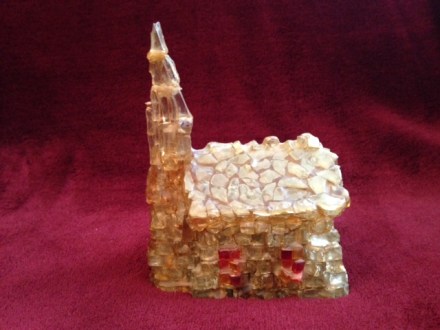
“But I can’t! I need one more day to complete my church!”, said Di, who was being treated at Bexley hospital for Postnatal Depression in 1966. She had a brilliant occupational therapist who took them to the swimming pool, organised hair-dressing days and helped patients to make things. Di made a church with bits of shattered wind-screen glass, put together with resin but the spire wasn’t on yet. This beautifully tactile piece of art was named ‘Faith’ by Ruth, her daughter.

Ruth

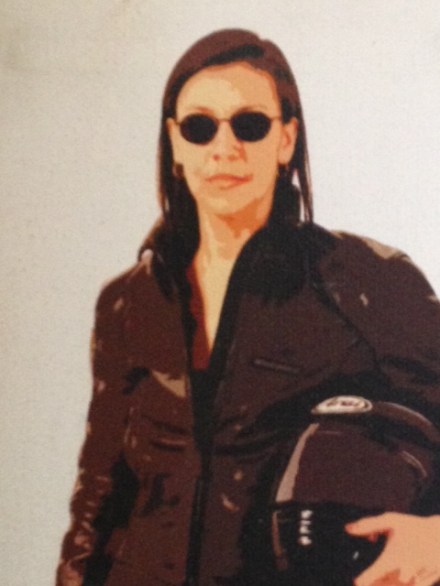
Ruth was a talented young lawyer. She was an actor and singer. She was kind, generous and gorgeous! She travelled extensively. She was diagnosed with Bipolar Disorder in her late 20s. She coped well with the help of health services, her friends and family but tragically lost her battle at the age of 47.

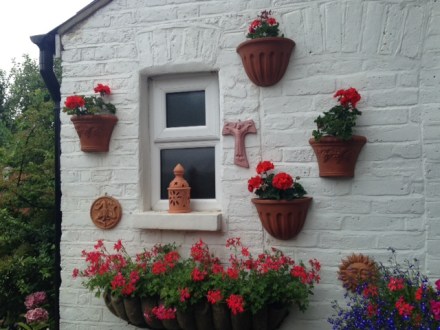
Di is in her second year of missing Ruth terribly. She has created the most beautiful garden in her memory. Some of the plants there are from Ruth’s house. Her mediterranean wall is stunning.

Mediterraneanwall

Being bereaved by suicide is a huge risk factor for suicide. Around 125 youth suicides a year occur soon after the person involved has experienced a bereavement. One in four (25%) of under-20s and 28% of 20 to 24-year-olds had lost a relative, partner, friend or acquaintance around a year or more beforehand. In 11% of suicides among under-20s, the person who those involved had lost had also taken their own life.

In a recent inquiry, bereavement was found to be an important theme in many deaths, said Prof Louis Appleby, the director.

People who have been bereaved need greater support to reduce the risk of them killing themselves. Agencies who are meant to help are not good at recognising this risk and need to improve.

This morning I caught up with Di over a cup of tea. We both believe that if Saagar and Ruth have met each other wherever they are, they must get on famously. The link below is a conversation with Di. She talks about her insights on mental health services over 5 decades. Thanks a lot Di!

Day 992

images

Strawberry Hill

“If you had a carpet bag and an umbrella you could be mistaken for Mary Poppins” one of my colleagues commented as he stopped his car right next to me at a red signal while I waited there on my bike. I often wear a tunic dress with leather shoes to work. I enjoy watching other cyclists in their multi-coloured and multi-logoed breathable jerseys, elasticated and padded cycling shorts, grippy mitts, electric yellow socks, clickity-clop shoes, snazzy sporty eye-wear and fancy headgear. Most of them are very serious.

My cycle belongs to the category of ‘hybrid’. It’s black and silver. It’s heavy compared to some of the feather-weights on the road. The special thing about it is that it is wholly unremarkable. Saagar used to call it ‘old lady bike’. Its first name is Strawberry and second name, Hill.

Space on roads is negotiated between cyclists, motorists and pedestrians. Cyclists move in packs and sometimes have disagreements amongst themselves. It’s clear from the behaviour of a cyclist if he/she has ever been behind a wheel. Likewise, it is easy to say if a driver is cyclist-aware. Pedestrians are a law unto themselves.

Within 3 turns of my wheels as I start off from a red signal, at least 10 bikes go past me. It’s another matter that a hundred yards hence we find ourselves waiting at the next set of lights. Some attempt to squeeze through the narrowest crevice in the traffic. Being stuck behind a bus is a special treat in terms of the quality of air. Smoking is mandatory.

The morning ride to work is a dream – fresh air, fresh me, very few people out and about, the wind behind me and the way mostly flat or downhill. In the evening – smoky air, tired me, lots and lots of people, riding into the breeze on a steady uphill road. Both, leisure times. Excuses to be a child again. As my quads toil hard to get me home inch by inch, I visualise the tub of Green and Black’s Dark Chocolate ice-cream waiting for me in the freezer. It helps with the speed and puts a song in my heart.


Day 991

Light and day and night.

nihms2913f1

The longest day of the year is behind us.

It’s well known that lack of sunlight has an adverse effect on our brains. It might stop a part of the brain called the hypothalamus from working properly:

  • Production of melatonin – Melatonin is a hormone that makes us feel sleepy. The hypothalamus may produce it in higher than normal levels.
  • Production of serotonin – Serotonin is a hormone that affects our mood, appetite and sleep. Lack of sunlight may lead to lower serotonin levels, which is linked to feelings of depression.
  • Body’s internal clock (circadian rhythm) – Our body uses sunlight to time various important functions such as the time we wake up. So, lower light levels may disrupt our body clock, mood and alertness.

A recent study by Klaus Martiny of the Psychiatric Centre in Copenhagen shows that people being treated for severe depression were discharged almost twice as quickly if their rooms faced south-west in comparison to those whose rooms had a north-west orientation. Depending on time of the year, the intensity of daylight in the south-west rooms was 17-20 times brighter. The results support findings in previous studies of the importance of architectural orientation providing natural daylight as a factor for improvement. “We don’t know the precise mechanism, but I think it’s to do with exposure to the morning light, which advances and stabilises their sleep-wake cycle,” says Martiny.

Light acts as a powerful reset switch, keeping the clocks in our brain synced with the outside world. This clock can weaken as part of ageing, Parkinson’s disease, strokes and depression. To tackle this problem several hospitals are installing dynamic ‘solid state’ lighting which changes like daylight over the course of the day : whitish-blue in the morning, growing warmer and dimmer through the day and turning orange or switching off at night.

Light can be a drug.


Day 990

stock-photo-mans-coat-hanging-on-a-handle-of-a-vintage-door-84244456

The Hook

Couldn’t believe that Saagar was gone on Day 1 or Day 10 or Day 100 … and soon it will be Day 1000. Still, life goes on. Still struggle with it. A lot!

Everything has changed – the world, me, my relationship with the world. I have been walking, sometimes crawling, up a steep learning mountain. Still am. Sometimes flattened by it. Many of you have been walking with me, keeping me fun, encouraging and comforting company. We have spent a lot of time together and there is so much more to do, share and learn.

This blog has been the hook on which I have hung my days. It has kept me from irretrievably crashing on the floor and getting decimated. It had held me together. It has been an ever-present friend, always willing to listen and receive, the stage on which I have shown Saagar off and poured my love for him, a rubbish bin into which I have chucked my pain, anger and regrets.

Coming up to Day 1000, I am filled with anticipation as I know it is time to loosen my grip, to place a little more faith in life and ride my bike with ‘no-hands’ for a bit. I feel the time is right. It is with trepidation that I make this proposal to myself that after Day 1000 I shall post a blog every Thursday. Or will it be Day 1001?

“You who walk, your footprints
 are the road and nothing else
 There is no road, Walker.
You made the road by walking.
By walking you made the road
And when you look backward
you see
 the path that you will never step on again.
Walker, there is no road,
Only wind-trails in the sea.”

– By Antonio Machado (PROVERBIOS Y CANTARES – XXIX)