Invitation to the Circle of Remembrance

Towards the end of 2020, a series of phone calls with mums and dads from the USA, Australia and the UK resulted in the formation of an on-line peer support group that has met every other Saturday evening for an hour and a half. The first meeting was held in the middle of January 2021. We’ve recently had our 32nd meeting. The group provides a warm space for sharing and offers non-judgemental listening and understanding. It provides a fertile ground for post-traumatic healing and growth. We call it CORe: Circle of Remembrance.

The loss of a child is different from other losses. The purpose of CORe is to honour our children, to create an opportunity for sharing our inner and outer experiences and to seek tools and mutual understanding for establishing a firmer ground of compassion, from which to live our new lives.

Over time, I have come to appreciate my need for a tribe to belong to. Other people who are also living through the loss of their child validate our experiences, witness our pain and help us feel less alone.

After many years of trying to make sense of something so treacherous, I now know that it is impossible to make any sense of it. However, I also know that it’s possible to create a new path for ourselves. A path of learning and peace.

It has been an honour for Si and me to facilitate the CORe group of roughly 20 friends and witness their journeys. The rich, life-sustaining conversations and friendships within the group are a delight to be a part of.

It therefore gives me great joy to invite bereaved parents to a new group that will meet on alternate Wednesdays from 7.00 – 8.30 pm (UK time). Please visit the website of CORe (link below) for more details and testimonials and sign up if you would like to join.  In our experience with the Saturday group, the upper limit to attendees is 25. Once we have about 15 members, we’ll get started. The tentative start date is 4th May 2022.

https://www.core-community.com/

Two lessons

“He loved me in the purest sense and I loved him. That’s how he kept me alive.” says Marsha about Ted, a catholic priest.

This relationship taught her two important things that she applied to her work as a therapist for seriously suicidal people. She wrote about these things and taught them to her students, the future generation of therapists.

  1. ‘I was unable to say thank-you then. Now I can.’

If you’re giving unconditional love to help someone cope with the hell they are in, if you’re holding them emotionally and physically, don’t interpret their absence of ‘thanks’ as a sign that you are not giving them what they need. You probably are.

2. ‘Keep loving them.’

When someone sees no point in living, they are like someone walking in a mist. They don’t see the mist. They don’t see that they are getting wet. If you’re walking with them, you may not see it either. But if they have a pail of water, you can collect the water that was mist, in it. Each moment of love adds to the mist, which adds to the water in the pail. By itself, each moment of love may not be enough. But ultimately, the pail fills up and the person in hell can drink that water of love and be transformed.

Like Marsha, I know this to be true. I’ve been there and drunk from that pail.

(Inspired by Marsha M Linehans’s book: ‘Building a life worth living’.)

I was so wrong.

I thought that if his doctors would have recognised how sick Saagar was, they would have known that the best thing to do was to refer him to the Psychiatric services. They would admit him to the hospital, look after him and keep him safe.  He would recover fully, return home and resume his life as normal – play the drums, read and speak French, play cricket, go out with his friends, go to the gym, make me laugh till I had tears in my eyes and soon, return to University.

Now I know, that I was so wrong at so many levels.

  1. Recognise?

The GP didn’t think his condition was life-threatening, even after he told him it was. How much more obvious did it have to be? They didn’t believe him. If at all they did, they didn’t take him seriously. Or maybe they simply didn’t know what to do.

GPs are not trained or supported in looking after suicidal patients.

  • Refer?

If they would have made a referral to the Mental hospital, he would have waited for a long time to be seen. Maybe he would have died while on the waiting list, like many others.

GPs are dis-incentivised to make referrals to specialist services in various ways.

  • Admit him to the hospital?

No chance! That would not have happened as there would have been no beds. If there were beds, there would have been others much sicker than him, ahead of him in the queue.

Hospitals have very poor capacity and very high thresholds for admission to inpatient beds.

  • Keep him safe?

490 patients died while detained under the Mental Health Act in the year up to March 21. At least 324, for non-COVID reasons.

Ref: https://www.bbc.co.uk/news/uk-politics-59336579

Being an inpatient does not mean –  safety.

  • Recover fully?

Many patients report traumatic experiences while admitted to mental hospitals. The treatment is often not conducive to recovery. Concerns include coercion by staff, fear of assault from other patients, lack of therapeutic opportunities and limited support.

There is little understanding of what the patient needs, to recover.

(Ref: https://www.cambridge.org/core/journals/the-british-journal-of-psychiatry/article/experiences-of-inpatient-mental-health-services-systematic-review/C5459A372B8423BA328B4B6F05D10914)

I am presently reading a book – ‘Building a life worth living’ by Marsha, M Linehan. She is the psychologist who developed Dialectical Behavioural Therapy, to help suicidal individuals to build their lives. Much before she did that, she was a seriously suicidal and self-harming young adult.

I am learning so much.

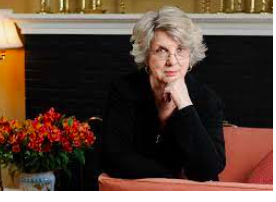
Marsha M Linehan – Author of ‘Building a Life Worth Living’

Oceans apart

My mother.

she was known by

her chum-chum silver key ring

tucked into her slim waist

and her swishing saris.

Those delicate fabrics

draping her like feathers.

Her face so gentle, her red bindi

was home.

Still is.

*

No other.

I saw me in her.

Years carried me away

to far-off places,

where every house

had steep staircases

inside.

Outside, the winds blew hard and

the terrible winter

could bite.

*

Why bother?

Here, jeans and polo-necks,

only they would do.

The stairs would unfurl

my sari in milliseconds,

if I dared to.

My dupattas would sweep the floor.

My bindi out of place,

found no spot to decorate.

The years I blame.

*

Not like her.

Yes. Oceans apart,

she is she, in her handwoven

white, pink and blue cotton sari

and me is me, in my blue Gap jeans.

Yet we are somewhat the same.

***