Day 975

image_update_img

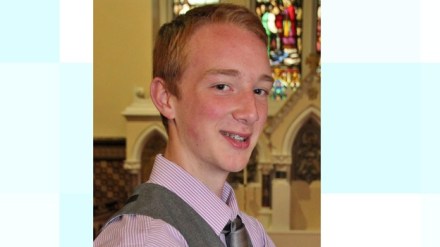
Ben 

In conversation with a retired Paediatric surgeon today, the topic of premature babies came up. He said that the commonest type of surgery in new-borns has changed over the years. Unlike a couple of decades ago, the commonest operation now is for dead gut, essentially due to the rise in our ability to provide better care for premature babies. He thought that the incidence of premature births was almost double in London than anywhere else in the UK because of high stress levels.

According to one of the largest reviews of evidence, children born very prematurely are at greater risk of developing mental health and social problems that can persist well into adulthood. Children who weighed less than a kilogram at birth are about four times as likely as those born at term to have attention deficit hyperactivity disorder (ADHD), and significant emotional problems. This may be due to weakened connections in brain networks linked to attention, communication and the processing of emotions.

These findings are important because mental health issues that occur in childhood are a strong predictor of psychiatric disorders in adulthood. “There is a strong case for assessing, on a regular basis, the mental health status of these children, so that early intervention approaches might be implemented sooner rather than later, with a view to minimising future mental health problems,” said Prof Smith from Glasgow.

Sarah is a Registered General Nurse with 25 years’ experience. She worked as a Neonatal Nurse over the last 17 years prior to moving to The University of Salford where she is now a Neonatal Lecturer within the Midwifery Team.

Sarah became involved with PAPYRUS in 2013 after the loss of her 14-year-old son Ben to suicide. Ben was a premature baby.

sarah_fitchett_for_trustees_bio


Day 972

download

Overheard

It were mental last weekend. We went crazy at the club. We did.
We ran around like a bunch of loonies.
Johnny was cackling like a fool. He’s a right schizo. He is.
Gives me the creeps, a right window-licker.
He’s not that bad really. He isn’t.
You gotta be a bit insane to live around here.
The place is completely mad! It is.
Could send anyone doolally. Completely demented!
Living like this is no living. It’s insane! Innit?
Bonkers!
Yes. But Johnny’s a bit cuckoo. He is.
He just lost it. Went all OCD on me.
One minute I was ok. The next I wasn’t.
Bloody lunatic. Went bananas.
I wish he’d go away. I need him like a hole in my head.
It’s nuts being around him. Sends me round the bend.

Now everyone and me thinks I’m loopy.
Complete goner!

Bloody psychos everywhere. Crackpots.
Nutters, them all. So they are.

Day 968

Artspace

‘Art should comfort the disturbed and disturb the comfortable.’ – Cesar A. Cruz

Yesterday’s play on ‘Shifting perspectives’ through theatre and today’s trip to the Dragon café brought this truth home.

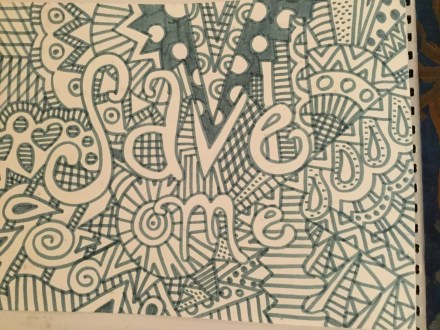
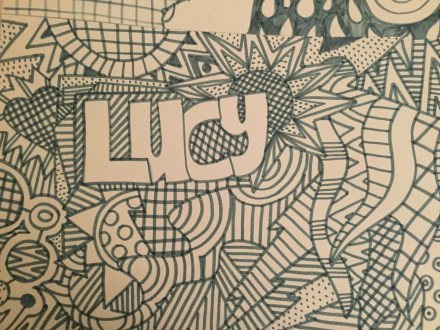
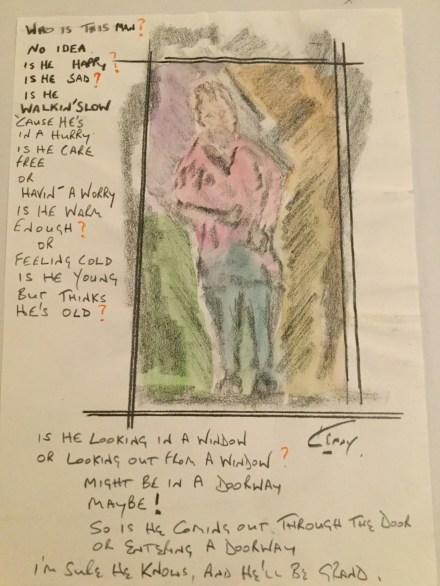
The work done by the patrons of the Dragon café was compiled into a big black book called ‘Artspace’. Looking through it was an immersive experience. Some brought me comfort and some disturbed me, making me a mixture of ‘comfortable’ and ‘disturbed’.
I shall let you find out how they make you feel.

saveme

lucy

lucy1

lucy2

mesittingJPG

maninwindow

Certain events or times of day are more difficult – like being alone late at night, or having arguments. During these times it can often be more difficult for us to feel a sense of hope, to feel connected to the idea of safety, to feel our own resilience. This is the times when ‘self-care’ is essential – taking time out to be kind to ourself, to find activities that feel good, or allow us to connect with ourself again. Self-care is about caring for ourself, inside and out.

Focusing on the present moment, the present activity, whilst allowing thoughts and feelings to just be – has a long history of helping people with their mental wellbeing. By allowing ourself to become absorbed in the moment it’s possible to feel a sense of calm and focus that can distract from painful thoughts and feelings. No wonder colouring books for adults and kids alike are taking a special place on book store shelves.

Here’s PAPYRUS’ bright idea

peacefulmind.JPG


Day 967

DAwbtccWAAEAAgj

One of the actors at the above workshop, who is also a mentally ill patient in recovery spoke about his insights, “I realised that as long as I depend on the State to look after me, I will be met with the lowest common denominator. This brought me to the conclusion that I may not have control but I have agency.”

After I got home, I looked up the meaning of ‘agency’ to figure out exactly what he meant. Agency is an ‘action or intervention producing a particular effect’. For example, many infectious diseases are caused by the agency of insects. Synonyms to this effect are: influence, power, effect, force, means, channels, routes, mechanisms and techniques.

In effect, he was referring to ‘self-help’. He was saying, “I have the power to change my situation.” It was inspiring for me to hear him say that. That statement reinforced the message of the workshop – there is a very thin line between the well and the ill. Role reversals are common. Sometimes visible. Often not.

I came away from there with a mixed bag of feelings. On the one hand, I could clearly see the daily struggles of mentally ill patients and on the other, their brilliance shone through. I wonder how Saagar would have been, had he got through that big dip.

May the force be with you. And me.

Day 965

Guidelines, guidelines everywhere…

NICE guidelines on ‘Bipolar Disorder in Adults’ regarding the role of families and carers state:

“Quality standards recognise the important role families and carers have in supporting adults with bipolar disorder. If appropriate, health and social care practitioners should ensure that family members and carers are involved in the decision‑making process about investigations, treatment and care.”

“Why is it that some psychiatrists sometimes don’t fully appreciate the views of carers and involve them in the care of a patient when NICE guidelines clearly state that it should be otherwise?” I asked a senior psychiatrist casually during a recent conversation. “Traditionally” he said, “doctors were sons and daughters of doctors, their friends and spouses were often doctors and those were the people they spoke with. Carers didn’t fit into that box. It’s a cultural thing, still lingering. Hardest thing to change – a mindset.”

India gets criticised for its caste system. In other countries it exists in other forms – the power dynamic between different groups of people in different strata of society. As the Grenfell tragedy unfolds, I see how the management didn’t  take the resident’s concerns seriously. What is the nature of Tenant-Management relationship? Who is disadvantaged?

Any number of guidelines cannot change deep-rooted, unconscious biases. Only humanity can.

Mrs May visited the site but couldn’t speak with the residents for ‘security’ reasons and because she is very tired after her recent election campaign. Being with them would have taken compassion. And humanity. I wonder if this was a Mayfair tower wether she would have felt more secure and less tired.