Day 988

Transition is the cliff edge.

IMG_0591

Alas, poor Yorick…

Eighteenth birthday! Yay! No more a child. You are mentally, emotionally, socially, spiritually and physiologically an adult. That’s it. Over to Adult services now. Easy.  The number ‘18’ is completely arbitrary. It is designed for the convenience of the service providers, not in the best interest of children. There is a strong case being made now for raising the ‘transition’ age to 25 and rightly so. The recent publication “State of Child Health 2017” has recognised that the transition from Paediatric to Adult services is poorly organised and unsafe for mental and physical health conditions.

This is how one of the parents felt: “In my experience the teams did not work together. They each did their separate thing. When Rebecca left school, she was left with without regular support or advice. When she turned 18 we just stopped receiving information. Emails and phone calls didn’t get answered.”

Chronic conditions such as Epilepsy, Asthma, Diabetes, Juvenile Arthritis and Childhood Obesity are often associated with significant mental health problems. The budget for kids was 6% of the Adult MH services until recently. The government promised an increase and guess what! It has gone up to 7% now. Hurrah! Considering that mental illness most often begins in adolescence and early intervention is of paramount importance, the allocation of funds is highly disproportionate.

Piet Jansen, Director of International Relations, Yes We Can Youth Clinics, Netherlands, commented:

‘There was a lot of talk at the CAMHS congress about the Green Paper, but in my view the only green thing that matters here are dollar bills (in this case pounds). Without sound financial and genuine political commitment, structural changes are not to happen.’

DC2K3UbXUAAai4p


Day 987

download-1

Dancing with Rumi

The Papyrus AGM this morning brought together many people with the same vision – to keep every young person safe and happy. The numerous hurdles on ground made my heart sink. This is too big a task. It’s too much for me or anyone else. But, I am not alone and they are not alone. We are together. Most of us in the room had been touched by suicide and were carrying our pain boldly around, hoping to use this massive emotional energy to reduce further pain in this world. Bit by bit we will keep planting seeds of hope. One person at a time, we will keep smashing the stigma. We will keep taking small steps and keep walking without looking fearfully into the distance. 

The Journey

Wake up lovers, it is time to start the journey!
We have seen enough of this world, it is time to see another. Though these two gardens may be beautiful,
let us pass beyond them and go to the Gardener,
let us go prostrating like a torrent to the ocean.
Let us journey from the vale of tears to the wedding feast, and bring the colour of blossom to our pale cheeks.
Let us journey home, our hearts trembling
like autumn leaves about to fall; in this world of dust
there is no avoiding pain or feeling exiled.
This path is full of trials, we need companions
let us join their caravan and let love be our guide.
We have stayed home, scared like mice
but we are lion cubs, let us roar like lions.
Let our soul turn into a mirror,
that passionately wants to reflect Beauty.
Let us begin the journey home.

  • By Rumi.

Day 985

download

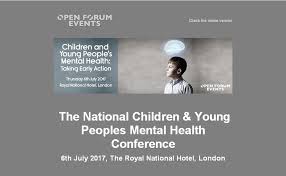
‘Children and Young People’s Mental Health – Taking Early Action’ : title of a conference I attended today.

The hall was packed with 350-400 people, working for the well-being of kids as teachers, social workers, decision makers and others. Two speakers mentioned suicide in the passing – Rt. Hon. Norman Lamb MP, who lost his sister through this tragedy 2 years ago and Richard Andrews, who set up the charity Healios after experiencing serious difficulties in accessing support for friends and family affected by serious mental illness.

One of the professors spoke about the reasons for early deaths of people with mental ill-health.  He attributed this mainly to physical problems such as hypertension, obesity and smoking related problems. Death by suicide wasn’t mentioned.

I learnt a lot, some of which I shall share in the next few days. A Green Paper is being drawn up to set out proposals for delivering better mental health support for children and young people. During one of the question times, I suggested that bearing in mind that suicide is the biggest killer of young people in this country, 2 things must be included in the Green Paper –

  1. Suicide Prevention Training for all medical and nursing staff and students, just like CPR training, to bring parity of esteem between physical and mental ill-health.
  2. Meaningful sharing of information about para-suicidal young people between medical teams, police, first-responders and families, in the best interest of the patient.

This remark was met with a stunned silence. The room froze. The chairperson mumbled something like ‘eloquent…’ and rapidly moved on to the next person.

Stigma lives here too. Inside the healthcare community.


Day 983

How many?

download

“Work out how many vulnerable children there are in this country today…Four months, 12 experts, 500 pages and four spreadsheets later, and our answer is: we don’t know.”

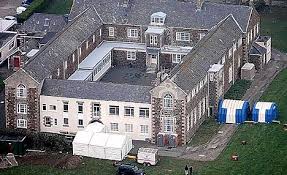
The report produced by the Independent Jersey Care Inquiry into the abuse of children in the Island’s care system over seven decades was published yesterday. The findings were shocking:

  • Having their hair forcibly cut off
  • Having their mouths washed out with soap
  • Spending long periods in an isolation room
  • Having fat from a frying pan poured over them
  • Being punched and slapped
  • Being sexually abused
  • Live electrical wires applied to legs
  • Being hit with a pre-war army stick with a metal end
  • Being beaten with nettles as a punishment for bedwetting

The “Jersey way” is a term used to describe a system where “serious issues are swept under the carpet” and “people avoid being held to account for abuses”. However, Jersey is not the only place in the world where this has been happening and still carries on.

Studies show that children and adolescents in care are at greater risk of suicide and attempting suicide than those who are not in care. Rates of suicide attempts and hospital admissions within this population were highest before entry into care and decreased thereafter. Health and social care professionals should be made aware of this research. The care home experience is a prominent risk marker for suicidal behaviour among teenagers and young adults.


Day 979

“Helping others is the way we help ourselves”
-Oprah Winfrey

Simple ideas change the world. A Clinical Psychologist, Dr Charlie Howard was taking a walk around her area. Having recently had a child, she was looking for her next “thing”. She asked random people what would make a difference in their community. “A Problem-Solving Booth right here on my street” answered a young man in the queue in a sandwich shop.  “A place where people can go with the stresses in their head and where we can help each other”. The idea was genius and Charlie’s head built on it quickly. “Maybe we could try one here?” Charlie suggested, “we could do it together”. The young man smiled at Charlie and said “yeah maybe” and then his phone rang and he ran off down the street. No one knows his name and no one has seen him since. He probably has no idea just what his throwaway words have since inspired.

Problem-Solving Booths are a great way to bring members of the community together to have conversations that they might not otherwise have, by helping each other with their problems. One chair is for the “Helper”, the person listening to the problems. The other is for the “Helped”, the person describing their concerns. The aim of the Booth is that people swap roles regularly as we all have both the potential to have problems as well as to offer help.

Thrive London is a citywide movement for better mental health for Londoners supported by the Mayor of London and the London Health Board. Problem-Solving Booths have become the local arm of Thrive and we’re working out what they are, what they do and what they can do, with everyone we meet from street to street, borough to borough and organisation to organisation. It’s cool.

Watch this space!