Day 716

Today I was a tourist in Lagos, Portugal.

This is our second visit here. Aside from having friends here, what brought us back is its pace and ease of life. It is an ancient seaside town, loaded with natural beauty and a few tourists.

img_0251


The Saturday Market, a short bike ride away from home was the highlight of this morning. With baskets hanging off the handles of our bikes, pretending to be two of the locals, we feigned annoyance at the ‘tourists’ getting in our way. Once in the market, the truth about us came spilling out. Out came our cameras and a huge appreciation for the ability to buy produce from the farmers directly. Friendly, relaxed faces manning tiny stalls sold locally grown seasonal produce – figs, chillies, grapes, olives, almonds, rosemary honey, tomatos, greens, homemade breads, sweetmeats, fresh and dried herbs, flowers, plants and other everyday little things. Saagar would have loved the real peri-peri.

The market reminded me of my childhood in India, buying real food from real people, sharing with them the value of their land and labour. It reminded me of sweeter, simpler times. Times when we had a feel for the land and a connection with each other through the food that it produced.

Simplicity is indeed a virtue, be it a town or a person.
The simple joy of breathing clean air, priceless.
So many simple things are now lost in many parts of the world!

“Simplicity is the ultimate sophistication.”
Leonardo da Vinci

Day 715

img_0249

She’s my friend.  She sees hearts everywhere – in candle flames, on flower petals, on unevenly toasted bread, on random clouds and other unlikely places. Basically everywhere. She actively seeks them out as though they are quietly waiting to be discovered, playing hide and seek with her. They fill her with child-like wonder and glee. She goes on to excitedly share her hearts with the rest of the world. It’s infectious and now I see them too.

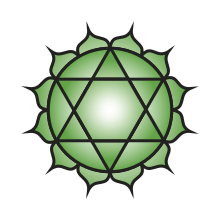
The heart is the ‘chakra’ that balances the body and spirit, with 3 chakras below and 3 above it. It is also known as ‘anahata’ in sanskrit which means ‘unhurt, unstruck and unbeaten’. It is green in colour.

This morning’s yoga session was about opening up the Heart chakra. It made me aware of the sensations in and around the chest. At times it felt like a flutter and others like an ache. It brought up the tears easily and induced a sense of expansion where I felt like all the kids in the world were mine and all I wanted was for everyone to be happy and free. My spirit seemed to have taken wings, soaring high while my mind and body stayed centred right where I was.

I am free to just be.
I am free to be happy.
I am. I am. I am.

anahata_mandala-svg

Day 714

You are not

You are not the ageing tortoise shell.
You are not the pillows of my hands
You are not the metallic taste in my mouth when I wake
(though you could be those threads running underneath my tongue).

I doubt you are the strands of hair which survive in my windowsill
(and are likely to have lost their film of neem oil)

Though you could be the windowpane itself, which allows me the view of the sky; the interesting birds.
(You are not the birds).

You are not hidden in bone, you do not bloom in the marrow.
You are (in my opinion) not the rain in November that studs my scalp.

(But you might be the heat pressing against my body in the market souk near the mosaic-mirrored shisha stall).

You are not the sacred cow, a murmur in the heart or blood-spit in the sink.
If I open my book you might well be the fly’s open wing dashed on the page.
You are not the hand of god on an incoherent foetal face.

But yes, I think you might be that moment when the clouds ripen
(just before the rain, before it hits the cloth of my dress, my cold hands).

  • By Mona Arshi, from her book Small Hands at the centre of which is the slow detonation of grief after her brother’s death.

Day 713

“Thank you Gas-lady” said the surgeon at the end of our working day as he picked up his bag to leave the operating theatre. I acknowledged it with a smile and a nod. That’s sweet. At that moment it didn’t register but later I realised that he does not know my name. We have worked in the same theatre complex one day per week for the past 4 years and he does not know my name. That’s interesting. I wondered how many people I see on a regular basis and don’t know the names of.

How did that make me feel? Not exactly insulted but definitely unimportant. I found myself making excuses for him – may be he finds my name difficult to remember. It is a foreign name after all. But this is London and many people here have foreign names. May be it is a reflection of a basic power imbalance – every one knows his name but he doesn’t have to know everyone’s name.

Knowing a name is a small thing, but it makes the difference between making someone feel that they matter or they don’t. When our name is known, we are more likely to have a sense of belonging to a person or a group. It also means that who we are is central to the interactions we have.

“Could someone get the defibrillator please?”
“James, could you please bring in the defibrillator?”

Which one of these two statements is likely to produce a quick and effective result? Knowing names can make it easier to get a job done.

Patients are not diabetics, schizophrenics, bed 10, ‘last on the list’, so on and so forth. They have their names and unique identities. Of course, it is not always easy to remember names. It does take some effort. It is easier to put in that effort if we know how much of a difference it can make not only to others but also to us. I find myself paying more attention to names now. Even if I get it wrong, I like to think I tried.
It is definitely worth the effort.

( Saagar was really good at remembering names. In fact, the more unusual the name, the more fun he had with it. Well, there’s a name I’ll never forget – Saagar.)

Day 712

rest-your-mind-calm-our-heart-quote-1

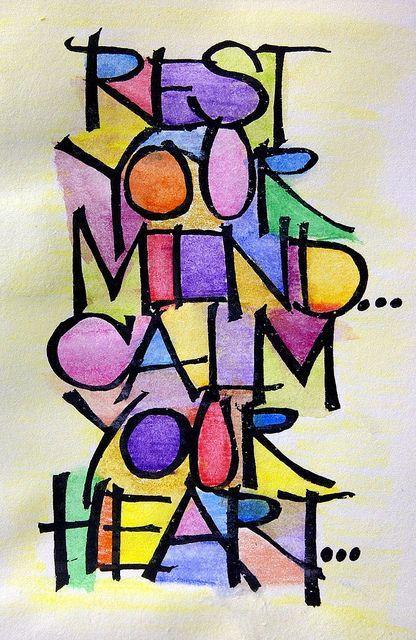
I long suspected that doing nothing was under-rated. I could do ‘doing nothing’ for hours, given a chance. Psychologists now believe that ‘doing nothing’ is in fact a positively restful activity. Day-dreaming is good for us and letting one’s mind wander is healthy.

Rest and doing nothing –same thing?
Rest and relaxation – same thing?
Rest and laziness – same thing?
Rest and ‘not at work’ – same thing?
Rest and lying in bed –same thing?

The Rest Test is a survey taken by the ‘old people’s ‘ radio – BBC Radio 4 to look into various aspects of rest. In the fast paced lives of today where each one of our free moments can potentially be invaded and claimed by phone calls, e-mails, face-book, texts and tweets, this survey is well timed.

It is the largest of its kind with 18,000 people from 134 countries participating in it.

What did it find?

More than 70% believe they need more rest than they get.
(http://www.bbc.co.uk/programmes/articles/5GF8npkXxpp4z0KBqGx2pl7/the-ten-most-restful-activities)

The most restful activities are: reading, being with nature, being on your own, listening to music, doing nothing, having a bath or shower, walking or exercising, day-dreaming, watching TV and meditating or practicing mindfulness.

All of the above are true for me but breathing consciously tops the list. Being with my breath keeps me connected to ‘right here right now’, to my ‘self’ and my sanity. The breath is a free resource. About 10 years ago I learnt to use it as a source of energy and calm at the same time. (http://www.artofliving.org/us-en/research-sudarshan-kriya) I experience deep rest through breathing exercises and meditation. 

Rest is often the unwritten part of a doctor’s prescription for various stress-related disorders. It is vital for our well-being.

Here’s a poem from the programme:

I expect you might at some point tonight
Beneath the sheets before sleep
Still reeling from the flaming lights
Want or more likely seek

Rest.

There’s no manifesto in this
No snake like lists of things to do
There’s no tomorrow either
There’s poetry as ever and YOU.