Day 988

Transition is the cliff edge.

IMG_0591

Alas, poor Yorick…

Eighteenth birthday! Yay! No more a child. You are mentally, emotionally, socially, spiritually and physiologically an adult. That’s it. Over to Adult services now. Easy.  The number ‘18’ is completely arbitrary. It is designed for the convenience of the service providers, not in the best interest of children. There is a strong case being made now for raising the ‘transition’ age to 25 and rightly so. The recent publication “State of Child Health 2017” has recognised that the transition from Paediatric to Adult services is poorly organised and unsafe for mental and physical health conditions.

This is how one of the parents felt: “In my experience the teams did not work together. They each did their separate thing. When Rebecca left school, she was left with without regular support or advice. When she turned 18 we just stopped receiving information. Emails and phone calls didn’t get answered.”

Chronic conditions such as Epilepsy, Asthma, Diabetes, Juvenile Arthritis and Childhood Obesity are often associated with significant mental health problems. The budget for kids was 6% of the Adult MH services until recently. The government promised an increase and guess what! It has gone up to 7% now. Hurrah! Considering that mental illness most often begins in adolescence and early intervention is of paramount importance, the allocation of funds is highly disproportionate.

Piet Jansen, Director of International Relations, Yes We Can Youth Clinics, Netherlands, commented:

‘There was a lot of talk at the CAMHS congress about the Green Paper, but in my view the only green thing that matters here are dollar bills (in this case pounds). Without sound financial and genuine political commitment, structural changes are not to happen.’


DC2K3UbXUAAai4p


Day 983

How many?

download

“Work out how many vulnerable children there are in this country today…Four months, 12 experts, 500 pages and four spreadsheets later, and our answer is: we don’t know.”

The report produced by the Independent Jersey Care Inquiry into the abuse of children in the Island’s care system over seven decades was published yesterday. The findings were shocking:

  • Having their hair forcibly cut off
  • Having their mouths washed out with soap
  • Spending long periods in an isolation room
  • Having fat from a frying pan poured over them
  • Being punched and slapped
  • Being sexually abused
  • Live electrical wires applied to legs
  • Being hit with a pre-war army stick with a metal end
  • Being beaten with nettles as a punishment for bedwetting

The “Jersey way” is a term used to describe a system where “serious issues are swept under the carpet” and “people avoid being held to account for abuses”. However, Jersey is not the only place in the world where this has been happening and still carries on.

Studies show that children and adolescents in care are at greater risk of suicide and attempting suicide than those who are not in care. Rates of suicide attempts and hospital admissions within this population were highest before entry into care and decreased thereafter. Health and social care professionals should be made aware of this research. The care home experience is a prominent risk marker for suicidal behaviour among teenagers and young adults.


Day 979

“Helping others is the way we help ourselves”
-Oprah Winfrey

Simple ideas change the world. A Clinical Psychologist, Dr Charlie Howard was taking a walk around her area. Having recently had a child, she was looking for her next “thing”. She asked random people what would make a difference in their community. “A Problem-Solving Booth right here on my street” answered a young man in the queue in a sandwich shop.  “A place where people can go with the stresses in their head and where we can help each other”. The idea was genius and Charlie’s head built on it quickly. “Maybe we could try one here?” Charlie suggested, “we could do it together”. The young man smiled at Charlie and said “yeah maybe” and then his phone rang and he ran off down the street. No one knows his name and no one has seen him since. He probably has no idea just what his throwaway words have since inspired.

Problem-Solving Booths are a great way to bring members of the community together to have conversations that they might not otherwise have, by helping each other with their problems. One chair is for the “Helper”, the person listening to the problems. The other is for the “Helped”, the person describing their concerns. The aim of the Booth is that people swap roles regularly as we all have both the potential to have problems as well as to offer help.

Thrive London is a citywide movement for better mental health for Londoners supported by the Mayor of London and the London Health Board. Problem-Solving Booths have become the local arm of Thrive and we’re working out what they are, what they do and what they can do, with everyone we meet from street to street, borough to borough and organisation to organisation. It’s cool.

Watch this space!


Day 977

_95454465_rebeccaprofile

Rebecca

Rose Polge. Rebecca Ovenden. Lauren Phillips.
All junior doctors. All deaths by suicide, in just over one year.
The only three publicly known. Total number not known.

Polge’s mother linked her suicide directly to conditions at work – exhaustion because of long hours, work related anxiety, despair at her future in medicine and the news of the imposition of a new contract on junior doctors.

This problem is not limited to the UK. Earlier this year, 4 deaths within 5 months in Australia propelled the launch of an urgent investigation into the problem. No such investigation in the UK. Indeed, the law here explicitly excludes suicide from the requirements to report work-related deaths. A GMC report in 2016 stated that the low morale amongst junior doctors was putting patients at risk. Signals of distress and a dangerous level of alienation are an indication that the system cannot simply go on as before.

At the 2017 BMA junior doctors’ conference, delegates gave the union a mandate to lobby for all suicides to be investigated formally by their employer, jointly with the GMC, Health Education England and the BMA.

In France, workplace suicides are a well-recognised entity.
Yes. Suicides are complex. There can be many contributory factors. But when there is clear evidence of a link to work pressures, that should be given appropriate attention.

Ref: BMJ Article: Suicides among junior doctors in the NHS followed by an interesting discussion.

Day 975

image_update_img

Ben 

In conversation with a retired Paediatric surgeon today, the topic of premature babies came up. He said that the commonest type of surgery in new-borns has changed over the years. Unlike a couple of decades ago, the commonest operation now is for dead gut, essentially due to the rise in our ability to provide better care for premature babies. He thought that the incidence of premature births was almost double in London than anywhere else in the UK because of high stress levels.

According to one of the largest reviews of evidence, children born very prematurely are at greater risk of developing mental health and social problems that can persist well into adulthood. Children who weighed less than a kilogram at birth are about four times as likely as those born at term to have attention deficit hyperactivity disorder (ADHD), and significant emotional problems. This may be due to weakened connections in brain networks linked to attention, communication and the processing of emotions.

These findings are important because mental health issues that occur in childhood are a strong predictor of psychiatric disorders in adulthood. “There is a strong case for assessing, on a regular basis, the mental health status of these children, so that early intervention approaches might be implemented sooner rather than later, with a view to minimising future mental health problems,” said Prof Smith from Glasgow.

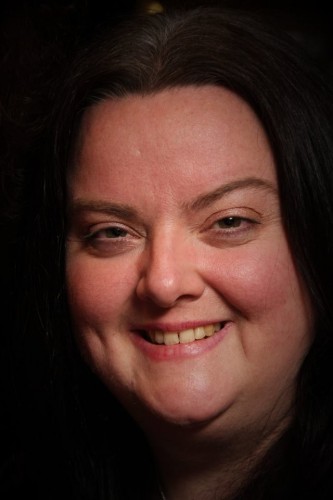
Sarah is a Registered General Nurse with 25 years’ experience. She worked as a Neonatal Nurse over the last 17 years prior to moving to The University of Salford where she is now a Neonatal Lecturer within the Midwifery Team.

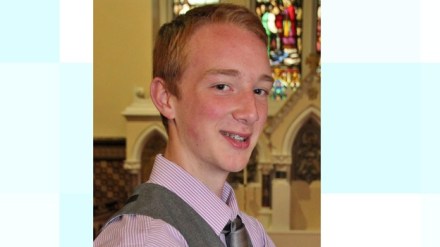
Sarah became involved with PAPYRUS in 2013 after the loss of her 14-year-old son Ben to suicide. Ben was a premature baby.

sarah_fitchett_for_trustees_bio