At a recent wedding, halfway through his speech, the bride’s father was overcome with tears. He was so happy for his daughter that he couldn’t help but cry. It was a sparkling moment of a mixture of affection, achievement and perhaps relief. Even though it took him by surprise, it was perfectly normal and rather sweet.
At the hospital, I watched men and women cry with joy at the first sight of their newborn baby. It was joy to behold their love and terror of having this amazing miracle happen to them. I have taken many photos of those moist eyes brimming with love.
Babies cry to express their hunger or discomfort or pain. Adults also cry to express themselves but somehow, they don’t seem to have as much permission as kids. When we’re happy, we laugh and that’s okay. When we’re sad, we cry and that’s often not okay.
Jesus wept. (John 11:35)
When he visited the tomb of his friend, Lazarus, Jesus was moved to tears seeing the sorrow of those mourning his death. The verse comforts believers by showing them that Jesus had empathy for the grief, loss, and pain that humans endure. Despite knowing he was about to raise Lazarus, he felt for them in that moment. He had solidarity with the human heart.
The protective mechanisms built into our bodies are very subtle. The eyelids blink to ensure that the cornea remains moist, so we can continue to see clearly. It happens without us noticing. As soon as we put something in our mouths, our saliva starts to counter potential troublemakers in our food. When we change our position from sitting to standing, the biomechanics in the body readjust to ensure that we don’t fall over. A sense of balance in innate to us while standing and walking.
Crying also protects. It works as a pressure-release valve. When our emotions are intense and difficult to contain, crying helps to reestablish emotional equilibrium. It is a cue for connection with others as it is founded in our vulnerability as humans.
To stay with each other until the flood subsides.
To hold each other. Talk. Listen. Be present
That’s how we hold space for feelings, allowing them to be fully expressed.
That is how we experience divine love.
Resource:
CORe: Circle of Remembrance. A free online peer support group for bereaved parents, where crying is honoured.
A café on a sunny beach in Goa. Lunch with friends. Rava dosa and spicy sambar. In walks a woman of European descent, possibly a few years older than me. She sits at the table opposite us. She has two deep vertical frown lines just above either side of the bridge of her nose. They seem to be fixed in place. She orders a white coffee and waits, looking at her phone and then turning to look out of the window. Looking at her phone and turning her head towards the window. This pattern repeats. The lines stay firmly in place. I wonder why. She is obviously travelling. Wonder if she has someone with her or not. Has she made some friends here? I wonder if I should ask but it might seem strange to her and others in the eatery.
I was still debating whether I should or shouldn’t, when I saw her pay her bill and leave. I excused myself and followed her out. She walked to the right with her arms crossed across her chest and her head bent forward.
“Excuse me.” I called out. She turned around.
“Sorry to disturb you. I was in the café there. You seemed to be worried about something. Of course, it’s not my business but if there’s something you want to talk about, I have time.”
‘Oh. Thank you. Things are not great at home. Nothing too serious but I feel so far away.’
“I am sorry to hear that. Are you okay?”
‘Yes. I am okay, I think. I have a couple of friends. We’ll meet up later and talk things over. Thank you for bringing some light into my day.’ She smiled, the frown softening.
“May I give you a hug?” I asked.
“Yes. Please.”
We had a moment, said our goodbyes. I slipped back into the café, gently sat down and blended back into the conversation.
“If everything around seems dark, look again, you may be the light.”
– Rumi.
For this new year and for ever more, I wish you be the light that you are, for others and yourself.
I applied for the London job only because I was sure I wouldn’t get it. In 2006, I had finished seven years of post-graduate training in Northern Ireland and it was time to look for a Consultant post. There weren’t any openings locally so I looked at vacancies on the ‘mainland’. If nothing else, it would be an opportunity to practice my interview skills. Halfheartedly, I applied for a job in London and kept absolutely mum about it. When I was short-listed, I was a bit miffed as my only free weekend that month would be spent preparing for an interview the outcome of which I didn’t really care for. But I didn’t want to look like a complete fool so I did prepare.
I also went shopping for a black pencil skirt with a smart white and black jacket. Why not? I already had a nice white top and black shoes to match. “Will we have to move to London?” Saagar asked. He was 12. ‘I don’t think so. Unlikely. Let’s see.’
Early one Wednesday morning I checked into my flight at the then brand new Belfast City Airport. As I was saying bye to Saagar’s father, I asked him, “What shall I do if they offer me the job?” Take it, he said. The Big Ben spooked me as it peered through the window of the office where I was waiting for my turn. What am I doing here? The panel seemed friendly. I felt relaxed and shared my thoughts freely, to the point of being quite blunt about the unrefined appraisal process and such like. Why did you apply for this job? They asked. I had been looking at your job adverts for a while and finally they stopped asking for ‘a female doctor from ethnic minorities’. That’s when I applied. Why do you think you are right for this job? Because I have trained twice for it – once in India and then in Belfast.
I found myself smiling as I left the room. I had enjoyed the conversation but there was no reason for them to offer me a job. I was sure London had its own candidates, like Northern Ireland had its own.
That afternoon, I was waiting for my return flight at Heathrow when the phone rang. I flipped the silver Vodaphone open. “Hello. Is that Dr Mahajan?” ‘Yes. Hello.’ “I am Dr Cunningham from St Thomas’. We met at the interview this morning.” ‘Oh yes. How are you?’ “I am well. I am ringing to offer you the position of a Consultant Anaesthetist at our Trust.” ‘Oh. Are you sure you have the correct number?’ “Ha. Ha. Yes. I am.” ‘Right. Wow. Thank you.’ “Would you be willing to accept the post?” ‘Yes. Thank you.’ “Great. The HR department will soon be in touch with you. Good luck.” ‘Thank you. Bye.’
I said yes only because I couldn’t say no. My ego was on an all time high. Of all the people in the world, one of the most prestigious teaching hospitals in London wanted me. Why in the world would I ever say no?
When I shared this exciting news with a senior colleague in Belfast, he said, “So, from being a rich doctor in Belfast you will be a poor nobody in London?” Another said, “Oh! We might find you swanning around the Royal College in a saree?” I smiled. May be this was a lucky escape.
Working in London was one thing but living in that city was quite another. On our first day we parked our car in front of our rental flat. While we were waiting for our truck to arrive with our household stuff, we kept an eye on the car, expecting it to be stolen within minutes. When we came down to the car an hour later, an orange plastic envelope was stuck to the front wind-shield. It was a parking ticket. A big lady in uniform stood there with her hands on her hips, “Yo’ front wheels’ half on top’o da pavement. I don’t make the rules. Innit?” Welcome to London!
From a detached three bed-room house in a friendly, modern development to a random three bedroom flat on a random Chestnut road. From having a front and back garden, a driveway and a double garage to no gardens and parking on the street. From a safe and quiet neighbourhood of friends and acquaintances, to a nameless road-side flat in one of the fastest metropolis, with no friends or family. Once again we were going to make a start with ‘just us’.
Resource: At present, more people than ever live in a country other than the one where they were born.
“What can we do to offer wrap-around care to our patients?”
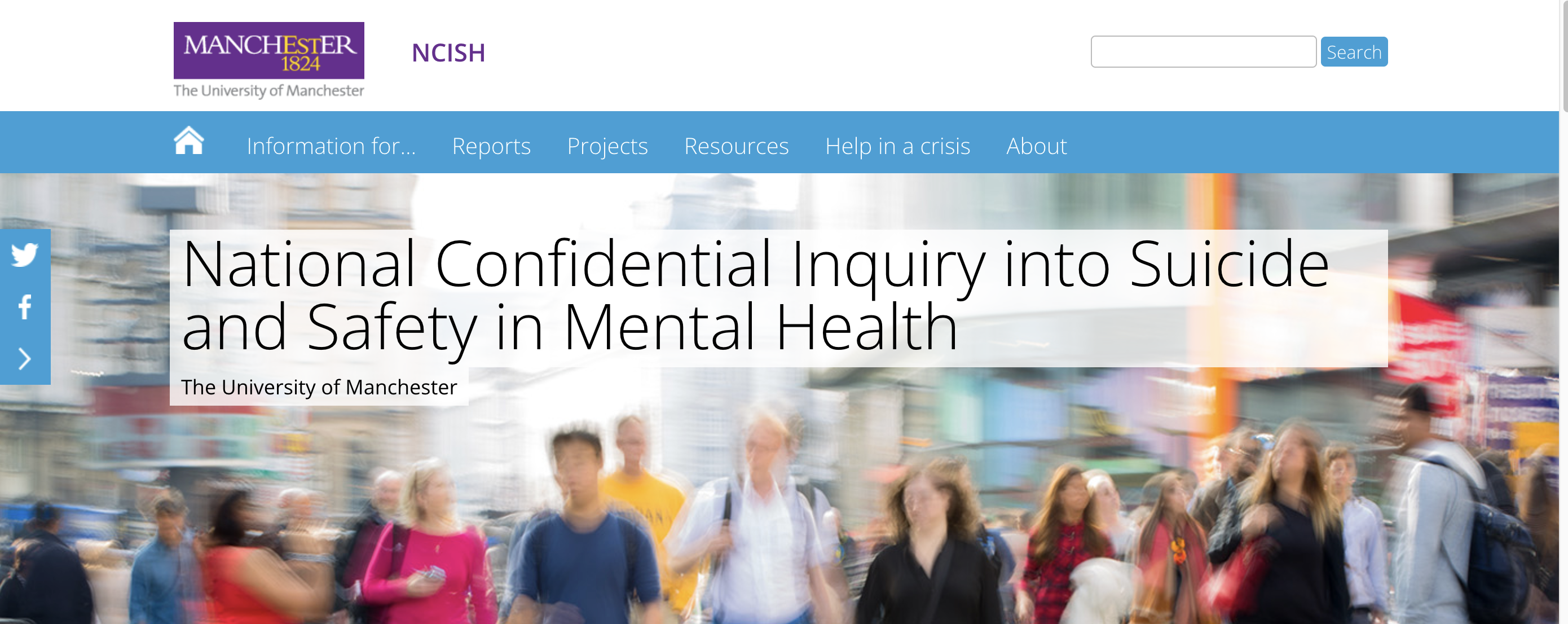
In the live Q&A at the end of the NCISH conference yesterday, this question was asked of the panel. The Chairperson directed it towards me. I can’t remember what I said. This morning I woke up with what I would have liked to say.
For wrapping, we need two things. One, the fabric which we are going to use to wrap and the person we want to wrap. Let’s discuss them one by one.
The fabric
The fabric of Suicide prevention in Health-Care is made up of two things – people and systems. Let’s look at them a bit closely.
People
What are the beliefs of the people?
I know of an ENT surgeon from another country who wanted to move to the UK and the only job he could find was in Psychiatry. So, he is now training to be a Psychiatrist. Is he interested in suicide prevention? Do Health-care professionals believe that suicides are preventable? Are they content that simply by treating mental illness they are doing their job?
What are the attitudes and abilities of the people?
When the Emergency department calls to say there is a suicidal individual waiting to be seen, how do they feel? Are they excited to have an opportunity to make a difference? Or is it a drain on the limited time and energy they have? Do they know how to build a compassionate connection with someone who has lost all hope? Have they received any training in Suicide Prevention? Do they have enough self-compassion to look after someone else well?
Do they have the resources and the knowledge to do a good job?
Do they have access to their past history? Do they have beds on the ward? Can they ask a colleague for a second opinion if they have a doubt about how to involve family or friends in their care? Do they know of other resources, like charities, activities and people that may help this person? Do they have comprehensive and informative leaflet they can share with them? Do they have the means to follow them up?
b. Systems
Does the system have capacity? Are the various parts of the system effective and joint-up enough to be able to hold the person they are trying to wrap or are there big holes in this part of the fabric? Do the various parts of the system share the same mental model, a shared knowledge, pre-suppositions, and beliefs that can be used to help achieve mutual goals? Are their practices evidence- based? Do they investigate deaths with a view to learn lessons and implement change? Do they look after the well-being and emotional health of their employees? Do they hold themselves accountable when things go wrong?
2. The person
Allowing space for them to express themselves. Help maintain their sense of agency. Inform them it is safer for them to involve other people who care for them. Equip them with resources. Give them the support they need. Ask them what would help them? Listen. Sit with their despair. Acknowledge it. Keep them connected with their life as they know it. Keep hope alive for them.
Know that the person at the centre of the wrapping is of great value.
Information is useful if it becomes knowledge. Knowledge is useful when it becomes wisdom. So, let us not stop at information.


 kidsaregifts