Day 651

Scan 12

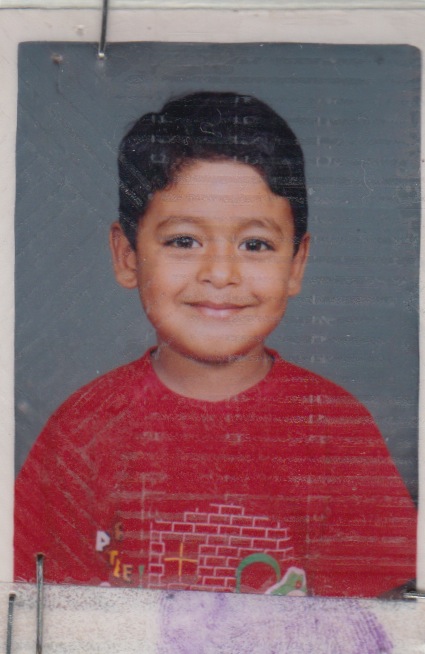
A face

A face or a mask?
Which one tells the truth I ask.
What schemes and works on the inside?
How much is revealed and how much we hide?
How much can the naked eye see?
What proportion of reality?

A soothing whisper to my soul.
His face makes me feel whole.
Deepens the cracks of my heartbreak.
Bringing back the crazy crippling ache.
A face I see with my eyes closed.
Trying to stay clam and composed.

Teaming crowds on the street
That’s the one my eyes thirst to meet
With open arms, come to me and greet
And carry me off my feet.
But the face is invisible
The presence just beyond reach- nearly imperceptible.

What lay behind those expressions?
Those funny faces and exaggerations?
That face could light up the darkest of spaces
How did it miss all the safe places?
Why could I not look behind the mask?
Being his Mum, it couldn’t have been that tricky a task.

Now the face is the screensaver on my phone,
It’s my watch, my diary and my home.
I live in it and it lives in me in every way.
It’s my umbrella on a rainy day.
It is the constant that helps me maintain
The will to sing and dance in the rain.

Day 650

A brain surgeon, Paul Kalanithi got diagnosed with terminal lung cancer at the age of 36. Suddenly he found himself on the other side of the table. He wrote a ‘rattling, heartbreaking, beautiful’ book about his life as a doctor and then as a patient before he died. It is called “When breath becomes air’. In it he tactfully dissects the walls that exist between doctors and patients. Having found myself on either side of the table – first as a physician and then as the mother of a severely ill child, I can completely relate with this excerpt below.

“The reason doctors don’t give patients specific prognoses is not merely because they cannot. Certainly, if a patient’s expectations are way out of the bounds of probability – someone expecting to live to 130, say, or someone thinking his benign skin spots are signs of imminent death – doctors are entrusted to bring that person’s expectations into the realm of reasonable possibility. What patients seek is not scientific knowledge that doctors hide but existential authenticity each person must find his or her own. Getting too deeply into statistics is like trying to quench a thirst with salty water. The angst of facing mortality has no remedy in probability.”

“I had to face my mortality and try to understand what made my life worth living and I needed Emma’s (my doctor’s) help to do so. Torn between being a doctor and being a patient, delving into medical science and turning back to literature for answers, I struggled, while facing my own death to rebuild my own life – or perhaps find a new one.”

I cannot imagine what one’s options would be when diagnosed with a severe/ terminal mental illness. Saagar was unable to access his own life as he knew it and perhaps chose to find a new one.

Day 647

”No history of self harm” said the discharge summary from the Home treatment team to the GP. This sentence was one amongst many on the four page long letter.

Saagar was seen by at least 3 psychiatrists – 2 senior trainees and one Consultant and they all missed it. Did they ask him and he didn’t tell them the truth or was it an omission? The scars could easily be seen on his left forearm. They were clearly visible. Did they find the scars and questioned him about them? Did he make up a convincing story for them as he did for me? Or were they missed altogether? No one asked me about his history of self harm. He was mentally ill at the time and I don’t think I was.

At the Coroner’s inquest when this question came up, the psychiatric team said that the remark was made because Saagar never presented to the Emergency department with self-inflicted injuries. Is that a valid criterion?

Self harm is a personal and often a very private act. Given it is an important clue to the extent of a person’s emotional suffering, we as carers and professionals cannot afford to miss it.

“The only antidote to mental suffering is physical pain.”
– Karl Marx

Day 644

Impulsivity has been variously defined as behaviour without adequate thought, the tendency to act with less forethought than do most individuals of equal ability and knowledge, or a predisposition toward rapid, unplanned reactions to internal or external stimuli without regard to the negative consequences of these reactions.

Impulsivity is implicated in a number of psychiatric disorders including Mania, Personality Disorders, and Substance Use Disorders. Yet, there is significant disagreement among researchers and clinicians regarding the exact definition of impulsivity and how it should be measured.

2014 Publications Graphs

The Houston study interviewed 153 survivors of nearly-lethal suicide attempts, ages 13-34. Survivors of nearly-lethal attempts were thought to be more like suicide completers due to the medical severity of their injuries or the lethality of the methods used. They were asked: “How much time passed between the time you decided to complete suicide and when you actually attempted suicide?”

One in four deliberated for less than 5 minutes!
Nine out of ten deliberated less than a day.

1 in 4 said 5-19 minutes
1 in 4 said 20 minutes to 1 hour
1 in 6 said 2-8 hours
1 in 8 said 1 or more days

While this personality trait brings to question the predictability of some suicides, it most certainly makes a strong case for removal of means.

It appears that impulsivity does play an important but small role in suicidal behaviour. Research has demonstrated that impulsive individuals are more likely to engage in painful and provocative experiences and that these experiences appear to make them less fearful about death. Given their greater acquired capability for suicide, if these individuals go on to experience perceived burdensomeness and thwarted belongingness, they will be at high risk for death by suicide.

Day 643

IMG_0871

Today I learnt an interesting fact – statistics show that most injuries in the gym occur at the first or the last repetition of an exercise. The first, because of inadequate warming up and bracing. The last due to loosening up before time possibly because of tiredness.

Saagar attended the gym regularly. Sometimes we went there together. I would spend time on the treadmill, bike and rowing machine but he would be in the weights room. He was good. He knew his stuff and the results were visible. He would often cringe at the poor technique in weight lifting that he saw some other members of the gym practise. He was very tempted to guide them so they could save their backs, joints and posture but he held back. He taught me a few things which I remember clearly.

The other side of the coin: Saagar was a hard core carnivore. He could live on meat but the house rule was that an accompanying green leafy salad was mandatory. He mostly followed that rule but sometimes he picked up one leaf and put it in his mouth and with a crooked smile, say,”Salad done.” Rascal!

Today my gym instructor said to me,”Immaculate technique” after a set of goblet squats. I replied with a faint smile,”Good teacher.” Only I knew who I was talking about.