Day 801

There are many doctors who still believe that if a person is serious about killing themselves then there is nothing they can do. That is a myth

Feeling actively suicidal is temporary, even if someone has been feeling low, anxious or struggling to cope. The majority of people who feel suicidal do not actually want to die, they just want to stop the pain. This is why getting the right kind of support at the right time is so important.

The purely medical model of symptoms = diagnosis = medication does not work for mental illness as there are many social factors that can serve as important contributors and resources. Paying attention to the concerns of carers and empowering them with relevant information and points of professional contact is crucial.

“A large percentage of individuals who end their life by suicide have had contact with primary care around the time of their death.” Luoma et al 2002.
(https://www.ncbi.nlm.nih.gov/pubmed/12042175)

Suicide is the single biggest killer of young people in the UK. Unless Human factors training and Suicide Prevention Training is made mandatory for all frontline medical staff, just like CPR training is, we will continue to silently loose thousands of beautiful people through suicide year after year.

I dedicate this plea to the memory of my darling son Saagar Naresh who would have been 23 this year. RIP my love.

Ref: http://www.samaritans.org/how-we-can-help-you/myths-about-suicide

Day 790

Home is so sad

Home is so sad. It stays as it was left,
Shaped to the comfort of the last to go
As if to win them back. Instead, bereft
Of anyone to please, it withers so,
Having no heart to put aside the theft

And turn again to what it started as,
A joyous shot at how things ought to be,
Long fallen wide. You can see how it was:
Look at the pictures and the cutlery.
The music in the piano stool. That vase.

  • by Philip Larkin

Here is a link to the video recordings of presentations made at a Suicide Prevention conference in Belfast, Northern Ireland on 17th November 2016. Stories of triumphs, visions, ideas and tragedies. All worth watching. The 10th one tells the story of Saagar and my sad home.

https://contactni.com/Contact-Conference-2016-Suicide-Prevention-What-Works.php

Day 780

Money alone will not solve the problems within Mental Health Care Systems. We need a radical shift in the understanding, training, outlook and organisation of our society as a whole, each individual and  every health service and professional. Paul Kirby writes about this comprehensively and optimistically. He points out failings and offers transformational solutions. Here are some excerpts:

“The medicalisation of mental health assumes that doctors can solve medical problems on their own, in the way that they do for physical illness with biomedical testing, drugs and surgery. That is rarely true in mental health where getting better relies significantly on the patient’s own therapeutic actions and their interaction with their friends, family and colleagues. Outpatient psychiatric care rarely works with the other people in the patient’s life, dealing with the patient one-to-one. Worse still, medical ethics prevent doctors discussing their adult patients, even vulnerable eighteen year olds, with their family and friends.

England, like other countries, has only ten per cent of the inpatient places, per head of population, that it had in the 1950s. The US has even less. It wasn’t just the asylums closing. England has halved the number of inpatient places it still had in 1998. Community-based crisis services have not worked well. Only fourteen per cent of English patients who’ve experienced a mental health crisis felt they had appropriate care and there are no English community services rated as good. In the absence of appropriate inpatient care, people who are severely ill are labelled, and dealt with, as non-medical problems, as criminals, as homeless, as addicts, as a public nuisance and as suicides.”

Doctors tell people that anti-depressants have a positive effect on half of the people who take them. That is true, but misleading. Even drug companies only claim that their drugs have a positive impact on one in eight people who take them. Drug companies are also clear that the beneficial effects of the drugs take two to six months to kick-in. Without medication, a third of people with depression are better after three months and two-thirds are better after six months. For the people who do benefit, these drugs are probably best compared to a band-aid, increasing the natural healing process a little.

A minority appear to be greatly harmed by taking anti-depressants, with a doubling of the suicide rate for people with depression and the triggering of psychosis in significant numbers of people. But the biggest harm of the anti-depressant accident is that their domination of psychiatric care has crowded out better and more varied solutions to common disorders and left millions unable to get well again.

Mental illness and poor health are often based on underlying feelings that one has lost autonomy and/or community-connectedness, experienced as helplessness, hopelessness, passivity, boredom, fear, isolation and dehumanisation. These are social problems that have medical consequences. The best solutions are, often, therefore social rather than medical. In terms of physical health, many of the biggest achievements have come from non-medical solutions. We live longer and better in large part due to clean air, safe water, better vehicle and workplace safety, less tobacco smoking, more and better food, fluoridated water. We need a similar public health approach for the social causes of mental health issues.”

Ref: https://paulkirby.net/

Day 762

Bone doctors can sometimes forget  there is a heart and a mind attached to the bone being fixed. Orthopaedic surgeons are the butt of many jokes for some unknown reason. They think it is because everyone is envious of the vast amounts of money they make and of course, they would like to think that.

What do you call two orthopaedic surgeons looking at a chest X-ray?
A double blind study.

What’s the difference between a carpenter and an orthopaedic surgeon?
A carpenter knows more than one antibiotic.

How do you hide a 20 pound note from an orthopaedic surgeon?
Put it in a textbook.

They are not what they are made out to be. Mostly. 😉

I am lucky to work with some funny, gentle and bright orthopods. One of them has changed from a purely professional colleague to a friend through the last 2 years. Yesterday, I shared with him my frustration over any meaningful improvement in the awareness of mental health issues within the medical community and beyond. I feel as if nothing has changed and no lessons have been learnt from Saagar’s death. Many others like him continue to suffer in silence. I feel that I go on banging my head against the walls completely in vain.

He wrote back:
“Saagar, has somehow had a profound effect on me, even though I never met him.

I have a young woman whose humerus I plated last week, and in clinic yesterday I could see her whole life starting to come unravelled: can’t exercise yet, not at work, not concentrating. All the things she used to give her self-worth are not available. Not despair, but the beginnings. So we talked about the dangers, and she agreed to see our psychologist.

You and Saagar have made that change in me, so keep doing what you do: it works.”

Day 760

cover-jpg-rendition-460-707

4500 men end their  lives every year in the UK, 3 times more than women. Many times more self harm and attempt suicide. The highest suicide rate in 2014 was for men aged 45-49.

‘Building Modern Men’ is a series of articles published by Huffington post to mark the International Men’s Day (19th Nov). It covers a wide range of topics from male role models to inability to swim. (http://projects.huffingtonpost.co.uk/building-modern-men/) A Masculinity Audit carried out by Huff Post and CALM,looking into the causes of male suicide  found that :

  • Four out of ten males feel they lack the qualities and abilities that partners look for in a man

  • 61% of all respondents agree that men are stereotyped in the media

  • Four in ten male respondents strongly agreed that ‘women have unrealistic expectations of men’

(Ref: http://www.huffingtonpost.co.uk/entry/mens-mental-health-building-modern-men_uk_58206805e4b0c2e24ab022fb?utm_hp_ref=uk)

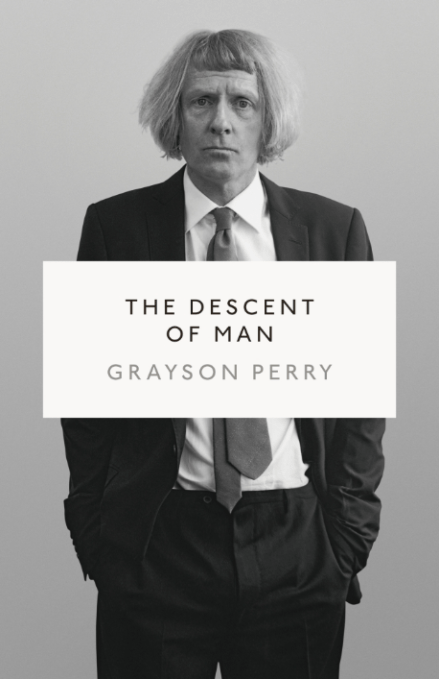
‘For many, masculinity is a fatal burden’ says Grayson Perry on why old-school masculinity is man’s greatest enemy. The 56 years old transvestite artist has always seen masculinity as a choice. He has questioned his gender identity since the age of 12. He believes that his transvestism permits him a greater distance and sharper insight into the layers of manhood that he talks about in his new book ‘The Descent of Man’.
He believes that the traditional approach of ‘stiff upper lip’ is completely out dated. It renders men emotionally illiterate and unable to form healthy relationships. It leaves them very fragile yet unwilling to express their vulnerability, a lethal combination when it comes to mental health. The inflexibility of traditional masculinity doesn’t fit in the present times of change and diversity. That masculinity comes from an age of heavy industry and farming and it doesn’t work anymore.

‘We need to think of masculinity like a piece of equipment. Some men, like soldiers, need to use it all the time, others might need it at the weekend and others not at all.’