Dat 626

Twenty-two years ago a 37 years old journalist Mike McIntyre felt his life was quickly passing him by. So one day he hit the road to trek from one end of the USA to the other with just the clothes on his back and not a single penny in his pocket. Through his travels, he found varying degrees of kindness in strangers from all walks of life and discovered more about people, values and life on the road in America than he’d ever thought possible. The gifts of food and shelter he received along the way were outweighed only by the touching gifts of the heart – the willingness of many he met to welcome a lonely stranger into their homes…and the discovery that sometimes those who give the most are the ones with the least to spare. He wrote an insightful book called ‘Kindness of Strangers’ based on his travel experiences.

The rail industry in the UK is piloting a new on-line service called Rail505. It empowers rail users to identify individuals on railway platforms who might be at risk of harm and provide them with resources to get help for these individuals. They have four 15 second you-tube clips on their website (Rail505.com) that are recordings from a CCTV camera. They are titled – shoes, bridge, sign and bench. Each of them is subtle and educative at the same time. Even if we think we can’t do much to help, there is always something we can do. Trust your instincts, says the website. The signs that someone is at risk from harm aren’t always obvious, but we all know when something doesn’t feel right.

“There was a time in this country when you were a jerk if you passed somebody in need. Now you’re a fool for helping. Gangs, drugs, murderers, rapists, thieves, carjackers. Why risk it? I Don’t Want to Get Involved has become a national motto.” – Mike McIntyre.

Time to talk. Time to change.


Day 589

Ruth was 47. She lived with Bipolar Disorder for 20 years. For all those years her mother looked after Ruth and volunteered for a Mental Health charity. The week after Ruth’s death, her mother rang the Charity with the bad news of her suicide. She didn’t receive as much as an e-mail of sympathy from them.

Saagar was under the care of our GP (General Physician/Family doctor). I didn’t hear anything from him after Saagar’s death. At the Coroner’s inquest the GP said that he had been advised against calling me by the Medical Defense Union (MDU). They claim to be ‘on your side’ and give ‘expert guidance and support’. It goes to show that on hearing of Saagar’s death the first phone call the GP made was to the MDU. The advise he got given was medico-legal in nature and that is what he was looking for. Interesting! Isn’t it?

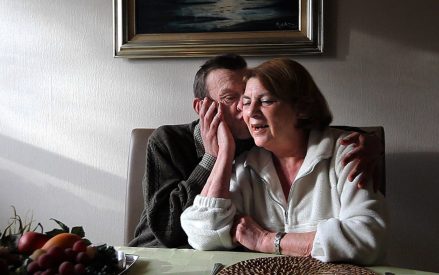
I had the honour of meeting Ruth’s mum today. We could see so many similarities in Saagar and Ruth. Both adorable, affectionate, creative  and kind. I was her mirror and she mine. The bond we felt was very special. She let me try on Ruth’s sun-glasses. She thought they looked great on me and I do too. She let me have them. In that moment, I felt exactly how she must have felt – deep pain tinged with a tiny drop of relief; deep loss with a sense of peace. RIP Ruth.

Here’s a poem I found on the Order of Service for Ruth’s funeral:

Afterglow

I’d like the memory of me to be a happy one.
I’d like to leave an afterglow of smiles
When life is done.
I’d like to leave an echo whispering softly down the ways
Of happy times, bright and sunny days.
I’d like the tears of those who grieve,
To dry before the sun.
Of happy memories that I leave when my life is done.

-By Helen Lowne Marshall

Day 579

header_Geel-by-Gary-Porter

Hospitals can sometimes be a problem rather than a solution.  They cannot provide the collaborative information sharing needed to care for today’s typical patients who may have multiple problems. This is especially true for the elderly and the mentally ill. Royal College of Physicians has proposed the concept of “hospital without walls” which aims at providing continuity of care for patients, coordinated and delivered by a single consultant-led clinical team. The hospital ceases to be “somewhere”. It becomes everywhere.

The little market town of Geel  in Belgium is well known for its early de-medicalisation of care of the mentally ill. For at least 7 centuries, it’s inhabitants have been taking the mentally ill or disabled into their homes as ‘guests’ or ‘boarders’. These are people who, whatever their diagnosis, have come here because they’re unable to cope on their own, and because they have no family or friends who can look after them. When they meet their new families there is no clinical diagnosis. During the Renaissance, Geel became famous as a place of sanctuary for the ‘mad’, who arrived and stayed for reasons both spiritual and opportunistic.

A boarder is treated as a member of the family, involved in everything and particularly encouraged to form a strong bond with the children, a relationship that is seen as beneficial to both parties. They call it ‘family care’, possibly the best form of therapy. Often the boarder lives with the family till they die, first as a child, then a sibling and later on as an uncle or aunt. Doesn’t that fulfil a basic human need of relatedness with other beings? The tradition still exists albeit to a limited extent due to faster paced city life, fewer farms and more double income families. However, the main reason for its longevity is not just tolerance, but pride. “Half of Geel is crazy, and the rest is half crazy,” runs a local joke.

Today, in London we aim to provide ‘Community Care’ in the absence of a community and no understanding of the word ‘care’. It’s obviously not working because the basic values on which it is based are wrong ie. cost saving.

We, the people need to educate ourselves, open our hearts and develop a deeper understanding of our human condition.

To kick off the Mental Health Awareness week, here are a couple of attempts on my part:

18 Months on…

Podcast from Croydon Radio


Day 578

image

This is the question : How can we Re-create Psychiatry?

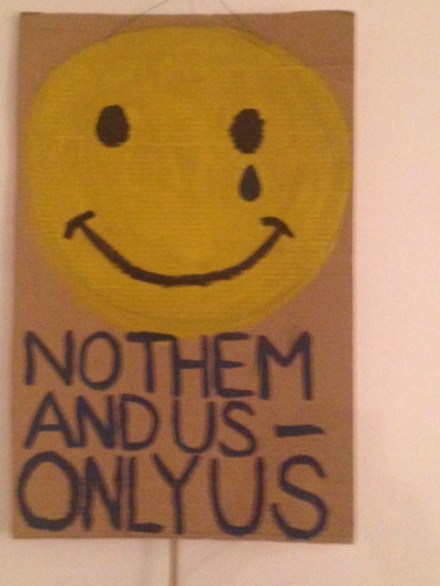
How can we break down the“us” versus “them” approach?

How can we stop ourselves from putting people into neat little labelled boxes rather than perceiving each one as a unique individual with their own unique story and experience?

How can we communicate in a way where we respect boundaries but do not create barriers? How can we truly listen in a way that we can put ourselves in someone else’s shoes?

There is a hierarchy in knowledge. Intellectual knowledge is considered superior to emotional or experiential knowledge, which in turn is rated higher than seemingly irrational knowledge, which could come from ‘patients’ with seemingly little insight. Who makes these decisions? How come the power balance between psychiatrists(intellectual/clinical) and patients(experiential/seemingly irrational) is so extremely warped? Does looking at people through templates give us any idea of who they truly are?

The Open Dialogue approach is a philosophical/theoretical approach to people experiencing a mental health crisis and their families/networks, and a system of care, developed in Western Lapland in Finland over the last 25-30 years. In the 1980s psychiatric services in Western Lapland were in a poor state, in fact they had one of the worst incidences of ‘schizophrenia’ in Europe. Now they have the best documented outcomes in the Western World. For example, around 75% of those experiencing psychosis have returned to work or study within 2 years and only around 20% are still taking antipsychotic medication.

Working with families and social networks, as much as possible in their own homes, Open Dialogue teams work to help those involved in a crisis situation to be together and to engage in dialogue. It has been their experience that if the family/team can bear the extreme emotion in a crisis situation, and tolerate the uncertainty, in time shared meaning usually emerges and healing is possible.

This Open Dialogue training launches in London next month.


Day 576

Uncertainty

There is some black. There is some white.
There is a lot of grey.
This is where a lot of life happens.
I didn’t know or understand this when I was young but as I get older, I see it.

Grey area means – Indeterminate territory, undefined position, neither here nor there, halfway between the two… This term was coined in the mid 1900s. I am surprised it didn’t come about much earlier than that because uncertainty has been an essential part of life forever and will continue to be so. Forever.

John Allen Paulos says “Uncertainty is the only certainty there is, and knowing how to live with insecurity is the only security.”

While I am pretty sure this train I am on will take me home, I cannot be absolutely certain. It might break down or there may be any number of other problems. But that’s ok. I am on it now. We’ll see what happens. I shall enjoy the lovely scenery and write this piece.

Being intolerant of uncertainty is a lot like having an allergy. If I am allergic to pollen for example, what happens when exposed to even a small amount of it? I sneeze and cough, and my eyes get red and teary. When people intolerant of uncertainty are exposed to it, they also have a strong reaction. They worry and do everything they can to get away from, avoid, or eliminate the uncertainty.

Sometimes that can be a big problem as it leads to a lot of time-consuming and tiring behaviours, causing major stress and anxiety. It is possible to learn to handle uncertainty and so worth doing.

God grant me the serenity,
to accept the things I cannot change.
Courage to change the things I can,
and the wisdom to know the difference.

Living one day at a time,
enjoying one moment at a time,
accepting hardship as the pathway to peace.

Taking the world as it is,
not as I would have it.
Trusting that all things will be right if I surrender to the Universe.”

– Serenity Prayer. (Modified)