Mum’s the problem.

Recently I have met a Professor of Psychotherapy, a Consultant Psychiatrist and a GP – all parents of children lost to mental illnesses. Here’s what one mum says:

“Whenever I have seen a therapist, they have gone straight to my childhood, my up-bringing, my parents and their parents. All my behaviours and feelings seem to be explained and understood based on their behaviours, however ‘normal’, for their times. I am encouraged to think of all the ways in which they could have directly or indirectly damaged me.

By that principle, all of my child’s behaviours and feelings should be explained and understood based on the behaviours of his parents. Half of them is me. I agree. I must be part of the problem. My profession is perceived as a bigger problem. ‘High achieving Asian’ parents are assumed to put a lot of pressure on their children. So much so, the medics looking after him didn’t even need to meet me or know the quality of our relationship to be certain that my job makes me a bigger problem than most other mums. They could squarely put the blame on me and actively keep me out of the picture. I asked too many questions. I was the biggest problem. They wrote it in their notes.

However, that does not mean that I cannot be part of the solution. NICE guidelines lay out my role beautifully but do the people on ground read any of these guidelines? In my experience, not. If half of all that is written in Policies and guidelines was implemented, families could engage meaningfully in helping their kids recover.”

Screen Shot 2019-04-23 at 23.01.58

Ref: https://www.nice.org.uk/guidance/cg185/chapter/1-Recommendations#recognising-diagnosing-and-managing-bipolar-disorder-in-children-and-young-people-2

A song and a prayer.

images-1

Once upon a time I used to sing. My friends had to beg me to stop. In 1987, a whole bunch of us, medical students traveled from Ludhiana to Delhi to participate in the Annual music festival at All India Institute of Medical Sciences, called ‘Pulse’. It was just the perfect time for us to be and sing together. We belted out song after song for the entire duration of the train ride. Some onlookers were entertained and others annoyed but we were oblivious to them all. By the end of the journey, we were hoarse. I had no regrets that on the day of the competition, I sounded nothing like myself. I had had a great time.

I grew up in a house filled with music. The radio used to be on before we woke up in the morning and we followed the charts closely every friday on ‘Binaca Geet Mala’. My parents loved Hindi film music which by default is the most popular music in India. My mother has an uncanny ability to remember lyrics that I seem to have inherited. The popularity of the music of a film determines its box-office success. Our playback singers are worshiped like Gods.

Saagar found Hindi film music b-o-r-i-n-g!!! He thought it lacked imagination and the lyrics were always about romantic love. True. Yet, he accompanied me in my singing whenever I asked him. Despite the fact he didn’t know the songs, he played the drums or Djembe along to perfection. The boy had a solid sense of rhythm. After losing Saagar, I lost my songs. Some, I just couldn’t bear to listen to. Others, I could sometimes play for myself and occasionally enjoy. But singing was undoable. My tears would come tumbling in waves if I attempted it. For more than 4 years, I mostly stuck with words, Radio 4 and the random weekly music of someone else’s choice on Desert Island Discs. For the last 2 years, Si and I would dance to some of our favourites on Saturday evenings, while pottering around in the kitchen.

A few months ago, some songs came to me. They were devotional and Sufi. Initially, they came with tears of love, sorrow and gratitude. With practice, the tears learnt to hide. My friends accompanied me – Katie on viola and Rajesh on the tabla and finally, last week I gathered the confidence to sing in public after 5 years. It was an exercise in equanimity. It didn’t matter how melodious or off-key the song was, it was an offering from the heart. It was a way of loving and honouring myself, Saagar,  friends and families present and all the lovely people they had lost to suicide. It was a new beginning.

English translation of O Paalan hare

Oh, nurturing Lord, beyond description and beyond all,
Except you, we have no one
Ease our difficulties, oh God

Except you, we have no one
You are our only supporter
You are our only protector
Except you, we have no one.

It is you who has filled the moon with moonlight
The sun’s brightness is from you
The sky is content, you have given it stars
God, if you don’t adorn this life
Then who will adorn it?

Oh, nurturing Lord, beyond description and beyond all,
Except you, we have no one.

If you listen, Lord, I shall make a plea
Give patience to the sorrowful
So that they never give in to their sorrow
Provide the powerless with protection
So that the powerless can live happily.

Provide our devotion with strength.

As you are the master of the world, please hear this plea
There is darkness in our path
Shine your divine light for us.

Oh, nurturing Lord, beyond description and beyond all,
Except you, we have no one
Ease our difficulties, oh God
Except you, we have no one.

Lyricist: Javed Akhtar
Composer: A R Rahman
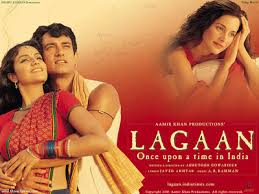
Film: Lagaan

Youtube: https://www.youtube.com/watch?v=arF8gWNFyZo

Recording: http://we.tl/t-npGeikz9QP?src=dnl

Venue: St Martin in the Fields. 9th March 2019.

Big thanks to Mary Kennedy for recording the song and to David Mosse for organising the Time to Talk service.

Gold flecks

Every day since Saagar’s death, I looked for him in my face when I looked in the mirror. I searched hard. I desperately wanted to see him. Just a hint of him. But, no. Nothing showed up. Absolutely nothing.

Last night, I hunted again and I am definite I found a hue of him in the black and golden flecks on the irises of my eyes. Just a shimmer, only visible when light fell at a particular angle. Fleeting but present. The golden flecks weren’t as bright as his. They were somewhat faded but they were certainly there. And they were his.

I smiled. Yes. He was right here.  In my eyes.

Every week day morning and every week day evening, I walk to and from the same railway station where it happened. As I walk to the station, I walk his last walk. As I walk home, I walk the path he didn’t. I send him my love and blessings at every step. He is in my mornings and evenings and in everything in between.

A new Blackbird Bakery kiosk has recently opened on Platform 1 at West Norwood station. The staff are friendly and coffee fabulous. I wish it had been there then. It makes it a happier place. I am glad it’s there now.

IMG_6322

Molly. Oh Molly!

When I look back I can clearly see we were headed this way. But once again, it has taken the shocking death of 14 years old Molly Russell, to call the big bad media companies to account. They claim to be helpful and in some ways they are but their algorithms aren’t.

A few weeks back I was researching base-ball caps for a piece of writing and now I can’t log on to the internet without someone trying to sell me one such cap. I feel like I am being hounded, sitting alone in my study. It’s all about unabashed, indiscriminate, aggressive marketing. “We’ll give you want we think you want and more”, they scream.

In the last week of January, Ian Russell shook the media world by naming and blaming Instagram directly for making a major contribution to the death of his lovely Molly, by her own hands, in November 2017. Even after she had passed, she was being sent inappropriate images and material in response to her previous search for ‘Depression’ and ‘suicide’. The heart-break was written all over him. The very next week, Instagram was hauled up by the Parliament and its CEO agreed to take responsibility for removing and monitoring harmful content. Google and Facebook are yet to follow suit.

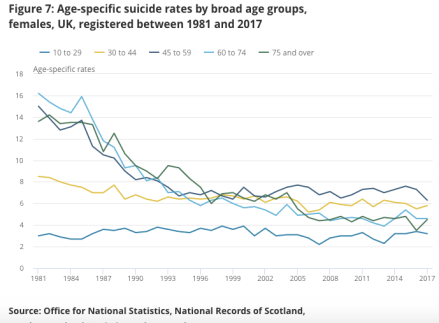
As indicated by this data from the ONS, there has been a worrying rise in female suicides, at either end of the age spectrum. The rise has been consistent in young women, 10 to 29 years of age, since 2013.

Screen Shot 2019-02-12 at 19.32.42

Last week, at the National Suicide Prevention Alliance Annual Conference, there was much discussion on the same subject. The minister for Suicide Prevention, Jackie Doyle-Price spoke briefly, trying to convince us that she would do everything she can to tackle the issue and we are watching. Like hawks.


Help? Me?

black-and-white-close-up-dark-167964

“Call for help” is the first step in Basic Life Support. At the hospital, I encourage Junior doctors to recognise early when a patient is too complex or too sick and ask for help at an early, rather than late stage.

It took six sessions of counselling to wake me up with a jolt to the fact that I needed to ask for help. Yes. I was a strong and independent woman. Yes. Very self-sufficient. Omnipotent, in my view. I offered help generously but hesitated to ask. Saagar was ill. I was looking after him the best I could while working full time. All our family was in India.  Saagar’s dad stepped in as much as he could. He worked full time too. We had no back-up. No support net-work. No community. We were muddling along till it dawned on me after 6 weekly Talking Therapy sessions of one hour each, that I could and should ask my family for help even though they were thousands of miles away.

I didn’t know it then, but it would seem I didn’t like asking for help. It made me feel weak, vulnerable and inadequate. Exposed. I don’t know why but it seemed like an admission of failure to manage my affairs. But now, Saagar was ill and we needed help.

On the night of the last session of therapy, I wrote an e-mail to all the adults on my side of the family, explaining our situation and finally, asking them for help.

One of my brothers responded. He applied for his UK Visa at once. A few days later he was told there weren’t enough blank pages in his Passport for the Visa to be stamped. He took the document back to the Passport office to get more blank pages added on. That took a few days. He then re-applied for his UK visa and finally got it a further few days later. By now 2 more weeks had passed.

In the mean time I arranged with one of my young friends, Jan to come to stay with us. Jan and his mum attended meditation lessons with me. Jan was a compassionate and enthusiastic young man who had recently lost his job and was looking for something meaningful to do. I offered him our guest room and invited him to stay with us, explaining the situation. He was excited about it. I asked Saagar how he felt about this temporary arrangement.

“It’s okay Mamma. I’ll wait for Uncle to come.”

I listened. I understood. I was tempted to push it. But I wanted to respect Saagar’s wishes. I didn’t want to take away the little control over his life that he had left.

A few days later, the visa arrived. Just in time for Saagar’s uncle to attend his funeral.

Moral of the story: Ask for help openly and EARLY.
Reminder: It takes a village …

Song: Lean on me:

https: //www.youtube.com/watch?v=qTVEIOOBD6Q