It sits on my shoulder like a monkey. Annoying. I’ve had a long day, I say. Go away.
It pulls my right ear and searches for lice scrambling all its fingertips over my scalp, irritating as hell. There are none. Get lost. I am not a child.
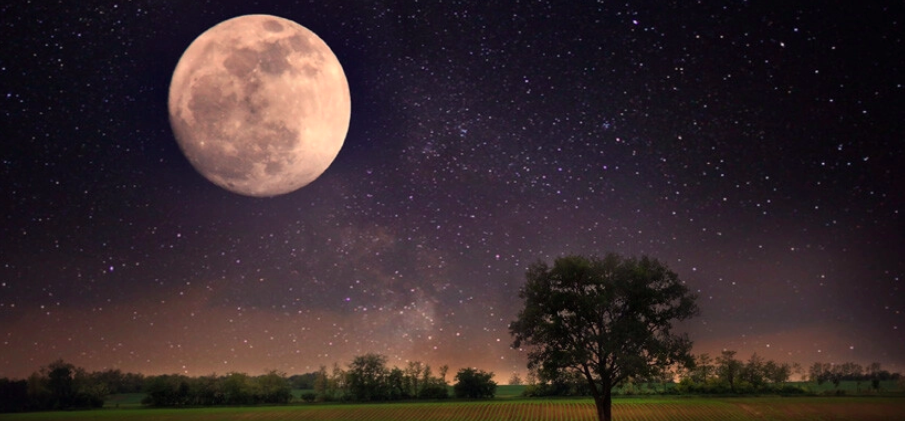
I’m losing it. The moon is winning.
Proud of its super-fullness. It is evil. The tides it excites, the fights it ignites, the way it bends minds, the resting foetuses it pulls into this cruel world, stealing sleep from the depths of the night. Milky and serene on the outside, within a serious trouble-maker resides. Hurricanes, tornados and earthquakes it invites.
You’re an imposter. I see you. A big black rough rock with nought to your name. No water. No gravity. No air. Certainly, no light. This thing you proclaim as your own is in fact not so. We all know. It belongs to the star called Sun. The one that gives life. Not you. That’s the real star. You, a mere appendage, borrowing importance, gloating in your pretend beauty, cycling and circling with poor intent.
(Pen Vogler by John Burke. BP portrait awards 2017)
With all her worldly wealth, she could not purchase belonging. Especially to herself. Her eyes thirsty for tenderness. Her muscles tense with want, her skin hungry for touch, her lips a straight line of dissatisfaction.
She hoped a painter might find her in his brush strokes and capture her on his canvas. She paid him a mountain, so he could help her find out who she might be … find out if she could meet her real self. After many hours of sitting still, with her hands clasped together in her lap, she was tired. She was tired of perfectly painting her fingernails bright red, for the painter. She couldn’t wait to see what he saw.
The day came and the painting was ready to be seen by her. Her eyes bulged out of her head, eager to find the joy she so wanted to find in herself. All she saw in the fore-ground, was a golden dress sitting beside a golden yellow lamp shade. All she saw in the back-ground, was the austerity of dark brown walls and furniture. That was the gist of it. The thing she was dying to find was not there. It was yet to be born. Those clasped hands held the secret. She knew what she had to do – unlock the door with those lovely hands and leave … for some place, white, blue and green.
Two years back, it could not be screened as scheduled. After a long wait, last weekend it was, at Clapham Picture house where Saagar often went with his friends. People came from Leicester, Salford, Cornwall, Cardiff and Birmingham. Some, I had only ever seen on screen. Others, when they were school kids. They brought their sisters, spouses, friends and colleagues. They stayed for hours afterwards, talking about themselves in a way they never had. They fell in love with Saagar’s big brown eyes and mischievous smile. They saw what a treasure had been carelessly lost. Everyone felt something. Many had no words but there was a profusion of overdue hugs all around. Many felt they knew him even though they had never met him. Some introductions were made to link up the leaders from various sectors of society so they could form stronger and safer networks.
That woman in the film was not just me. She spoke for the fifteen families in the UK, who are plunged into this harsh reality every day. More than 6500 every year.
That young man in the film was not just Saagar, but everyone who has ever blamed themselves for their troubles and felt shame for things that have happened to them, hiding behind their beautiful smiles. Unseen. Unheard. Each one who lost their tribe and couldn’t find a way back.
These were not just Saagar’s friends, but all those who are left behind, trying to figure out how this could happen to someone they loved. Wondering what they could have done then and what they can do now.
This film laments a future lost. It mourns silent suffering. It also illuminates a path that appears out of darkness. It also celebrates love and smiles. It also gives us permission to soften, lighten, loosen. It breaks open our hearts so we can hear the unspoken pain that lies behind the mask of another face and our own. It makes us one.
This is what it means to be human. Here, on this beautiful Earth, there is no other. Only us. Not us and ‘them’. Just us.
PS: International film awards: Eight.
‘1000 days’ is made by Me and Thee films for educational purposes. Hence it is not yet freely available on social media. It was screened in the ‘Lived experience’ section at Middlesbrough, for the Hartlepool and Stockton Safeguarding children’s Partnership and South Tees Safeguarding Children’s Partnership Conference on the 12th of July. It made a profound impact on roughly 350 attendees, motivating them to make individual and collective change so as to protect young lives and their happiness. Will keep you posted on the opportunities to watch it. Thank you for your love and support. Please do share any constructive ideas/ thoughts you may have for the film in the comments section.
Meeting old friends for the first time. In at least three dimensions. Sharing a physical space together, not just a bland rectangular screen. Actually holding hands.
“Gosh! You’re for real!”
The sparkling smiles of recognition mixed with disbelief. The hugs offering heart to heart resuscitation and healing. Sitting down side by side on the sofa, sharing stories, tea and cake.
A year ago, this could have been fiction but last weekend it was fact. While volunteering at a retreat for Bereaved parents hosted by The Compassionate Friends, we finally met people we’ve only ever seen on Zoom. It was held at the simple and serene Woodbrooke Centre, a Georgian manor house in Selly Oak, Birmingham with tall trees, beautiful flower beds and a family of geese perambulating the grounds, intermittently honking. It is a Quaker centre and has a poster in the main foyer which reads “Nameless helping the Nameless”.
The garden in front of the main house has a labyrinth mowed into it. Early on Saturday morning, birds were singing and the light was inviting me into the open. I decided to walk bare feet into the center of the labyrinth. I took my shoes and socks off at the edge of the circle. As soon as I started walking, it turned into an extremely mindful experience as the ground was littered with geese droppings.
The silence in that place was sweet and the views a treat. We talked about the importance of finding meaning. We shared the joys and challenges of taking the inward road. We watched a film and sang together. We wrote from our hearts and created pretty little candle holders for our kids from jam jars at the crafts table. We cried and laughed, reassured that in this company, it was completely acceptable to do both, sometimes simultaneously.
A pleasant exchange. Giving and receiving with compassion. Understanding. Belonging. Learning. Holding the utter magnificence of life in one hand and the absolute devastation in another. That’s what this game is all about, I guess.
In Delhi, it was simple and sweet. In Belfast, it was a problem. It had to be pronounced slowly with exaggerated lip movements and spelt out clearly. Still, it was uttered in all kinds of ways – Segaar, Sega, Saaga, Sags, Sagsy-wagsy. It is after all, a proper noun. “As long as you call him with love, you can call him anything.” I would say with a smile. But of course, it was his name. Not mine.
At the age of 7, one day he came home from school and said, “Can’t you change my name to Aran or something?” I felt for him but laughed. What else could I do? I asked him if something happened at school that day, if someone said something hurtful and he just picked up his soft grey elephant and cuddled it.
I told him the story of his name. I was 24 when I got married. My in-laws lived In Chennai. We visited them a few months after the wedding and one evening we all visited a place called Besant Nagar beach. That was the first time my eyes fell upon the expansive ocean. On the map this water body had the boring label, Bay of Bengal. The vision of a dark blue shimmer below meeting a pale blue glow above in a clean, delicate, straight line made everything else disappear. Its calm, its rhythm, its enormity, its subtle dance, its grace and openness pulled me in. All conversation faded away and there I was, completely soaked in the bliss of the ocean. My soul soothed. My body relaxed. My eyes quenched. My heart happy. I was in love. In that moment, I knew that if we ever had a son, he would be called, ‘Ocean’: Saagar. I reminded him that his name was Saagar because his heart was as expansive and as beautiful as the ocean. He smiled and gave me a tight hug.
As he grew older, he came to own his name. He came to live it. The waters of this ocean ran deep. They appeared placid on the surface but strong currents ran underneath. All I saw was the steady flow of gentle waves, rhythmically lapping against the shore through the seasons. It oscillated with the moon but the high tide was never too high and the low tide was never too low, until one day it was.



 kidsaregifts