Be the light.

A café on a sunny beach in Goa. Lunch with friends. Rava dosa and spicy sambar. In walks a woman of European descent, possibly a few years older than me. She sits at the table opposite us. She has two deep vertical frown lines just above either side of the bridge of her nose. They seem to be fixed in place. She orders a white coffee and waits, looking at her phone and then turning to look out of the window. Looking at her phone and turning her head towards the window. This pattern repeats. The lines stay firmly in place. I wonder why. She is obviously travelling. Wonder if she has someone with her or not. Has she made some friends here? I wonder if I should ask but it might seem strange to her and others in the eatery.

I was still debating whether I should or shouldn’t, when I saw her pay her bill and leave. I excused myself and followed her out. She walked to the right with her arms crossed across her chest and her head bent forward.

“Excuse me.” I called out. She turned around.

“Sorry to disturb you. I was in the café there. You seemed to be worried about something. Of course, it’s not my business but if there’s something you want to talk about, I have time.”

‘Oh. Thank you. Things are not great at home. Nothing too serious but I feel so far away.’

“I am sorry to hear that. Are you okay?”

‘Yes. I am okay, I think.  I have a couple of friends. We’ll meet up later and talk things over. Thank you for bringing some light into my day.’ She smiled, the frown softening.

“May I give you a hug?” I asked.

“Yes. Please.”

We had a moment, said our goodbyes. I slipped back into the café, gently sat down and blended back into the conversation.

“If everything around seems dark, look again, you may be the light.”

– Rumi.

For this new year and for ever more, I wish you be the light that you are, for others and yourself.

An Irish Legend

Most of his stories are based in small towns and villages of 1950s Ireland. He writes about the underdog: small men and hard-done-by women. He has a deep concern for sexual exiles. His writing is true to that time in history because he normalizes silence, evasion and ambiguity. His fiction reads like truth. It reminds me of the time we lived in Northern Ireland. Almost every day I was flummoxed by the response I got on asking a colleague, how they were.

“Not too bad.”

I was never sure what that meant. Were they well? Or not as well as before? Or not as unwell as before? Not as well as they could be? Bad, but not too bad? I soon came to accept that as normal. In time I came to understand it as a safe answer – not giving away too much. It was historical.

William Trevor was a genius at talking about the unknown known, of knowing and not knowing at the same time. A cognitive disjunction. A common social ailment.

Yes. Mary Louise is in a loveless marriage to an older man and everyone in their small town knows but they pretend like they don’t.

Yes. Everyone knows that Elmer is becoming an alcoholic, but they act like they don’t.

I lately read ‘Two Lives: Reading Turgenev & My House in Umbria’ – a book with two artful novellas by Trevor. Reading Turgenev was shortlisted for the Booker Prize in its time. My House in Umbria was made into a film in 2003, available on YouTube. I haven’t watched it but apparently Maggie Smith is brilliant and the end has been changed for Hollywood.

For me, the protagonists of both these stories exemplify how hidden and unacknowledged grief can escort one to the thin red line between sanity and insanity. Both women are poorly understood even by people who claim to love them, their coping labelled as unacceptable, erratic and bonkers. Judged, condemned and outcast for simply managing their losses. Punished for somehow managing their loss. And finally, put away.

What’s in it for me?

When we moved from the frantic chaos of London to the quiet serenity of Sakleshpura, we didn’t have much to do. We didn’t speak the local language, had no local friends or family and no real work. I offered to start volunteering as a Spoken English teacher at two local primary schools for an hour per week each. They didn’t ask me for a DBS certificate or for any evidence of appropriate qualifications. Not sure I am qualified, but I was sure we would have fun.

Within a few weeks of starting, my students would smile and wave at me if they spotted me in the market. Some of the older ones would offer to carry my bags. Kushil is seven. His uncle told me that he shampooed his head twice on the morning of the class as he knew I would kiss him on the head. He is one of 5 students at one of the tiny schools in a tiny local village.

I bought hairclips for the girls from ‘Accessorize’. Kavya wore them on the very next occasion she knew she’d see me.

Tanushree lives near one of my new-found friend’s houses. She stood by the roadside when she saw my car coming. I stopped the car and lowered the window. “Miss, books.” She said. I sent her a few age-appropriate story books by Indian authors to read, strictly on returnable basis.

Praapti presented me with a lovely little handmade Diwali card which I did not expect. Such joy! She also enclosed two pens in the envelope – one with dots and the other with bunnies, one writes in blue and the other in black.

After the class we walked to our farm nearby and played with cows and dogs, ate laddoos and fed peanuts to the birds.

Some of the locals cannot fathom why I teach the kids for free. What’s in it for me?

(Resource: Health benefits of volunteering: https://www.mayoclinichealthsystem.org/hometown-health/speaking-of-health/3-health-benefits-of-volunteering)

The day is the day.

(Credit:: Saagar Naresh. Age 12. Art Homework.)

It’s an ordinary day that starts as the sun peeps from somewhere behind the horizon and ends as it vanishes somewhere behind another at different times for different people on the globe scattered all over these continents everywhere. It is not a singular day as it claims to be.

It’s not my enemy and yet it circles around each year as a reminder of what happened as if I need reminding. It’s not my enemy even though it feels like one. It’s just another day, innocent and ignorant, asking me to sit down. Have another cup of tea.

It was nameless and inconspicuous until it arrived hiding a deep darkness within its light wearing the face of a sacred place and a robe of expansion and growth and holding a promise of transformation before I knew what that meant, unlocking the path to an invisible destination.

This endless path covered in thorns and nettles with no alternative or detour must be trodden with bare feet. It is essential they bleed.

To my desperate open eyes the destination remains invisible. When I let them close I glean a faint ray of hope.

Comings and goings.

As usual, I sit here at my table by the window of my study, admiring the autumnal trees standing in the park across the road, looking for inspiration to write. They have been my encouraging companions for years. The difference is that today might be the last time I write sitting here.

Early autumn has cycled back again. The fullness of the moon has synchronized with the one eleven years ago. The comings and goings of the seasons, of the world carry on as usual. Moving away from this home to live elsewhere was unthinkable at one time. But now, the heart has settled. It knows things it did not before. It carries a treasure of love and memories. Saagar lives in this heart now. He cannot be left behind. He is with me everywhere.

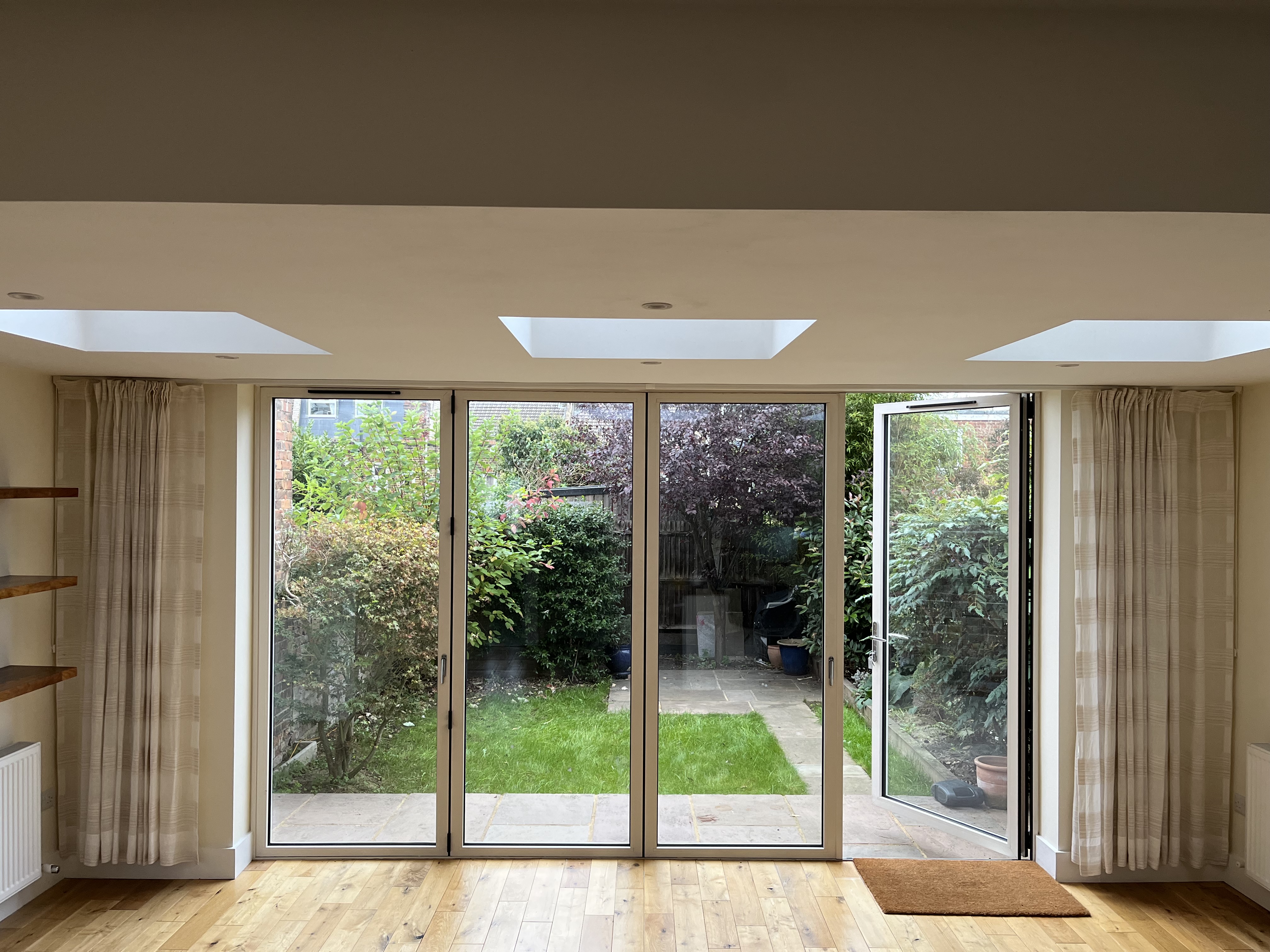
This, our home is ‘under offer’ now. A young couple wants to buy it for the same reasons we did twenty years ago. A quiet street. A diverse neighborhood. A garden. Parks and good schools nearby. Last few days of packing up have been intense. Things that have surfaced from deep recesses – a handheld Nintendo Gameboy carefully wrapped in its purple case, a proper Canon camera, one black sock with TUESDAY on it in yellow bunched together with another with SATURDAY printed on it in green.

I know not to trust my memory. It often fails me. It misremembers things, puts them in the wrong order. Omits some entirely. It plays tricks, causes confusion. Forgets what I want to hold on to and remembers what I’d rather forget. Luckily, the job of the heart does not include remembering but feeling – how it feels to sit here looking out the window and then at a blank page, to fold a much-loved photo in silk and cover it in more soft clothing, to look at an empty room and see it filled with light, to know it’s okay. I can trust this thing in the center of my chest. It’s all okay.