We all are Sakura.

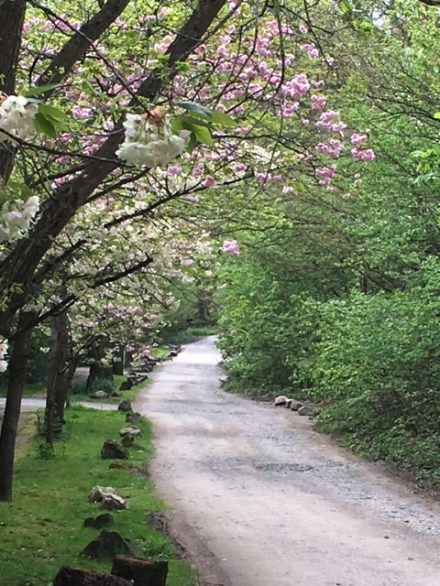
After a long, harsh and adamant winter, the hope and light of spring is here. The former is still lurking around the corner, waiting to jump back when it can. But for now, it’s hiding. Pink and white clouds of blossom hover a few feet above the ground.
IMG_6355

For centuries cherry-blossom or sakura has lived in the hearts of and ignited the spirit of the Japanese people. They wait for this time of year as the blossom signifies beauty and celebration. Its delicate pinkness stands for innocence and fragility. Families get together ceremoniously to marvel at this spring-time bloom. This occasion of watching and admiring of the blossom is called Hanami.

These feathery pink  flowers have inspired much of Japanese painting, poetry, film, music, food, textile design, ceramics and other art forms. In addition to being exquisite to look at, they carry a deep philosophical meaning. They are a timeless metaphor for human life. While this blooming season is intoxicatingly brilliant, it is tragically short. It  reminds us of the splendour and brevity of our own lives. It encourages us to appreciate our time on earth with the same joy and passion as we do the blossoms. It awakens our senses and forces us to pay attention – notice the present moment, welcome what’s to come, honour what has passed, acknowledge the transient nature of everything and hold ourselves in a stance of grace and gratitude.

The samurai embodied this combination of beauty and mortality. They appreciated the inevitability of death without fearing it. A fallen petal or blossom is said to symbolise the end of their short lives.

Sakura also indicates renewal. In Japan, this is the month in which the school, calendar and fiscal year start.  Aside from deep historical, religious and cultural significance, it also has connotations of agricultural optimism.

Beautiful, fragile and transient – that is us.


Day 980

Japanese Floral Art

In ancient Japan it was believed that God lived in the evergreens. That is why they used it as the tallest and the main component of their flower arrangements. God was the invisible line that passes vertically through the centre of the arrangements. So said a senior faculty of Ikebana, Prof. Kurata at his lecture/demonstration this morning.

GodTraditional Ike

Three hours of his talk equalled a year’s worth of learning. He went on to show how nature outdoors is depicted through flowers, leaves and stems indoors. This bamboo vase represents a cliff side and the alcove within it denotes a cave from where plants are emerging towards light, the spectator. Pictures don’t do any justice to the space and the movement created by the study.

Cliffhanger

IMG_0738

He spoke of beauty. When hidden, it carries intrigue. When hidden, it allows for imagination to flow. When hidden, it can be the most beautiful thing in the world. This is an example.

The Veil

IMG_0741

The shape of the container and the simplicity of the materials combine to create elegance.

Who? Me?

IMG_0745

Rikka is a form that captures a landscape. Each part of it signifies something, like receiving, flowing, supporting and carrying. It has mountains and rivers within it. Find them if you can.

Tatiana

IMG_0747

Clever use of angular shapes and bright contrasting colours to create an uplifting happy slanting mood.

I swear diagonally, Bro.

IMG_0748

The world is sort of round and so is this. Rounds within rounds. Wheels within wheels. Keeping to the theme. Cheerful asymmetry.

Must be Spring

IMG_0750

This last one was for the youngest member of the audience, a 3 year old girl. Playful bobbles and wires hanging out happily with an orchid in a blue bottle of gel balls.

Smile!

IMG_0749

Wonderful to see a true genius at work! It’s calming working with flowers, stems, branches, leaves, berries and grasses. Being with nature. Breathing. Learning. Smelling in the subtleness. Letting the imagination flow. Allowing the Self to heal. Letting go. Dissolving.

Day 934

IMG_0701

Rikka

The custom of placing flowers on an alter is an ancient one. In the sixth century, Ikebana was founded in Kyoto as an offering to the Goddess of Mercy. Flower arranging contests were held at the imperial court where aristocrats and monks competed with each other at festivals.

In the early 16th century people tried to give a deeper meaning to the thoughts accompanying flower arranging. They wished to arrange rather than casually placing them in a vase. An earlier attitude of passive appreciation developed into a more deeply considered approach.

Rikka is the oldest style of Ikebana. Trees symbolise mountains while grasses and flowers suggest water. A natural landscape is expressed in a single vase. Indeed, all things in nature are reflected. In Rikka it is important to know the laws of nature through harmony of trees and plants.

It is my good fortune that I have the opportunity to be very intimate with Mother Nature in this concrete jungle of London. I have a teacher who is dedicated to passing this ancient tradition on to future generations. Her school has generated a number of teachers who inspire many people like me. Arranging flowers is like meditation in motion. The right brain can express itself to the fullest. The intuitive decision making, the textures, smells and colours of materials, the elegant shapes, the spatial organisation and the movement within bring peace and satisfaction. It is creative within a set of rules. It is aesthetically appealing to the subtle sensibilities. It is a gentle experience of being one with nature.

Maybe one day beauty will save the world.


Day 931

download

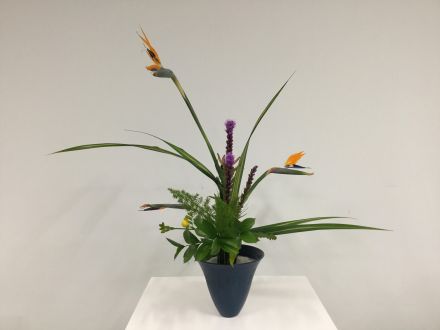
Making everything better.

Sweetest memories come from mundane everyday activities.

When Saagar and I went for our weekly shopping, he loved to take full charge of steering the trolley around. He wouldn’t want me to touch it. Sometimes I would mistakenly place a hand on it and get a glare from him. Other times I would deliberately touch the trolley with the tip of my little pinky, just to get a reaction from him. I was never disappointed. He obliged. We also had a ritual of rewarding ourselves with a chocolate éclair each, on our way home.

Soon after Day 0, I couldn’t manage to go to that supermarket without a major heart-break. I would stand in front of the bakery section and cry like a school kid with sobs and tissues and both my fists covering my eyes. It didn’t matter who was around. It didn’t matter that I made a spectacle of myself. It just happened.

Today, it didn’t happen. We went there and finished our shopping. We went to the bakery section. Si stood beside me and put his hand on my shoulder as we got our chocolate eclairs. We went to the car-park, stood in the sun and enjoyed our sweet rewards. It felt like Saagar was there. He was there in our hearts and minds.

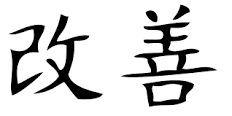
The Japanese have a word, kaizen. Kai means change and zen means good. Kaizen is based on the philosophical belief of continuous, incremental improvement. It believes that everything can be changed for the better. Nothing is ever seen as a status quo – there are continuous efforts to improve which result in small, often imperceptible, changes over time. These small changes add up to big changes over the longer term.

Getting better at getting better.