Day 901

In the USA, the number of suicides in 2014 was 42,773. Of these, deaths by firearms were 21,334. So, approximately one-half of suicides are completed by firearm, accounting for two-thirds of all firearms deaths.

In the UK, the most common method used in the United Kingdom is hanging. Suicide using firearms accounts for only a very small fraction, possibly due to tight gun control. Only 4% of households in the UK possess them. Self poisoning and overdosing are the common methods used by women.

Removal of methods is one of the basic strategies for suicide prevention.

Details of suicide methods in the media have been shown to prompt vulnerable individuals to imitate suicidal behaviour. With this in mind, Samaritans recommend these media guidelines:

Avoid giving too much detail.
While saying someone hanged themselves or took an overdose is acceptable, detail about the type of ligature or type and quantity of tablets used is not. Avoid any mention of the method in headlines as this inadvertently promotes and perpetuates common methods of suicide.
Extra care must be taken when reporting the facts of cases where an unusual or previously unknown method has been used. Incidences of people using unusual or new methods of suicide have been known to increase rapidly after being reported widely. Reporting may also drive people to the internet to search for more information about these methods.
Remember that there is a risk of imitational behaviour due to ‘over-identification’.
Vulnerable individuals may identify with a person who has died, or with the circumstances in which a person took their own life. Never say a method is quick, easy, painless or certain to result in death. Try to avoid portraying anything that is immediate or easy to imitate – especially where the ingredients or tools involved are readily available.

The Golden Gate Bridge is identified as the scene of the most suicides in the world. Today a ceremony in San Francisco launched the building of a net to prevent suicides from occurring on the bridge. Excellent leadership has led this effort. Eduardo Vega explains beautifully how this leadership has impacted the decision to move toward a prevention of suicide on this world famous landmark in this video: https://youtu.be/bUSpiGOwoMk

Ref: Media Guidelines:
http://www.samaritans.org/media-centre/media-guidelines-reporting-suicide/advice-journalists-suicide-reporting-dos-and-donts


Day 895

The New Colossus

Not like the brazen giant of Greek fame,
With conquering limbs astride from land to land;
Here at our sea-washed, sunset gates shall stand
A mighty woman with a torch, whose flame
Is the imprisoned lightning, and her name
Mother of Exiles. From her beacon-hand
Glows world-wide welcome; her mild eyes command
The air-bridged harbor that twin cities frame.
“Keep, ancient lands, your storied pomp!” cries she
With silent lips. “Give me your tired, your poor,
Your huddled masses yearning to breathe free,
The wretched refuse of your teeming shore.
Send these, the homeless, tempest-tost to me,
I lift my lamp beside the golden door!”

Emma Lazarus wrote this sonnet in 1883 in America to raise funds for the  construction of the pedestal  on which stands the Statue of Liberty.

The glorious aspiration set out in this poem seems to have been well forgotten and contorted over the years.

It appears as though humanity sits at the verge of self destruction. We refuse to learn lessons from history. All too familiar ugly realities of the past repeat themselves -demonising of a particular religious group resulting in seemingly justified atrocities against humanity, wars in the name of peace and liberty, a conviction of weapons of mass destruction/chemical weapons proven wrong, rightful nuclear assault of another country, false news and propaganda, massive unplanned military operations used as knee-jerk reactions to events in order to overthrow tyrannous regimes, complete lack of meaningful dialogue and statesmanship.

The awfulness of it!


Day 893

It was an evening of sharing Saagar’s story with a group of lovely young women. We talked about the art of listening non-judgementally. We practiced the skill and found it tricky. We noticed the strong urge to jump in with solutions and ‘fix it’. We found silent pauses awkward.

We explored the things that stop us from listening – a thousand things knocking about in our own head already, our own stress levels, fear of having to take action, fear of saying the wrong thing, I am not qualified, it’s not my job, and so on. Most of the reasons came from a judgement of ourselves or the situation.

Out of the blue, a thought ran clearly through my mind and before I knew it, I was speaking it out loud. I was reminded of a constant grievance I used to have with Saagar. I would request him to not leave utensils in the kitchen sink after use. How difficult could it be to put the dishes into the dish-washer? But, I often found dishes left in the sink. That small thing pushed my buttons. I would tell him off for being lazy and for not respecting this small request I made of him. I judged him. I couldn’t see that he was depressed.

Judgements come from the head.
Connection comes from the heart.
Harsh judgements create great distances between hearts.

I must not judge myself too harshly now. I am learning. Mindfully and heartfully.

Day 892

“Pay attention!” – I heard this thousands of times at school. Did anyone actually teach me how to pay attention? No. I did my best with whatever my understanding was.

Mindfulness seems to be the buzzword these days. And rightly so. It is about paying attention to what is. However, without ‘heartfulness’ it is incomplete. Not just ‘attention’ but ‘kind attention’. The softening of the heart is important.

The purpose of teaching mindfulness in schools is not mainly to achieve better focus and concentration in lessons but learning to recognise and express ones feelings and be respectful and considerate of other’s feelings. It is about using all our senses with intention and noticing the subtleties of our surroundings and ourselves. I learnt a new word and technique today – FOFBOC – Feet on Floor, Bum on Chair – a technique to anchor the ‘monkey mind’.

In school we were taught to get us to a point where we could make a living but we were not taught how to live. Now, children as young as 5 are being taught mindfulness and I think it is a life enhancing skill which will have a definite role in prevention and early recognition of mental ill health.

Sitting still for a few minutes is an activity and a precious one.
Mindfulness is being alive and knowing it.

Ref:

FOFBOC: http://www.dotbe.org/lessons/lesson-two/

DotBe: http://www.dotbe.org/

Mindfulness in schools Project: https://mindfulnessinschools.org/

Day 888

Dying from Inequality – Samaritans commissioned eight leading social scientists to review and extend the existing body of knowledge on socioeconomic disadvantage, ie. being poor, addressing three key questions:

  • Why is there a connection between socioeconomic disadvantage and suicidal behaviour?
  • What is it about socioeconomic disadvantage that increases the risk of suicidal behaviour?
  • What can be done about it?

A few excerpts:

Neighbourhoods that are the most deprived have worse health than those that are less deprived and this association follows a gradient: for each increase in deprivation, there is a decrease in health. Additional support for those living in deprived areas is needed to reduce geographical inequalities in health and the risk of suicidal behaviour.

Economic uncertainty, unemployment, a decline in income relative to local wages, unmanageable debt, the threat or fear of home repossessions, job insecurity and business downsizing may all increase the risk of suicidal behaviour, especially for individuals who experience socioeconomic disadvantage.

Unmanageable debt is an important risk factor for suicidal behaviour. Financial advice and support for those at risk of having unmanageable debt can help reduce the risk of mental health problems and suicidal behaviour.

Suicidal behaviour and mental health problems, such as mild-to-moderate anxiety and depression, could be reduced through labour market policy design, such as higher spending on active labour market programmes and unemployment benefits.

People living with socioeconomic disadvantage and inequalities are more likely to experience negative events during their life, such as job loss, financial difficulties, poor housing, and relationship breakdown. This can lead to negative emotions and increase the likelihood of suicidal behaviour.

Ref:

Dying from Inequality: http://www.samaritans.org/sites/default/files/kcfinder/files/Samaritans%20Dying%20from%20inequality%20report%20-%20summary.pdf

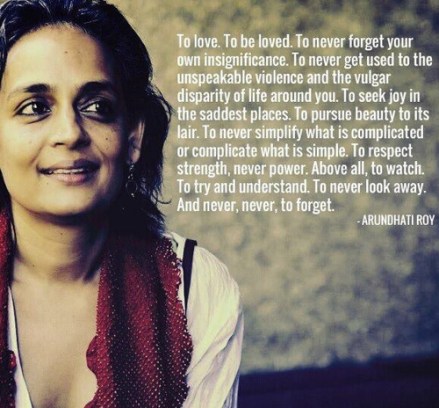
arundhati-roy_picture-quote