Needs, needs …

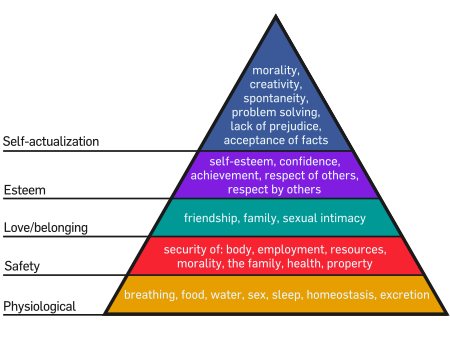
Alexander Maslow called himself a Humanistic Psychologist. He had a special interest in the relationship between the human mind and human potential. He is known by the model of human needs he proposed, Maslow’s Triangle.
450px-maslow's_hierarchy_of_needs.svg
Starting from below, the first 4 needs are classed as ‘Basic’ needs. They are essential to survival and yet, unmet for a large proportion of the world population. The order of needs is not meant to be strictly from the base to the tip of the pyramid. Many of them are of importance simultaneously. At different times, one can be more important than the other. Self-actualization is put forward as a ‘Being’ need, to connect with something beyond survival of the ‘ego’, to find self-fulfillment and help others find the same.

I read ‘morality’ as ‘authenticity’ – being aligned with my true values and self. For me it’s not about abiding by a religious doctrine or an external diktat.

When Saagar was alive, I spent most of my time in meeting our ‘basic’ needs, often sacrificing one for another. Moving away from friends and family, spending long hours at work, fighting stiff competition to move forward professionally, not making time for my hobbies, friends and relaxation, constantly chasing time, worrying about running a house-hold.

Since Saagar’s passing, I have had glimpses of ‘self-actualization’. I have been able to connect with myself and others authentically. I have a desire to know and understand the meaning of being human at a deeper level. My creativity has found expression. I have experienced transient moments of transcendence, which cannot be described in words. I have been able to appreciate beauty in flowers, leaves and poetry like never before. Retrospectively, I have been able to see that Saagar could not meet any of his needs except the most basic when he was severely depressed and that must have been crushingly painful for him.

I wish it didn’t take something so terrible, to make us see things clearly.
Inheritance of fear

The past is never dead. It’s not even past.”
– William Falkner. Requiem for a Nun.

The echoes of past traumas get subconsciously played out by us in our everyday lives. Sigmund Freud called it ‘repetition compulsion’ – an attempt of the unconscious mind to replay the unresolved so that we can ‘get it right’. This mechanism drives its way through generations. Jung also noted that whatever is too difficult to process does not fade away. It gets stored in our unconscious and finds expression in other ways. He says,” When an inner situation is not made conscious, it happens outside as fate.”

Here’s an example: Jake was 19. He hadn’t slept a full night’s sleep in more than a year. He had developed dark circles around his eyes and a blank stare in them. He looked at least 10 years older. He had been a star student and a great athlete but the insomnia had left him lifeless. This thing had no explanation and none of his doctors or psychologists or naturopaths could figure it out.

It had started with Jake waking up shivering one night at 3.30 am, frightened to death. No amount of woollen clothing warmed him up.  Soon, insomnia became a daily ordeal. Despite knowing that his fear was irrational, Jake was helpless and could not relax. The ‘freezing’ feeling associated with the first episode was quite peculiar.

On exploration of Jake’s family history, this story came out: His mum’s brother, Uncle Colin,  whom he had never met had frozen to death at the age of 19. He was checking power lines in a storm in the Northwest of Canada. He struggled to hang on but eventually fell face down in a blizzard, lost consciousness and died of hypothermia. The family never spoke his name again.

Now, thirty years later, Jake was unable to slip into sleep at the same age as his Uncle. For Colin, letting go meant death. For Jake, falling asleep must have felt the same. Once Jake could see this link, he was able to free himself of it with the help of healing techniques taught by Dr Mark Wolynn, a neuroscientist with an expertise in breaking inherited family patterns.  His book “It didn’t start with you”, describes some of these practical tools.

Scientists are now able to identify bio-markers as evidence of traumas passed down from one generation to the next. Studies on Holocaust survivors and their children have revolutionised the understanding and treatment of PTSD all over the world. Be it fear, guilt, low self-esteem or anxiety, the roots of these issues may reside in the traumas of our parents, grand-parents and even great-grandparents.


If all the world’s a stage…it has props.

downloadIn the background stands a majestic Palladian structure in brick red. It’s nearly 400 years old. The artistic roof displays beautiful finials, turrets and cupolas. It’s easy to imagine the large atria and sweeping staircases on the inside. It appears as if this building emerges from an expansive lush green sea.
The cricket nets are placed to the right of this building. Many hours have been spent here, laughing, picnicking, practising, talking, spectating and playing. Multiple recordings of his bowling action have been made here, each scrutinised to the nth degree by him. Each one distinct to his discerning eyes but all identical, to my lay ones.

In the fore-ground sits a TV screen with ‘Friends’ playing. He likes Rachel. I think she plays the role of who she is in real life. Not much acting ability required for that. He doesn’t understand that. He thinks I don’t like her. I like Phoebe. We both love ‘Smelly cat’. He watches it when he is down. I see why. However feeble, it always brings a smile to his face as it does to mine now. However predictable, it doesn’t fail to amuse, to lighten the heart. The impression of a head is clearly formed on the red velvet cushion resting at the corner of a black leather sofa.

At centre-stage, a pink and silver drum-kit sits atop a hand woven black and white Moroccan rug.  2 goblet drums wait in the wings – a Djembe and a Darbuka. A set of initialled drum-sticks read ‘SN’. Big round black bags lean against the wall. They weigh half a tonne. They encase special cymbals – presently silent but given half a chance, fully capable to raising the roof of not just our house but also that of the neighbours.

A fake snake coils on the study table with its tail realistically hanging off the edge. It has been used successfully to blow the living day-lights out of people of all ages, shapes and forms, on many occasions. It took me 2 years to immunise myself against it.

An unwieldy ragged cricket bag with wheels at one end lazes against the wall. One entire shelf in the cup-board is dedicated to cricket gloves, balls and other paraphernalia.

The sun streams in from 2 big sky-lights and the space is lit like a sanctuary. A silver Apple Mac laptop lies gaping on the study table with funny cat-videos playing. It’s connected to the dome of Harman Kardon speakers which hide under the table.  An assortment of coins, head-phones and keys splash across the dark wood table top. A few coffee mugs are scattered around the room with various shades and degrees of dry brown coffee lining the insides.

Behind the door is an overflowing willow laundry basket. A pair of union-jack boxer shorts shine through. The space smells of an unkempt temple with a male caretaker –  hints of incense, musk and testosterone. From the door hook hangs a towelled maroon dressing gown.

All the props are here, tell-tale signs of a life. Where’s the main man? At a subtle level, his absence is only physical. His essence is present.

It’s in all the props, in the air around them, in the luminosity of the room, in everyone he touched, made jokes with, played music with, was kind to and loved. In the glow in my eyes, the light in my heart. In me.

His essence is here. I only need to close my eyes. This must be immortality.

“Do you not know that a man is not dead while his name is still spoken?”                              – Terry Pratchett

(Ref: A fully referenced, peer reviewed article published in an educational, medical  journal for GPs; a case study of a young man called SN to demonstrate the importance of Suicide prevention training and the role of human factors in patient safety: http://journals.sagepub.com/doi/full/10.1177/1755738017724183.)

Day 993

Ruth

churchhealing

Broken glass

“You are well enough to safely go home now”, said the panel.
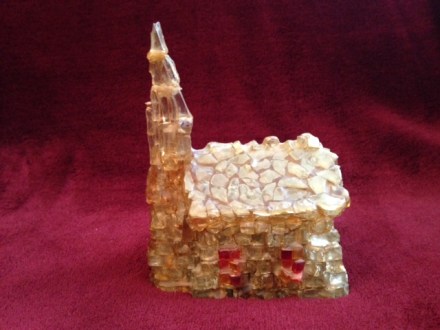
“But I can’t! I need one more day to complete my church!”, said Di, who was being treated at Bexley hospital for Postnatal Depression in 1966. She had a brilliant occupational therapist who took them to the swimming pool, organised hair-dressing days and helped patients to make things. Di made a church with bits of shattered wind-screen glass, put together with resin but the spire wasn’t on yet. This beautifully tactile piece of art was named ‘Faith’ by Ruth, her daughter.

Ruth

Ruth was a talented young lawyer. She was an actor and singer. She was kind, generous and gorgeous! She travelled extensively. She was diagnosed with Bipolar Disorder in her late 20s. She coped well with the help of health services, her friends and family but tragically lost her battle at the age of 47.

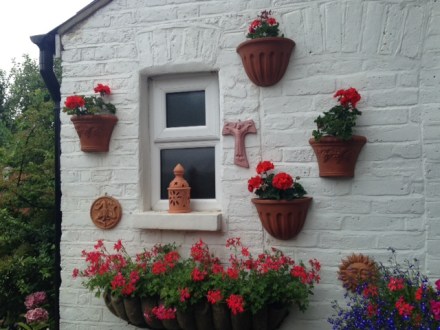
Di is in her second year of missing Ruth terribly. She has created the most beautiful garden in her memory. Some of the plants there are from Ruth’s house. Her mediterranean wall is stunning.

Mediterraneanwall

Being bereaved by suicide is a huge risk factor for suicide. Around 125 youth suicides a year occur soon after the person involved has experienced a bereavement. One in four (25%) of under-20s and 28% of 20 to 24-year-olds had lost a relative, partner, friend or acquaintance around a year or more beforehand. In 11% of suicides among under-20s, the person who those involved had lost had also taken their own life.

In a recent inquiry, bereavement was found to be an important theme in many deaths, said Prof Louis Appleby, the director.

People who have been bereaved need greater support to reduce the risk of them killing themselves. Agencies who are meant to help are not good at recognising this risk and need to improve.

This morning I caught up with Di over a cup of tea. We both believe that if Saagar and Ruth have met each other wherever they are, they must get on famously. The link below is a conversation with Di. She talks about her insights on mental health services over 5 decades. Thanks a lot Di!

Day 991

Light and day and night.

nihms2913f1

The longest day of the year is behind us.

It’s well known that lack of sunlight has an adverse effect on our brains. It might stop a part of the brain called the hypothalamus from working properly:

  • Production of melatonin – Melatonin is a hormone that makes us feel sleepy. The hypothalamus may produce it in higher than normal levels.
  • Production of serotonin – Serotonin is a hormone that affects our mood, appetite and sleep. Lack of sunlight may lead to lower serotonin levels, which is linked to feelings of depression.
  • Body’s internal clock (circadian rhythm) – Our body uses sunlight to time various important functions such as the time we wake up. So, lower light levels may disrupt our body clock, mood and alertness.

A recent study by Klaus Martiny of the Psychiatric Centre in Copenhagen shows that people being treated for severe depression were discharged almost twice as quickly if their rooms faced south-west in comparison to those whose rooms had a north-west orientation. Depending on time of the year, the intensity of daylight in the south-west rooms was 17-20 times brighter. The results support findings in previous studies of the importance of architectural orientation providing natural daylight as a factor for improvement. “We don’t know the precise mechanism, but I think it’s to do with exposure to the morning light, which advances and stabilises their sleep-wake cycle,” says Martiny.

Light acts as a powerful reset switch, keeping the clocks in our brain synced with the outside world. This clock can weaken as part of ageing, Parkinson’s disease, strokes and depression. To tackle this problem several hospitals are installing dynamic ‘solid state’ lighting which changes like daylight over the course of the day : whitish-blue in the morning, growing warmer and dimmer through the day and turning orange or switching off at night.

Light can be a drug.