Day 806

search

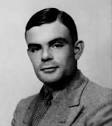
Alan Turing was a lonely, awkward boy. His only friend in school died of tuberculosis in 1928. This awful event had a formative impact on the life of this young man who went on to become a brilliant mathematician and code breaker at Bletchley Park from 1939-45. Cracking the Enigma code significantly shortened World War 2 and potentially altered its outcome. He was the first man to indicate how thinking machines might be built. He later came to be known as the father of modern computing. He was one of the most influential men of his time and we owe our freedom to him. Steve Jobs wanted his company logo of the bitten apple to be associated with Turing’s love of apples.

An accomplished runner, he also had a great interest in the paranormal. And there is Turing the composer, responsible for some of the earliest computer music recorded by the BBC in Manchester. He is described as “shy, gay, witty, grumpy, courageous, unassuming and wildly successful genius”.

In 1952, he was arrested under a homophobic law for ‘gross indecency’. The chemical castration that Turing underwent thereafter was highly unjust and disgusting. Tens of thousands of less famous men were similarly prosecuted between 1885 and 1967.

He was found by his cleaner when she came in on 8 June 1954. He had died the day before of cyanide poisoning, a half-eaten apple beside his bed. His mother believed he had accidentally ingested cyanide from his fingers after an amateur chemistry experiment, but it is more credible that he had successfully contrived his death to allow her alone to believe this. The coroner’s verdict was suicide.

These countries still punish homosexual acts by death: Saudi Arabia, Afghanistan, Nigeria, Qatar, Iran, Somalia, Yemen, Sudan, Mauritania and UAE.

World gay rights map:
https://www.washingtonpost.com/graphics/world/gay-rights/

Day 801

There are many doctors who still believe that if a person is serious about killing themselves then there is nothing they can do. That is a myth

Feeling actively suicidal is temporary, even if someone has been feeling low, anxious or struggling to cope. The majority of people who feel suicidal do not actually want to die, they just want to stop the pain. This is why getting the right kind of support at the right time is so important.

The purely medical model of symptoms = diagnosis = medication does not work for mental illness as there are many social factors that can serve as important contributors and resources. Paying attention to the concerns of carers and empowering them with relevant information and points of professional contact is crucial.

“A large percentage of individuals who end their life by suicide have had contact with primary care around the time of their death.” Luoma et al 2002.
(https://www.ncbi.nlm.nih.gov/pubmed/12042175)

Suicide is the single biggest killer of young people in the UK. Unless Human factors training and Suicide Prevention Training is made mandatory for all frontline medical staff, just like CPR training is, we will continue to silently loose thousands of beautiful people through suicide year after year.

I dedicate this plea to the memory of my darling son Saagar Naresh who would have been 23 this year. RIP my love.

Ref: http://www.samaritans.org/how-we-can-help-you/myths-about-suicide

Day 795

As I read this piece of research, I could see Saagar and me reflected in it. It rang true. It gave me a deeper understanding about myself, my humanity and the precious fragility of our closest relationships. This qualitative research by Prof Christabel Owens et al tries to understand the needs of concerned family members and friends that can better equip them to intervene when their loved one is suicidal or in distress. It focuses on micro-social systems, like families or a group of friends as opposed to macro systems like nations and societies. (http://www.bmj.com/content/343/bmj.d5801)
Microsociology is the study of thoughts, feelings, moods, behaviours and forms of language that serve to maintain or threaten bonds between individuals.

Life is lived in small units – husband and wife, mother and son, boy-friend and girl-friend and so on. This is the level at which suicidal crises unfold and are managed, very often without any help from clinical services.

Family members and friends are the real frontline of suicide prevention but little is known about what goes on in these settings. A series of narrative interviews with the next of kin of 14 young people lost by suicide were analysed : What did they see and hear? What did they think was happening? What actions did they take and why? What additional knowledge, skills and support would have been useful?

Findings:

  1. Warning signs were rarely clear at the time. For example, one dad of a 19 year old boy said,“He had a teddy bear hanging from a light cord in his bed room.” In retrospect, the signs were clear but at the time, they were offset by countersigns or were difficult to decipher, open to a range of interpretations.
  2. Significant others engaged in normalizing and legitimizing their behavior. For example, a mother of a 29 years old man said, ”A few times he rang me in the early hours of the morning absolutely piddled out of his head and he’d be gabbling on but I couldn’t understand a word he was saying because he was drunk. I’d say, “Look, I’ll come and see you tomorrow and we’ll talk about it then.” I’d go there and nothing would get said and he’d seem alright.” In almost all cases, more weight was given to countersigns. The boundaries of normality were stretched to accommodate a loved one so as to avoid ‘pathologising’ or labeling them as that may be perceived as rejection.
  3. Fear (of loss) prevented them from saying or doing anything that might have prevented tragedy. For example, the partner of a 26 years old woman said, “I was trying to find the right words to persuade her to go to the GP. It’s bloody difficult and I was afraid she’d react badly. The situation was delicate and I had an awful lot to loose. And I ended up loosing it anyway.”

The article concluded that these are highly complex decisions. Due to a deep emotional involvement, we often cannot think and act in a rational manner. These findings are now being used to devise emotionally informed suicide prevention efforts, as opposed to cognitive ones which are most commonly used. These methods will help people like you and me to acknowledge and overcome our fears and act appropriately.

So far this leaflet had emerged as a result of this study:

Click to access UoA2_leaflet.pdf

Day 790

Home is so sad

Home is so sad. It stays as it was left,
Shaped to the comfort of the last to go
As if to win them back. Instead, bereft
Of anyone to please, it withers so,
Having no heart to put aside the theft

And turn again to what it started as,
A joyous shot at how things ought to be,
Long fallen wide. You can see how it was:
Look at the pictures and the cutlery.
The music in the piano stool. That vase.

  • by Philip Larkin

Here is a link to the video recordings of presentations made at a Suicide Prevention conference in Belfast, Northern Ireland on 17th November 2016. Stories of triumphs, visions, ideas and tragedies. All worth watching. The 10th one tells the story of Saagar and my sad home.

https://contactni.com/Contact-Conference-2016-Suicide-Prevention-What-Works.php

Day 785

crisis-plan-copy

The above is an example of a highly inadequate safety/crisis plan. The one that Saagar was given. It does not mention the word ‘Suicide’.

A safety plan should include:

  • Reasons for living and reasons not to harm themselves
  • A plan to create a safe environment How they can remove or secure things they could use to harm themselves? Can they identify and avoid things that they know make them feel worse? These are called distress triggers
  • Activities to lift mood, calm or distract
  • People to talk to if distressed. Include contacts for general support (not necessarily confiding their suicidal thoughts) and specific suicide prevention support.
  • Professional support such as 24 hour crisis telephone lines
  • Emergency NHS contact details
  • Personal agreement that Safety Plan was co-produced and a commitment to follow when required

Include names and all phone numbers for people to be contacted

Bank of Hope 

A. Maximise the power of the individual not to act on their suicidal thoughts;

  • Increase wellbeing and resilience – enhance protective factors
  • Increase emotional resourcefulness and share simple problem solving techniques to better equip them to deal with their triggers for suicidal thoughts or adverse life events should they occur/continue;
  • Increase internal locus of control – ‘do not be a passive victim of suicidal thoughts’
  • Increase self-efficacy – uncover or learn the skills and techniques not to act on suicidal thoughts

 B. Reduce the power of suicidal thoughts;

  • Help patients see that suicidal thoughts don’t last forever;
  • Intense suicidal feelings are often short lived (although acknowledge that individuals may have long lasting suicidal thoughts which can still be very distressing)
  • Share examples of others who made serious and potentially lethal suicide attempts but who changed their mind immediately before or half way through and realised that they did not want to actually die, it was just that they felt so desperate and hopeless that they did not know what else to do to make those feelings go away. Their real wish was to feel better, not to actually die.
  • Reduce ‘the power’ of their suicidal thoughts, whilst acknowledging and validating the distress they can cause to the individual experiencing them;
  • Help the individual experiencing suicidal thoughts to view those thoughts as nothing more than ‘a symptom of distress’ (like having a temperature due to a viral illness), rather than some powerful magical impulse that they cannot resist.

Podcast: BMJ : https://soundcloud.com/bmjpodcasts/revisiting-the-bridge

(Source : Connecting with people: http://www.connectingwithpeople.org/)