Thank you Prime Minister.

Recently, our highly respected Prime Minister declared there was a need to treat ‘problem drug users’ with ‘compassion’ by investing in rehabilitation. In the same breath, he said that his government would  ‘wage a war’ on drugs by removing passports and driving licenses from drug-users to tackle drug-related crime. He rightly emphasized that drugs were really ‘bad for society’.

Little surprise that he said absolutely nothing about the invisible drug that is freely available in shops and restaurants and can easily be found in homes, clubs and pubs. Many of us use it everyday even though it causes severe social, financial and health damage. As good friends, family and colleagues we often encourage each other to use it, while thinking nothing of using it ourselves. Some of us go as far as taking offense, when someone declines our offer to use it. Yes, alcohol is a drug. It is a depressant, even though it can fool us into thinking and feeling otherwise. It causes more than 60 types of diseases and injuries.

[Courtesy: Science Direct : https://www.sciencedirect.com/topics/pharmacology-toxicology-and-pharmaceutical-science/ethanol-effect%5D

Alcohol use, particularly heavy use and dependence is directly associated with suicide in three ways:

(1) through its dis-inhibiting effects, it emboldens people to attempt suicide

(2) individuals with Alcohol Use Disorders are at an increased risk of suicide as compared to the population at large

(3) alcohol consumption co-relates with suicide rates, all over the world.

Thank you dear PM for giving us a chance to think about our relationship with ‘drugs’, especially at this time of year which can be difficult for some and over-festive for others.

I wish you good company, much fun and laughter now and always. May you be blessed with lots of cake.

(by Charlie Mackesy from “The Boy, the Mole, the Fox and the Horse”)

Ref: Suicidal Behaviour and Alcohol Abuse:  

https://www.ncbi.nlm.nih.gov/pmc/articles/PMC2872355/#b26-ijerph-07-01392

Two suitcases, three homes.

Diwali at home with Mum and Dad – after ages!

Nineteen months passed before I could travel again. The uncertainty in the air for all this time meant no one knew when they would see their close family that lived in far-off countries. The news relayed the horrendousness of the situation in India and the 6700 kilometers between them and me made me feel utterly powerless. I would have flown to India at least thrice in this time but I waited for it to become possible.

Then, it did. Si booked my tickets and I felt like I was flying already but coming up to the date of travel, the extra layer of bureaucracy turned me into a tight knot of nerves. This test, that certificate, the other QR code, the timing of this, the reference number of that, one on-line form to be filled on the way out and another on the way back and so on and so forth. I had 2 close friends on speed dial, one in India and the other, a frequent flyer in the UK.

Yet, in the run up to the date of departure, my antacid consumption seriously shot up. In my awful dreams, the faceless uniforms looked at my paper work and shook their heads from side to side. They sent me back home from the airport. They told me I would have to quarantine at the other end in a seedy hotel for 10 days. That would eat up more than half my holiday. I woke up in a bath of sweat.

My two suitcases were mostly packed with chocolates, cheeses, cheese-crackers, sheep’s wool, woolly jumpers, bamboo socks and other such goodies for my folks. I got on the plane at Heathrow and landed at New Delhi safely, utterly grateful to be united with all my loved ones back home. How much I take for granted!

I immersed myself in the everyday life back home- boiling milk, making chapattis, creating rangolis at Diwali, indiscriminately consuming sweets dripping in desi ghee, singing, praying, chatting and overeating at every meal. I set aside my concerns about pending jobs, deadlines for writing assignments, hacked e-mail accounts, consciously locked them away in a clanking steel Godrej cup-board.  

Yes, there was pollution and poverty. There was religious and political bigotry. There was the Right and the Left and the Middle, the Farmer’s protest, the choked Press and the Covid dictats. There was my mind, noticing that Saagar was not physically present in the room. His cousins were messing about, grandma was cooking his favourite chicken curry, Olivia Rodrigo was singing ‘Jealousy Jealousy’ on the Bose speaker, his uncles and aunts were drinking beer and chomping on roasted, salted cashew nuts, talking about the joys of driving on the new highways network and the high price of petrol. We were celebrating our togetherness but he was not here.

In that thought, he became present to me. His essence appeared in the room, as me, my presence, my noticing, my love and my longing. It was subtle, only perceptible at a certain frequency that in now accessible to me. This nameless, formless realm that makes itself known when I pay attention. My real home. Its doors always open.

Before I knew it was time to come home. My two suitcases filled with silk and cotton fabrics, saris ‘borrowed’ from my mother, home-made carrot halwa, cashews and almonds and proper Darjeeling tea.

I am back home from back home now. Rested and reconnected. Refreshed and reassured.

All is well. All is well.

Civilized. Are we?

An anthropologist, Margaret Mead was asked by a student “What do you consider the first sign of civilization to be?” He expected her to mention things like clay pots, fish-hooks and grinding stones but she replied, “A femur that had been broken and then healed. In the animal kingdom, if you break your leg, you die. You can’t run from danger, get a drink from the river or hunt for food. You are meat for prowling beasts. No animal survives a broken leg for long enough for the bone to heal. A bone that has healed indicates that someone took the time to stay with the one who fell, bound up the wound, carried the person to safety and tended the person through to recovery. Helping someone else through difficulty is where civilization starts.”

She also said that we should never doubt that a small group of thoughtful, committed, citizens can change the world. Indeed, it is the only thing that ever has.

Over the last weeks and months, there have been thousands of job-losses, much sadness caused by separation and bereavement and much suffering due to limited social contacts and falling away of normal support systems. Perhaps explaining this tweet by London Ambulance Service.

May be this is the time for us all to step up and be there for those who are affected. Sharpen our radars and pick up the subtlest signs of despair around us. However small, there is something we can all do – start a conversation, smile, share a hot coffee, offer a few coins or share information on useful resources. There will always be a reason to not do it but you are a member of a small group of thoughtful, committed, citizens who are going to change the world. Slowly. Slowly.

Resource: PAPYRUS: A charity dedicated to the prevention of young suicide: https://www.papyrus-uk.org/

Herbal life

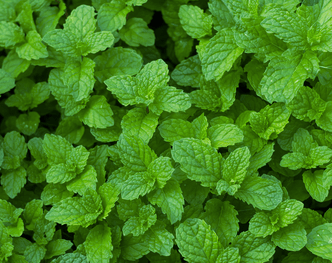
Whenever he picks mint or basil or bay leaves, he says a polite ‘thank you’ to the plants with a subtle bending of his head and all. I watch him and smile. How pointless, I think. If that’s his way, fine by me. Happy to be entertained for free by Si, the country-boy.

All the extra time at home over the last few months has meant lots of herb-pots overflowing in the garden. The relative dryness has meant lots of watering of the plants. An urbanite at heart, every two days I go around with a watering-can and make a leisure activity out of it. Slowly, select the order in which I go, pick the spots where the water drops in and carefully consider, how much.  As I tilt the can into the basil, a waft of basil-fragrance envelops me. Am I imagining this? On to the thyme, a cupful of water and the air suffused with thyme-odour. I had never noticed this before. I wasn’t convinced. I move to the lavender and pour more generously, and there it is again, filling the air. The same unmistakable gesture comes from the profuse apple-mint.

I am not imagining this. They are all saying ‘thank you’.

For the first time, I am paying attention.

Food, water, shelter and clothing.

That’s what it’s all about. Isn’t it? Our most basic needs.

For some, who were comfortable, these basics are threatened in the current climate. For some they have constantly been under threat. For the lucky ones, all is well. For now.

The fact remains that food needs to be grown by someone. Seeds need to be sown and nurtured. Given the right amount of nutrients, sun and water. Given time to mature and then harvested. Like Midas, even if everything else was made of gold, we could not eat it. Even if we put hundreds of satellites in space, we need our basic needs met.

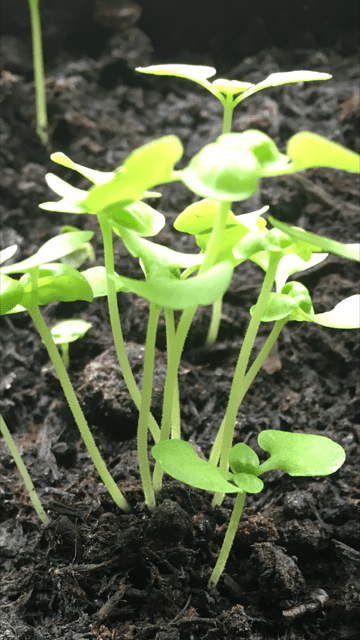
Over the past few months I have appreciated growing a few things from seed. Sunflowers, mint, coriander and sage. Not enough to keep me alive but enough to give me a smug feel of being someone who grows stuff. I have little trays laid out by the windowsill and they fill me with pride each day they reach out for the sun, a few millimeters more than yesterday. What must it be like to be a real farmer!

In India, more than 11 thousand farmers ended their lives in the year 2016. Too much rain. Too little rain. Aberrant weather. Poor quality seeds. Exploitative middle men. Illness in the family. Monsanto. Easy access to pesticides. False promises of relief measures, incentivising a farmer suicide. The government promises money but fails to deliver again and again. It then blocks articles and videos that try to make this information public.

Kheyti is an organisation that helps small farmers design and implement low-cost farming interventions. “Greenhouse-in-a-Box” is a low-cost greenhouse bundled with end-to-end services. This greenhouse fits in 2-5% of a small farmer’s land, protects crops from environmental risks and grows 7 times more food using 90% less water.

This prolonged lockdown is going to affect many individuals and small businesses. Many are starting to worry about their very basic needs. Uncertainty, insecurity and the feeling of being stuck is rising everyday. Helplines are receiving more calls. Food banks have had to expand beyond capacity. The indirect and unintended consequences of the pandemic might be worse than the direct and predicted ones. As incomes fall away, despair in our communities will rise further.

Each of us needs to think of one person we know whose income might be affected by this and call them. We need to think of one person recently bereaved and call them. Not text. Not e-mail. Phone call. Speak. Directly. Ask questions. Connect, have a chat, come up with ideas and creative answers. Signpost to resources. Reassure. Give hope. Together, figure it out.

This too will pass but before that it will test us. All of us.

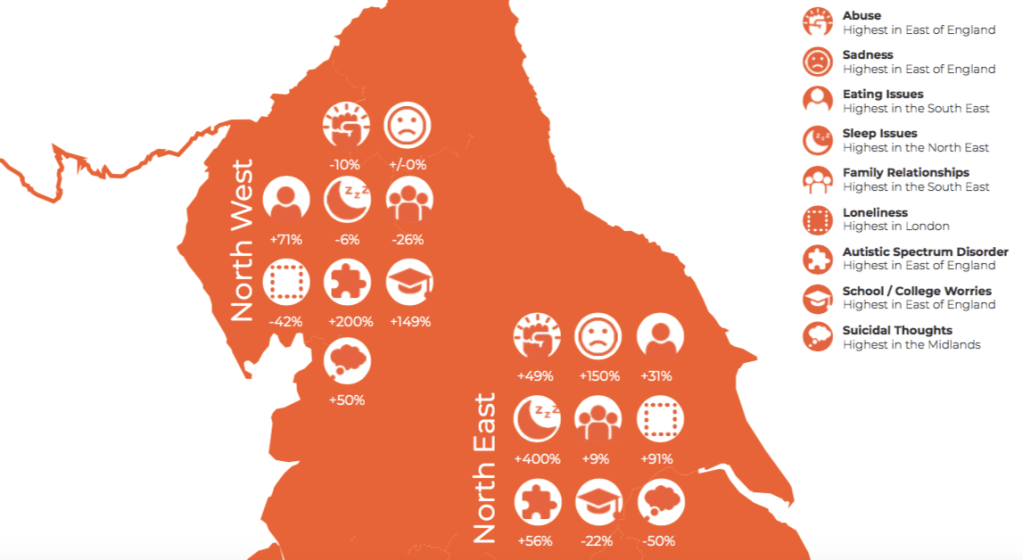
Kooth Infographics – suicidal thoughts rising. Highest in the Midlands.

Kooth Week 10 COVID infographics