How did I get here?

17John W James was a young man in America who had his heart broken by the death of his son in 1977. He found that there was no help available for his heart. He was mostly asked to process the pain through his brain. This did not work for him. His pain continued to worsen and invade other parts of his life, such as his marriage and his work. At one point his suffering and isolation was so great that he couldn’t bear to continue living. He was on the brink of ending his life when he asked himself, “How did I get here?”

He sat down and took a closer look at his life. He found many losses in his past that had been claiming parts of his soul like land-mines along the way. For example, friends lost in the Vietnam war.  He had never addressed or resolved any of his previous painful experiences and they had been layering up, one on top of the other, on top of him, to the point he was being smothered by them. He unpicked each of these layers one by one. He dealt with every one of them in a particular way. He found a method by which he could reach his heart and reduce his pain. Slowly, he started to feel much better. He shared this method with other grieving families and it helped them too. He called it “Grief Recovery Method”.

This afternoon I completed my Grief Recovery Method workshops and I can see why they have helped thousands of people across the globe over the last 30 years.

PS: E-book request form : https://www.griefrecoverymethod.co.uk/ebookrequestform/
Hope

The concert had just finished and the hall was semi-lit. A dance recital entitled ‘Hope’ had coaxed everyone’s feelings up from deep within to just under the surface, like fish in an aquarium hovering at the top for specks of food. The main supporter of the show was the Patel family who had recently lost one of its eminent members. He was survived by his young wife and three kids. The soft thuds of seats folding up, the hiss of people whispering in gentle tones and trudging in small steps towards the exit filled the warm air.

I approached the 17 years old Patel boy, one of the sons. He appeared shrunken. Contracted, like an empty plastic water bottle, after a flight.

“How’re you doing?”
‘Not bad. Thanks’ he stated, unconvinced, looking downwards and sideways.
“Did you enjoy that?”
‘Yes. T’was nice.’ Still expressionless.
“How’s mum doing?”
‘We went for a safari to Kenya. That was good’ he looked up a little.
“I am sorry for your loss. I hope you’re taking good care of yourself.”
‘Yes. Thanks’. Mortified.
“Can I give you a hug?”

It was like hugging a coat stand.

Resources:

1. Child Bereavement UK: https://childbereavementuk.org/for-families/support-for-bereaved-children/
2. Winston’s wish (Charity to help young ones cope with grief): https://www.winstonswish.org/
3. Cruse: https://www.cruse.org.uk/children/how-to-help

you is kind. you is smart. you is important.

images-1

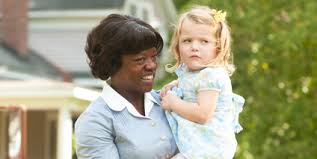
My laptop claims to have at least 8 films on it but for some strange reason, on a train from Birmingham to London, it agreed to play just one, called, ‘The Help’. It’s about the writing of a book compiling the stories of African American maids working in white households in Jackson, Mississippi in the early 1960s. A book about an open ugly secret. About the courage of a few to start talking about it as a mark of protest. About the collective impact of small actions in bringing about big changes.

Yesterday was World Mental Health day and the UK became the first country in the world to announce a minister for Suicide Prevention. The day before yesterday, I learnt that Health Education England are very keen to put measures in place to prevent suicides within medical practitioners. Having been a part of the Suicide Prevention Community for the last 4 years, the one profession that is most conspicuous by its absence is Psychiatrists.

At 2 different meetings, I happened to meet 2 different Consultant Psychiatrists. On hearing Saagar’s story, one of them said he was very sorry but ‘this has been happening for 30 years’. I went blank. I just looked at him. I wonder what the public’s reaction would be if a surgeon would publicly admit that his surgical team has been making the same errors, that have been costing people their lives for 30 years. Yes. These are systemic errors. They are difficult to tackle. But, even today, youngsters like Saagar are dying because of lack of leadership within the specialty of Psychiatry, like they have been for the past 30 years.

The other, extremely prominent and respected Consultant Psychiatrist completely rubbished Mindfulness, Yoga and Meditation, without having tried any of them. He said that all these interventions have side effects. He believed that a Psychiatrist is only meant to attend to the most extreme cases. Their role comes into play only after these 5 have been called upon – parents, schools, GPs, CAMHS and Talking therapies. I am sure he knows that many youngsters die while on the waiting list, without ever getting to see a proper Psychiatrist, once. I am also sure he knows the side effects of psychiatric medications that are offered generously to all and sundry by non-psychiatrists. Lastly, I am sure he also knows how unsupported the GPs feel when faced with patients who are severely mentally unwell due to slow and inefficient response from the secondary services. And, I am sure it’s all down to poor funding. The same excuse that we’ve had for decades gone by and will have for decades to come. How about some imaginative leadership?

As parents, let’s start by saying to our kids in words and actions –
‘You is kind. You is smart. You is important.’
To me, I say – ‘I is kind. I is smart. I is important.’
You could too.

Six homes

images

These worlds, like multi-coloured balls in a kid’s play pen in Ikea overlap, intersect, collide, clash and merge constantly. They clang as if  at VT station, Mumbai at 8 am on a Monday morning.

At the core of these spheres is a mush of thoughts, words, impressions and feelings, ground into a thick viscous treacle. At their margins are bright green woods.

I live in the shifting woods that border these globes. These borderlands are safe. Nothing can be taken away from me here. If one world vanishes, I jump onto another. All of them are home. They tumble along and slosh about merrily in a pool of love, inside and outside of me.

Sanity & Insanity
Life & Death
Reality & Illusion

I have six homes.

Ref:

A 4 minute conversation, Si and I : The Listening Project on BBC Radio 4 (19th Sept 2018)

I-Player (only available in the UK)https://www.bbc.co.uk/radio/play/b0bk1fc0

No more thorns

The bridge rumbles, shakes and shudders
as trains thunder over it.
I sit under the bridge and everything around me
rumbles, shakes and shudders.
The verticals, horizontals and things in between
judder
Outside and inside of me
I live under this bridge. It threatens to snap and bury me in rubble
Some trains are overloaded.
They crawl on top of my chest.
Crushing me to pulp.
Others come galloping,
Turning me to fine flying dust.
Almost non-existent
Yet, here.
Feeling. Breathing.

Thousands of us huddle under this bridge.
Wondering why our love wasn’t enough
Why no one said anything
Why it keeps happening at a maddening pace
Why we were blind
Why we didn’t know what to do
Why the Earth keeps spinning
Why the breath keeps oscillating
Why the heart keeps drumming.
Why?

4 years ago, it was all happening in September.
He didn’t know he was so close to the end.
I didn’t know I was so close to his end.
Now, I know.
Everyone’s talking.
Was I deaf or is it much too late?

Kingdom of Us: Lucy Cohen presents a film about the life of a family affected by suicide https://www.theguardian.com/film/2017/oct/08/the-kingdom-of-us-review-netflix-teenagers-lucy-cohen

Horizon: Stopping male suicide by Dr Xand Van Tulleken on BBC2 on 22nd August 2018
https://www.bbc.co.uk/iplayer/episode/b0bgv82g/horizon-2018-6-stopping-male-suicide

House of Commons, 5th September 2018: Transcript of a debate by Helen Jones, making a case for changing the standard of proof from ‘criminal’ to ‘civil’ for deaths by suicides
https://hansard.parliament.uk/commons/2018-09-05/debates/B8A2C436-64BE-4694-B4AA-F6535E49E31E/SuicideCoroners%E2%80%99Courts

NICE Guidelines: September 2018: Preventing Suicide in community and custodial settings.
https://www.nice.org.uk/guidance/NG105