Old people’s radio station

Screen Shot 2018-02-25 at 19.33.32

During his holidays, Saagar and his friends would be subjected to Woman’s hour on BBC Radio 4 second hand, as their mothers listened. They would later have amusing/interesting discussions about breast feeding, female education and employment challenges. This station was pre-set on the car-radio and at home. It was designated as the ‘old people’s’ radio-station by him. Invariably, ‘Gardener’s question time’ would come on while we were in the car together, travelling over the weekend. It was quaint by its sheer irrelevance to us as we could barely keep our 4 nameless indoor plants alive.  Our urban pre-occupations meant we didn’t have a gardening vocabulary.

‘Just a minute’ was our all-time favourite – a panel of funny people asked to speak for one whole minute on a given topic without repetition, hesitation or deviation. The seemingly innocent topics often held great potential for hilarity, for example, billiards, the best thing about cats, how I spread a little happiness, keeping a straight face, my love of the absurd, garages and such. The correct and incorrect challenges posed by the panellists generated tremendous amount of laughter. Our attempts at giving each other topics resulted in great amusement.

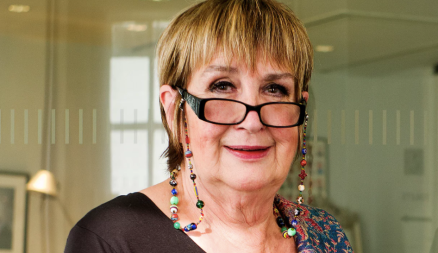
On Thursday evening I was asked if I’d like to be a guest on Woman’s hour to talk about Saagar. It was unbelievable. It made me smile and cry at the same time. What a paradox! Of course I’d love to be on Woman’s hour. Under these circumstances? Meeting Jenni Murray was an honour. She was down to earth and professional, looking just as I imagined,  in her trademark glasses sitting just above the tip of her nose.I told her she had my dream job. She said Joan Baez had been in the studio the day before, sitting at the same chair as me. How cool! Oops! Saagar prohibited me from saying ‘cool’ as he thought it sounded all wrong coming from me. I wonder how he would feel about this interview if he knew. Maybe he does.

Despite making notes and preparing as well as I could, I was a bit flummoxed by some of the questions. I didn’t say everything I wanted to. I hope there will be other opportunities. This conversation must grow until everyone is a part of it in a meaningful and constructive way. In a way that saves lives.

A recording of the interview with brilliant and committed Mr Ged Flynn, the CEO of PAPYRUS and I:
Kisa Gautami

download

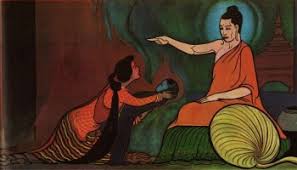
In ancient India, there lived a woman. She was happily married to a rich merchant and was the proud mother of a bubbly one year old. After a brief illness, her only son died. Her grief was unbearable. Wailing and weeping, she took her child’s lifeless remains from door to door pleading with the townspeople to bring her beautiful child back to life. No one could help her. She was destroyed.

Someone suggested she take her infant to the Buddha. She did. Through her tears and sobs she narrated her tragic story and begged Him to infuse life back into her bundle of joy. The Buddha listened with compassion and said, “Kisa Gautami, there is only one way. Bring me 5 mustard seeds from a household where no deaths have occurred.”

Her eyes lit up with hope. She hurriedly gathered up her bundle and once again, went knocking on each and every door in town. To her utter disappointment, every family had experienced death in one form or another. She realised the lesson that the Buddha had wanted her to learn. Suffering is a part of life and death is inevitable. Kisa Gautami’s eyes were now open. In the light of this knowledge, she could handle her grief. She went on to become an ardent follower of the teachings of Buddha.

Like Kisa Gautami, I have found myself at the feet of the Buddha. His teachings have brought light and lightness to my being. Along the way other divine souls have helped in unique ways.

This is the festive season for most people. Planning meals, choosing stocking fillers, selecting wrapping paper, posting greeting cards and preparing to welcome the New Year. Yay! It’s all happening. But a Saagar-shaped piece is missing. I feel for all the families who will have that vacant chair at their table this year. I hold them close to my heart. As time goes by, it does not get easier. This excerpt on the subject of ‘Pain’ from ‘The Prophet’ speaks to me. I hope it helps you too. I wish you as peaceful a time as possible.

“And a woman spoke, saying, “Tell us of Pain.”
And he said: Your pain is the breaking of the shell that encloses your understanding.
Even as the stone of the fruit must break, that its heart may stand in the sun, so must you know pain.
And could you keep your heart in wonder at the daily miracles of your life, your pain would not seem less wondrous than your joy;
And you would accept the seasons of your heart, even as you have always accepted the seasons that pass over your fields.
And you would watch with serenity through the winters of your grief.
Much of your pain is self-chosen.
It is the bitter potion by which the physician within you heals your sick self.
Therefore trust the physician, and drink his remedy in silence and tranquillity:
For his hand, though heavy and hard, is guided by the tender hand of the Unseen,
And the cup he brings, though it burn your lips, has been fashioned of the clay which the
Potter has moistened with His own sacred tears.”
― Kahlil GibranThe Prophet


I carry your heart in my heart.

It’s a luminous room on the first floor of a Victorian building. The sun pours in from the big window facing the street. The delicate palm leaves throw artistic, dancing shadows on the carpet. I feel the tension in my muscles, the knot in my stomach and the tightness in my chest. Two comfortable black arm-chairs sit facing each other.  I am gently welcomed and ushered to the chair facing the window by a lady with a soft Irish voice and a sweet smile.

We sit down. I am relieved to catch sight of a box of tissues from the corner of my eye. I look at her and say my name. She says hers.  We hold the same belief – the soul is eternal. I ease into the chair and take a deep breath. I am open to this, whatever it brings. For now, I put my anxiety and scepticism aside. I tell her that I am here to find out if my son is at peace. He died by suicide at the age of 20, two years and 10 months ago.

She is sorry for my heartbreak. She shifts in her chair, turning and looking in the direction of the door. Her smile widens. I can only remember a fraction of what she said -“He’s so bright. So lovely.
Your relationship is sweet … special.
Does he play music?
West African drums?
He is not just a good drummer. He is extra-ordinary.
He has an eclectic taste in music. Super-creative!
He’s very proud of his musical heritage.
He’s wearing a long shirt, like a kurta.
He says he enjoys Celtic music too.
Recently a memorial concert was held for him?
He says he was there.
Is there a London connection?
He is showing me a cat sitting on his shoulder.”
She changes the direction of her body and aligns it to  me.
“You … are a writer. A healer.
He loves your writing.
He says it comes from the same field of energy as his creativity. It entwines your souls.
Your nutrition is very good but you suffer with severe stomach cramps. Your distress affects your digestion. You need to take lemon juice on an empty stomach every morning.”

She shifts again.

“The last year of his life was difficult. In his last few weeks the medications messed up his head real bad. He couldn’t think straight.
I see a strong army connection.
Your mother’s mother is there with Saagar. She tells me that your father is a man with great integrity. He has a big moustache. You have had a disciplined upbringing.

Saagar is surrounded by love. He wants you to know that you did your best. He wants to thank you for encouraging him to pursue his passion for languages and music and for not pushing him to do other things. He thanks Si for his patience and his friendship. He is impressed to see the commitment that Si has shown towards you. He is happy for you both.

He is offering me some rose petals.
Does that make any sense to you?”
Not sure, I say with an uncertain smile.
“Is someone’s birthday coming?”
Yes. Mine. In 10 days.
“He is also offering me a small bronze statue of Lord Ganesha. Does that mean something to you?”
Yes. I smile with tears of recognition.
“Would you like to ask any questions?”
Is he at peace?
“Not only is he at peace but he is joyful.”
Can you tell him I am sorry for not spending enough time with him and for not understanding the extent of his suffering?
“He feels nothing but love for you. Can you feel his presence?”
Yes.
“I know you have felt it for short periods of time, here and there in the past. I hope that with time you will begin to feel him around you a lot more.”

I can remember bits of that interaction but can’t comprehend the accuracy. How can a complete stranger know the intimate details of 3 overlapping lives? May be there is no such thing as death. Maybe we all exist together in a big pool of consciousness where different energies manifest in varying realms, like magnetic waves and gravity are invisible but they exist. Infrared and ultraviolet radiations are invisible to the naked eye but they manifest themselves in other ways. Maybe there is no such thing as death.


Day 838

“How are you?”
There is no short answer. Often, there is no answer.
This question comes up walking past friends and acquaintances in corridors. All I can say in the given time is, “Fine. Thanks. And you?” All I can do is acknowledge the question, smile and nod. It’s like saying ‘Hello’. No one actually finds out how anyone is doing or feeling.

It’s been 2 years 3 months and 3 weeks. It could be said ‘enough’ time has passed. For who? Who decides how much time is enough? Traditionally bereavement has been a personal and private process. Does it mean that as a society we would generally prefer it to be personal and private? Other’s sadness can make us feel uncomfortable, embarrassed, not knowing what to say or do. The path of least resistance is to not mention death or the deceased at all. There is a fervent desire that the bereaved will adjust and move on per a set timetable, not only for their own sake but also that of others.

The Bible says:

For everything there is a season, and a time for every matter under heaven:

a time to be born, and a time to die;
a time to plant, and a time to pluck up what is planted;
 a time to kill, and a time to heal;
a time to break down, and a time to build up;
a time to weep, and a time to laugh;
a time to mourn, and a time to dance;
a time to cast away stones, and a time to gather stones together;
a time to embrace, and a time to refrain from embracing;
a time to seek, and a time to lose;
a time to keep, and a time to cast away;
a time to tear, and a time to sew;
a time to keep silence, and a time to speak;
a time to love, and a time to hate;
a time for war, and a time for peace.

  • Book of Ecclesiastes 3:1-8

Never assume someone’s mourning is over and done with. It takes its own time.

Day 830

16387290_1223236211093081_7092133132352048931_n

Now, I belong to a network of mums and dads who share the same loss. We exchange stories, everyday struggles and our little achievements. Sometimes it is something as small as getting through an hour, a day. But then, fighting to get through the night, an all too familiar scenario. We know. We understand. We listen.

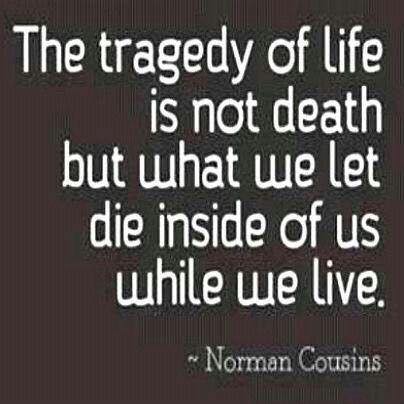
Sometimes, it is an inspirational piece of craft, a moving piece of music, a long walk or a rant. All of us desperately trying to hold on to who we were and make sense of who we now are, hanging on to the shreds of our being with all our might, seeing ourselves in each other, watching our helplessness and grief spill across the screen over and over again only to gather it all up and see it as nothing but love. All the rags weave together to form a mesh that strengthens each one of us. We recognise our reflections in each other and feel our little angels sending us collective blessings. All that is inside of us is alive even if it feels like it isn’t. It’s the purest form of love.