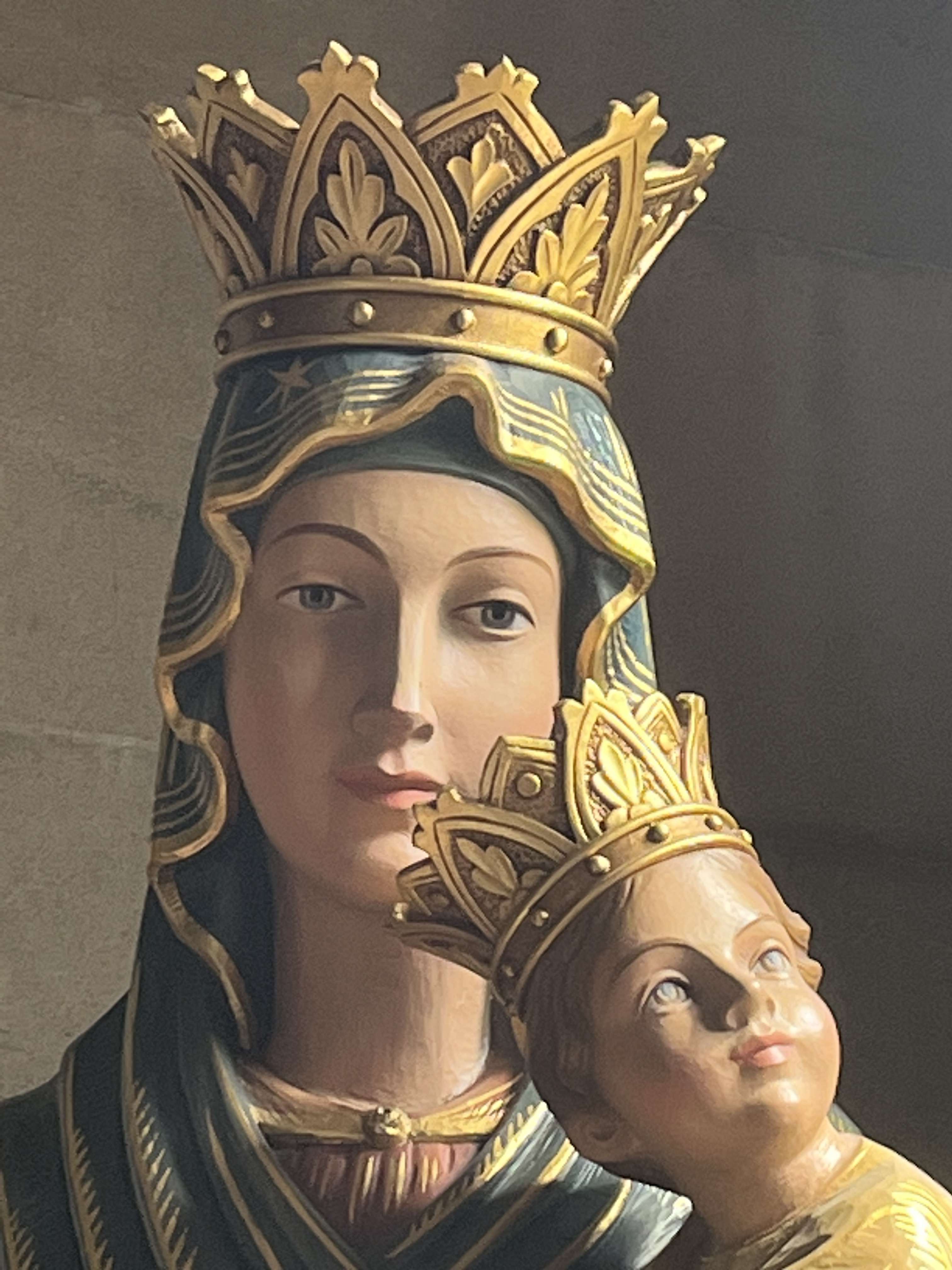
It’s a story. It’s not a story.

Last weekend I was part of a team of volunteers. The Compassionate Friends hosted a summer retreat for parents who have lost a child to suicide or substance use. We expected seventy parents to arrive, some as couples, some by themselves. Many of us drove for many miles through road works and traffic jams. Some changed trains more than once and persevered through serious delays due to fatalities on the tracks on two successive days. Even though their own hearts ached, they traveled from all over the UK to Leeds.

The venue was a new one, Hinsley Hall. It was true to the pictures on its website – majestic. Having never worked there before, many of us arrived a day prior, to familiarise ourselves with the space and allocate rooms to activities depending on their size and suitability, getting to know the staff and setting out folders, notice boards and programes.

The job at hand was to belong to those who attended and have them belong to us. I went up to my room and drew the curtain. I gasped at the view. My window looked over a deep-green lawn with dark old trees and two parallel hedges with patches of yellow.

As the participants arrived through the gates, we welcomed and escorted them despite their visible anxiety and fatigue, a reluctance to acknowledge their eligibility to be here, attending this retreat. Slowly, cups of tea, coffee and glasses of water loosened the atmosphere.

At the Writing workshop, words like ‘disassembled’ and ‘brown silt’ were shared and felt. A bronze sculpture of a young woman in the courtyard, standing with her arms wide open was a constant encouragement to open our hearts.

Over the next couple of days, each of us felt seen, listened to, acknowledged and our grief felt witnessed. Friendships were born. There was much laughter and many tears flowing through truck-loads of memories. Grace was at work. It was allowing something within us to soften and relax.

At the end, one mum said she met some lovely people and found much comfort and connection. Another said, she met herself, this time with gentleness.

Being there, volunteering, was a good way to honour Saagar’s  life and mine.  What better way to spend our days than to hold our kids, ourselves and each other in a warm embrace?

I am here. He is here.
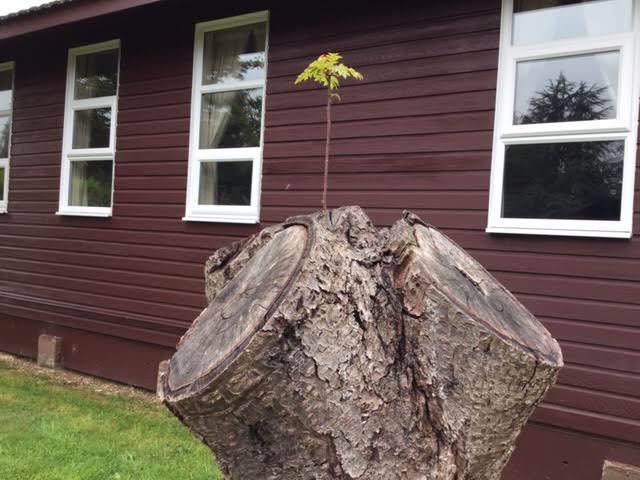
It changes. And changes again.

Over and over I asked myself – Now what? Now what? What happens after a severance such as this? How long do one’s bones bleed? Do the tears ever finish? What does ‘recovery’ look like? Is it even possible? How does one keep placing one foot in front of the other? Where is the road? Where does it come from? Where does it go? How long and meandering is it? When does the screaming in my head stop? How long can I keep up the facade? Pretend to be sane? Is this what a new diagnosis of a terminal illness feels like? Is forgiveness possible? Self-forgiveness? Acceptance? Surrender? All these big words! Surrender what? To whom? Who am I now? What do I do?

No answers. Silence. The tilted earth keeps spinning around its imaginary axis. It keeps cradling me. The sun stays at the center of its orbit. My son stays at the center of my being. My breath keeps coming and going. I grow new eyes. My bones carry my weight even though they bleed. The road appears under my feet. It reveals itself one step at a time. Rumi and Khalil Gibran come and hold my hand. The screaming softens. The wall of bricks that was my body, loosens. I come to know the terror and the joy of being insane, catch glimpses of being free. Respect for those who went before and sadly others, who follow. I stop fighting with the big words and keep it simple. Watch. Observe. See. Open. Let the gash in my heart, allow the light in.

A recent talk for The Compassionate Friends, a charity dedicated to supporting bereaved families.

Logotherapy

It was late 1930s. He was a young man in love. She was a young woman who was delighted to be asked by him. They were married. Soon she was to be a mother. But the clan they belonged to were not allowed to procreate. She was made to abandon the baby even before it was born. They both were sent to different concentration/death camps. But their love story did not end there.

Despite shoveling snow with no shoes on, going for months without proper food, constant beatings and humiliation, not knowing which instant he would be walked to his death, he carried on loving her. He did not know if she was dead or alive but he loved her every second. He hoped to see her again. His longing kept him alive.

Four years later, he was freed and he found out that his sweetheart had passed away soon after their separation, at the age of 24. His father, mother and brother had met the same fate in that ugly assault of humanity on itself. His sister had survived and moved to a faraway land.

Viktor E. Frankl was a Psychiatrist. He took 9 days to pen down his learning and thoughts which became a book – ‘Man’s Search for Meaning’ that sold millions of copies all over the world as it helped them transform their suffering .

He pioneered a new way of counselling patients called Logotherapy or ‘meaning-based-therapy’. When asked of the difference between Psychoanalysis and Logotherapy, he said, “In Psychoanalysis the patient must lie on a couch and tell you things which sometimes are very disagreeable to tell. In Logotherapy the patient may remain sitting erect but he must hear things which sometimes are very disagreeable to hear.”

It is a future focussed approach through which the patient is reoriented toward his unique and specific attributes aligned to a purpose which can be fulfilled by him/her alone. It is based on the premise of freedom – the freedom to choose our response to our experiences, the freedom to choose the stance we take when faced with a difficult and unchangeable situation.

Over the last 5 years I have read Frankl’s book at least 5 times, each time deriving new inspiration. Last week I had the good fortune of being able to share some of those insights on-line with a community close to my heart. The Compassionate Friends helped me discover that Frankl’s love story will never end. It is interwoven into yours and mine and with the love-stories of those yet to come across it.

What do people need?

Thanks for this N.

It finally got me. This wretched forced and voluntary isolation. No wonder solitary confinement is a well known punishment. Mon, Tues, Wed were very deep blue. A friend’s dad’s funeral, a very unwell teenager … but underneath it all, missing my people. The screen did not suffice any longer. It only frustrated me. The phone was a sordid excuse for ‘contact’. I wanted to be with real people in a real way. Feel the fabric of a friend’s scarf between my palms, share a pot of tea and a big slice of carrot cake at a local cafe and laugh till I cry and such simple pleasures.

For now, gotta hold my horses and know you are there and soon we’ll meet again. Thank you for being there for me, my people. I am here for you too.

“People need people,
To walk to
To talk to
To cry and rely on,
People will always need people.
To love and to miss
To hug and to kiss,
It’s useful to have other people.
To whom to moan
If you’re all alone,
It’s so hard to share
When no one is there.
There’s not much to do
When there’s no one but you.
People will always need people.

To please
To tease
To put you at ease,
People will always need people.
To make life appealing
And give life some meaning,
It’s useful to have other people.
It you need a change
To whom will you turn.
If you need a lesson
From whom will you learn.
If you need to play
You’ll know why I say
People will always need people.

As girlfriends
As boyfriends
From Bombay
To Ostend,
People will always need people-
To have friendly fights with
And share tasty bites with,
It’s useful to have other people.
People live in families
Gangs, posses and packs,
Its seems we need company
Before we relax,
So stop making enemies
And let’s face the facts,
People will always need people,
Yes
People will always need people.”

Benjamin Zephaniah

Men and boys

International Men’s Day is designed to help more people consider what action we can all take to “Make A Difference” and “give men and boys better life chances” by addressing issues such as high suicide rates, sexual abuse and health.

I had no idea when this day was until yesterday morning, when I received 4 photographs from Aidan who lives in Malasia. He is one of Saagar’s close friends and he shared a house with him at Durham. His comment read “Delivering a Mental Health talk to Schlumberger in conjunction with International Men’s day.’

Invaluable, undying friendships.

Here’s another set of friends. Rene’s friends, who are racing across the Atlantic later this month in his memory – Race for Rene. They are raising a huge amount of awareness and funds for 2 charities: PAPYRUS and Child Bereavement UK. They say, “We lost Rene to mental health in 2017. We don’t want anyone else to have to feel what that’s like.” That is a vision worth having.

Here’s a conversation with James, one of Rene’s friends: https://www.youtube.com/watch?time_continue=4&v=Aerqfealiwk&feature=emb_title

Good luck to the crew. Here’s to all the men and boys we love:

Thanks for this Mary.