Day 980

Japanese Floral Art

In ancient Japan it was believed that God lived in the evergreens. That is why they used it as the tallest and the main component of their flower arrangements. God was the invisible line that passes vertically through the centre of the arrangements. So said a senior faculty of Ikebana, Prof. Kurata at his lecture/demonstration this morning.

GodTraditional Ike

Three hours of his talk equalled a year’s worth of learning. He went on to show how nature outdoors is depicted through flowers, leaves and stems indoors. This bamboo vase represents a cliff side and the alcove within it denotes a cave from where plants are emerging towards light, the spectator. Pictures don’t do any justice to the space and the movement created by the study.

Cliffhanger

IMG_0738

He spoke of beauty. When hidden, it carries intrigue. When hidden, it allows for imagination to flow. When hidden, it can be the most beautiful thing in the world. This is an example.

The Veil

IMG_0741

The shape of the container and the simplicity of the materials combine to create elegance.

Who? Me?

IMG_0745

Rikka is a form that captures a landscape. Each part of it signifies something, like receiving, flowing, supporting and carrying. It has mountains and rivers within it. Find them if you can.

Tatiana

IMG_0747

Clever use of angular shapes and bright contrasting colours to create an uplifting happy slanting mood.

I swear diagonally, Bro.

IMG_0748

The world is sort of round and so is this. Rounds within rounds. Wheels within wheels. Keeping to the theme. Cheerful asymmetry.

Must be Spring

IMG_0750

This last one was for the youngest member of the audience, a 3 year old girl. Playful bobbles and wires hanging out happily with an orchid in a blue bottle of gel balls.

Smile!

IMG_0749

Wonderful to see a true genius at work! It’s calming working with flowers, stems, branches, leaves, berries and grasses. Being with nature. Breathing. Learning. Smelling in the subtleness. Letting the imagination flow. Allowing the Self to heal. Letting go. Dissolving.

Day 979

“Helping others is the way we help ourselves”
-Oprah Winfrey

Simple ideas change the world. A Clinical Psychologist, Dr Charlie Howard was taking a walk around her area. Having recently had a child, she was looking for her next “thing”. She asked random people what would make a difference in their community. “A Problem-Solving Booth right here on my street” answered a young man in the queue in a sandwich shop.  “A place where people can go with the stresses in their head and where we can help each other”. The idea was genius and Charlie’s head built on it quickly. “Maybe we could try one here?” Charlie suggested, “we could do it together”. The young man smiled at Charlie and said “yeah maybe” and then his phone rang and he ran off down the street. No one knows his name and no one has seen him since. He probably has no idea just what his throwaway words have since inspired.

Problem-Solving Booths are a great way to bring members of the community together to have conversations that they might not otherwise have, by helping each other with their problems. One chair is for the “Helper”, the person listening to the problems. The other is for the “Helped”, the person describing their concerns. The aim of the Booth is that people swap roles regularly as we all have both the potential to have problems as well as to offer help.

Thrive London is a citywide movement for better mental health for Londoners supported by the Mayor of London and the London Health Board. Problem-Solving Booths have become the local arm of Thrive and we’re working out what they are, what they do and what they can do, with everyone we meet from street to street, borough to borough and organisation to organisation. It’s cool.

Watch this space!


Day 978

Primum non nocere- First do no harm.

Doctors could save lives by breaking rules on privacy.

Screen Shot 2017-06-29 at 22.23.06

This is a point worth making again and again and again and again and as many times as it takes. Few excerpts:

Hamish Elvidge, father of Mathew – “Before my son took his own life, he had only just been discharged as a low-risk patient, despite coming in as a high-risk patient that very same day after a suicide attempt. At no point were his family involved in any part of the process. There is a chance that, had the hospital decided to share information with his family, our son would still be here today.”

“Confidentiality is far too embedded within the medical profession. The default position has to be one where you have to explain why you haven’t involved the family.”

Prof. Appleby said: “Psychiatrists should feel able to use their clinical judgment on where the balance of patient safety and confidentiality lies. Families are devastated when they discover too late that their loved ones had been talking to professionals about suicide.”

Professor Sir Simon Wessely, president of the Royal College of Psychiatrists, said: “In my experience, if doctors make well- justified, well-recorded decisions to share information in the best interest of a patient who is in suicidal crisis, consistent with their professional codes of practice, this will be understood, respected and upheld in courts of law.”

 (Source: The Herald_Congress17_suicide story.pdf)


Day 975

image_update_img

Ben 

In conversation with a retired Paediatric surgeon today, the topic of premature babies came up. He said that the commonest type of surgery in new-borns has changed over the years. Unlike a couple of decades ago, the commonest operation now is for dead gut, essentially due to the rise in our ability to provide better care for premature babies. He thought that the incidence of premature births was almost double in London than anywhere else in the UK because of high stress levels.

According to one of the largest reviews of evidence, children born very prematurely are at greater risk of developing mental health and social problems that can persist well into adulthood. Children who weighed less than a kilogram at birth are about four times as likely as those born at term to have attention deficit hyperactivity disorder (ADHD), and significant emotional problems. This may be due to weakened connections in brain networks linked to attention, communication and the processing of emotions.

These findings are important because mental health issues that occur in childhood are a strong predictor of psychiatric disorders in adulthood. “There is a strong case for assessing, on a regular basis, the mental health status of these children, so that early intervention approaches might be implemented sooner rather than later, with a view to minimising future mental health problems,” said Prof Smith from Glasgow.

Sarah is a Registered General Nurse with 25 years’ experience. She worked as a Neonatal Nurse over the last 17 years prior to moving to The University of Salford where she is now a Neonatal Lecturer within the Midwifery Team.

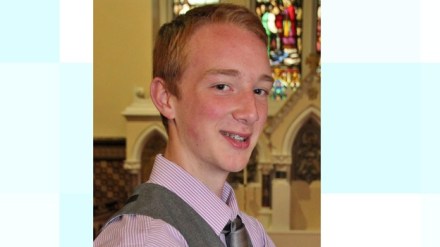
Sarah became involved with PAPYRUS in 2013 after the loss of her 14-year-old son Ben to suicide. Ben was a premature baby.

sarah_fitchett_for_trustees_bio


Day 974

download

Yes, but…

‘Yes, but…’ essentially means “what you say is superlative, here’s the underlying truth.”
I am sorry but…
I like what you’ve done but…

The moment the ‘but’ appears, the previous half of the sentence gets completely negated. It sounds insincere or like blame or criticism.

I am shocked to discover how many times I use the word ‘but’ in one day. Recently I learnt that a simple and effective shift can be made if I replace ‘but’ with ‘and’. That way, this is true and that is true too. Multiple realities don’t need to compete. I don’t need to choose one.

‘I know you want more time to complete this book and the deadline is looming.’
‘You want my help here and I need to be in Wales for a few days.’
‘I’d like to help you and I need to make some difficult decisions.’

Feels and sounds better to both parties I think.
Multiple realities do not compete. They just exist.
You own a piece of truth and so do I. Let’s figure out what we can do.
Yes and, ‘NO BUT’!