Day 964

Grenfell fallen

127 flats
24 storeys
20 residential levels
400-600 residents
4 mixed levels of community areas and residential flats
2016 refurbishment completed

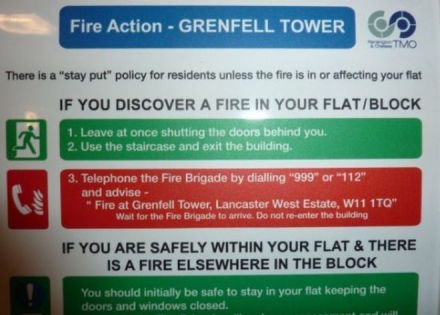
Fire Sign

The tower was built in 1974. It was recently made to look pretty for £8.6 million pounds. Lower 4 floors were remodelled, creating nine additional homes, better heating and communal facilities.

1 am, Wednesday, 15th June : A fire started at the 4th floor and rapidly engulfed the entire tower. Source unknown.
No alarms. No sprinklers. No warning.
40 fire engines and 200 fire fighters.
More than 24 hours to bring the blaze under control.
17 reported dead so far. Count rising. Many hospitalised. Many missing.

Heart-rending stories of people trying to save their kids and themselves in any way possible. Firemen and women traumatised by what they saw. Families distraught. Neighbourhood shattered. London shaken.
Previous warnings by residents ignored. False assurances given.
All to do with money. Cheap material used for encasing the building. Each unit not adequately isolated.
Recommendations made by inquiries into similar previous fires not implemented. All to do with money.

Our country cannot provide its citizens with proper medical care, education or housing. First world country?
This is what it must be like in countries like Syria, Yemen and Lebanon where every day, unmanned drones drop ruinous bombs on innocent unsuspecting civilians. We are all the same people.

We don’t need aliens. Thank you. We are clever enough to self-destruct.

Day 963

Wysa

A young couple, committed to making a difference used their love and  intellect to create Touchkin, Artificial Intelligence for proactive care, integrating behavioural health into medical practice.

Tom Insel, a psychiatrist from National Institute of Mental Health (NIMH), the world’s largest mental-health research institution, spoke frankly about how MH services and research were failing to help the mentally ill. He openly dismissed the DSM (Diagnostic and Statistical Manual of Mental Disorders). At any given moment, roughly one in seven of the world’s 7.5 billion people is struggling with mental illness. “We’re not going to reach all those people by hiring more psychiatrists,” says Insel. But we might reach them with smartphones.

In one of his talks, Insel was sharing the intricacies of the delicate workings of the brain.   Someone interrupted him and said, “You don’t get it. The house is on fire, and you are discussing the chemistry of the paint”

Jo Aggarwal, one of the developers of Touchkin says:

“This line from the article resonated deeply with me. It’s a familiar sentiment – one many of us in development have had in conferences on employment, education, conflict. They are all at some level connected to the base fire that engulfs our world today – that of mental health. Until this fire is brought under control, we don’t have a hope for any of the rest of it.

His dramatic move lends credibility behind the idea that phones may be the answer. Identifying issues using smartphone behavior is powerful, though it can feel creepy. But detection is not enough. In our trials at Touchkin, phone sensors were able to predict depression in people with diabetes to a 90% accuracy, and went a long way in getting the physicians convinced to integrate mental health into their regimen. But only 1 in 30 people diagnosed went on to take treatment for the depression.

It said to us – “The house is on fire, the fire brigade is missing, and here we are saying how accurate our fire alarms are”

Wysa the emotionally intelligent penguin willed itself into existence somewhere along the way. It was a side feature created between ‘formal’ projects to improve accuracy. Taken by how people reacted to the prototype, we all kept working on making it better… in three months it crossed a threshold. It started changing lives. Last month, 3 people wrote in to say it saved their life, it is what is keeping them from suicide. Over 50,000 people talked to it anonymously, and thousands of them wrote in to us to say how much it meant to them.

Unlike the Stanford psychologists creating Woebot- we have no hypotheses around Wysa. It is evolving entirely based on what works for its users. It has evidence-based techniques, but everytime we add more tools or advice or tips we get users telling us to just let them talk to Wysa, and not to underestimate how much of a difference that makes.

“The fire in the house, is in our brains. The fuel is the language of the conversations we have inside our head. “

We started out, like Insel, trying to detect the fires… Wysa is leading us to try and put a fire extinguisher in everyone’s pocket. Any pretence of our own hypothesis went out of the window when the first person wrote in to say it saved their life. Now we are following it to see where it goes.

Like us, like Tim, there are many unwitting recruits to this fight.

Rick Little started fighting it as soon as he graduated college. So many of my friends… Sangeeta Mahajan who lost her son to suicide and has dedicated her life to preventing it for others. Anjana Ajay who is changing others lives after healing her own Stage 4 cancer by focusing on healing her mind. Bhavana Issar who is doing amazing work at Caregiver Saathi.Pooja Goyal who is creating resilience in pre-school children and their parents, bravely facing all the storms that come her way. Archana Aggarwal Sarda has made emotional support a way to get intl level diabetes outcomes in rural children, long before she realised that she was doing it.

None of them are psychologists. They each have options of more comfortable, lucrative ways to spend their time. They are all powerless to not do this. “The house is on fire. Once you see it, and you realise that you can stop it spreading, it is hard to do anything else.”

11078077_10152678753741035_8566229743541697060_n


Day 962

A letter of recommendations addressed to SLaM, drawn up along with another mother, who lost her son, Simba, to suicide:

“The laws that govern the relationship between professionals and patients namely:  the Data Protection Act (1998), the common law duty of confidentiality, and the Human Rights Act (1998) are all silent about the nature of the  relationship between  professionals and carers. This is because these laws regard each citizen as an autonomous agent capable of making decisions with regard to their own rights.

The Common Law Duty of Confidentiality in particular has been derived from the millennials-old Socratic oath taken by doctors, which is absolutist in its injunction stipulating that there is no condition under which doctor-patient confidentiality may be broken.  The 21st century has witnessed a significant shift in the doctor –patient relationships as well as, increasingly, in the doctor-patient-carer relationships. The increasing need to care for patients outside of hospitals and within communities or in their homes, has necessitated a requirement for greater collaboration between professionals and carers.

Given the pivotal roles of carers in the management of service users, the professional’s duty to share information with carers is covered by the 7th Caldicott principle: the duty to share information can be as important as the duty to protect patient confidentiality.

As carers who have had first-hand experience of caring for loved ones, we set out below some recommendations which we believe will help professionals and carers in working more effectively together for the well-being of service users and carers.

Carer’s Recommendations

  1. Patients should be actively encouraged to nominate someone they trust in their care, right from the beginning. This practice should be so well engrained that the nominated person becomes an integral part of the process of care and recovery. It is also recognised that a patient may nominate a trusted person who is a friend to attend meetings instead of a family member, as the presence of the relative may inhibit frank and honest disclosures with professionals. For example, in CAMHS a young person may trust a friend to advocate for them more than they trust their parents. If this is the case, the right of the carer or next of kin to be kept informed of the care plan should also be respected, so that they are not left out of planning and can continue to care effectively.

This recommendation is particularly relevant if the service user lives with the carer.

2. At the time of diagnosis, accurate information about the nature of the illness and the choice of treatments should be given to the carers, in written and verbal form or on- line if such facility exists. They should be made aware of their rights as carers and encouraged to partner with health professionals in the care of the patient. They should also be given realistic information about the natural course and mortality of the illness. This may mean spending more time with patients and carers at consultations, and the need for additional support services.

3. Carers should be provided with the following:
– Diagnosis or working diagnosis of the psychiatric condition
– List of symptoms to look out for.
– A management plan.
– Choices of treatment.
– Possible side-effects of any medication.
– Possible roles for the carer in managing symptoms.
– Sources of support for the carer, for example pamphlets or online resources.

  1. Professionals must remember the following when working with carers:

– To be more transparent in their communication with carers.
– To anticipate the carers need for information, providing necessary information about the nature of illness and available services even if the carer does not directly ask for this.
– To have empathy and willingness to engage carers and build a trusting relationship.
– To consider that carers may need practical support in order to be effective carers.

  1. The carers must be educated and empowered with knowledge about the psychiatric condition. They should be made to feel involved in the process of care, especially if the patients are being cared for in the community. Crisis teams and early intervention teams should engage members of the family in the care package.
  1. It needs to be understood that carers are a valuable resource, and must be listened to, as they spend more time with the patient than professionals do, and therefore will know them well. Even when service users instruct teams not to see their families, professionals should always meet with the families for collateral history, and especially if the family requests to be seen by a professional. Carers and friends know their relatives well enough to see early warning signs, and should be encouraged to share such information if necessary, in confidence with professionals especially if the service user is too ill to give consent because they are lacking in insight.
  1. Carers’ perspectives should be part of the training curriculum for junior doctors and medical students wherever possible.
  1. Patients should not be discharged from one team to another or from specialist care to primary care without arranging an early follow-up date. Given the risk of patients falling through cracks in the service following discharge, carers should be given adequate information about service structures and not merely told to go to the GP or the local AE in crisis situations.
  1. Decision making around the timing of discharge should be properly scrutinised, as premature discharge could have disastrous consequences.
  1. Discharge plans should include information for carers about the following:

-What are the warning signs to watch out for?
-What service number to call?
-How quickly one can expect help to arrive.
-Where to go in day/night time in a crisis.

  1. GPs must also understand the importance of engaging with carers, listening to them, and sharing important information.
  1. Community teams should engage patients and families in discharge planning. Where necessary, designing a crisis plan should be a joint enterprise between teams and patient and family. Carers should be involved in the design of the plan, and be given a copy of the finished document. Professionals must anticipate any problems with the patient and share them with carers at the time of discharge.
  1. Organisational structures should be redesigned to address the problems brought on by the strict compartmentalisation of services. This can be a hindrance to the provision of safe and efficient patient care.
  1. Mishaps and suicides should be investigated within a week, with the intention of learning lessons and preventing future serious incidences due to the same causes. Carers should be involved in this process, in order to hear the story from their point of view and arrive at real answers. Defensive investigations do not add to learning or patient safety. Contact with families must be at the earliest possible time following death or serious incidents. This is the time when families are most vulnerable and require information about their loved ones from those who were present. Legal considerations of blameworthiness should not prevent staff from empathetic consideration and communication with the bereaved families. Likewise, protracted legal processes should not be allowed to stop the trust from reaching out to bereaved families. Carers understand that staff may feel vulnerable following serious incidents but it should be understood that carers feel equally vulnerable and unlike professionals, may have no access to support networks at such times.
  1. At Coroner’s inquests, the trust should send representatives who have a deep knowledge of the case and who will not hide behind jargon.


Day 960

images

Q: I don’t see how I can be free now. As it happens, I am extremely unhappy with my life at the moment. This is a fact and I would be deluding myself if I tried to convince myself that all is well when it definitely isn’t. To me, the present moment is very unhappy – it is not liberating at all. What keeps me going is the hope or possibility of some improvement in the future.

A: You think that your attention is in the present moment when it’s actually taken up completely by time. You cannot be both unhappy and fully present in the Now.

What you refer to as your ‘life’ should more accurately be called your ‘life situation’. It is psychological time : past and future. Certain things in the past didn’t go the way you wanted them to go. You are still resisting what happened in the past and now you are resisting what is. Hope is what keeps you going, but hope keeps you focussed on the future. This continued focus perpetuates your denial of the Now and therefore your unhappiness.

Q: It is true that my present life situation is the result of things that happened in the past, but it is still my present situation, and being stuck in it what makes me unhappy.

A: Forget about your life situation for a while and pay attention to your life.

Q: What is the difference?

A: Your life situation exists in time.
Your life exists now.
Your life situation is mind-stuff.
Your life is real.

Find the “narrow gate that leads to life.” It is called Now.
Narrow your life down to this moment. Your life situation may be full of problems – most life situations are – but find out if you have any problem at this moment. Not tomorrow or in 10 minutes, but now. Do you have a problem now?
When you are full of problems there is no room for anything new to enter, no room for a solution. So, whenever you can, make some room, create some space, so that you find the life underneath your life situation.

Use your senses fully. Be where you are. Look around. Just look, don’t interpret. See the light, shapes, colours, textures. Be aware of the silent presence of each thing. Be aware of the space that allows everything to be. Listen to the sounds: don’t judge them. Listen to the silence underneath the sounds. Touch something – anything – feel and acknowledge its Being. Observe the rhythm of your breathing : feel the air flowing in and out, feel the life energy in your body. Allow everything to be – within and without. Allow the ‘isness’ of all things. Move deeply into the Now.

-An excerpt from “The Power of Now’ by Eckhart Tolle

Day 957

18888487_1895787250694780_1274793830150832128_n

At 26, she finally sought help. She is bright, has received fabulous education, is brought up in a stable, happy household and has travelled extensively. After graduation she got a great job in the city of London but came to realise it was not right for her.

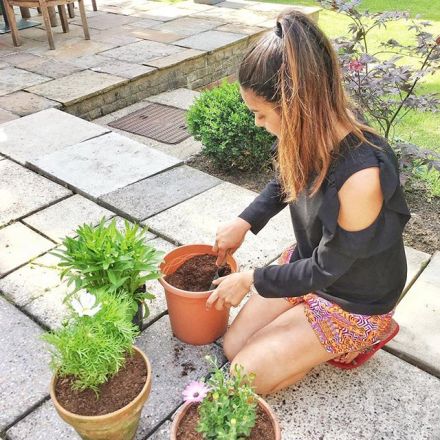
After a tempestuous patch, she has landed on her feet. Great wisdom has come to her in abundance. She has discovered that her family is her strength. She can trust them. Her mother walks right beside her, growing with her, every step of the way. She now appreciates her dog more than ever before. A drive to the coast and a stroll by the sea with a loved one is not something she takes for granted anymore. Yoga is now a part of her daily routine. Gardening brings her peace. She spends her time colouring picture books and drawing sketches.

Her creativity is finding expression. Zaynah lives with Borderline Personality Disorder and writes a blog – Not a simple mind. Her life is not easy but it is a hundred percent authentic. She shares it generously. She is determined to help others. While Facebook constantly incites her to compare her life with that of others, she knows better. She can tell real from fake. She understands she is in recovery. It’s a zig-zag road but it’s good. Yes. All this learning at 26!

“Recovery isn’t about getting back to how you were before, it’s about building something new.” – Anonymous.

In the recording below, Zaynah talks to me about her diagnosis, her recovery and the changes in her life: