Comings and goings.

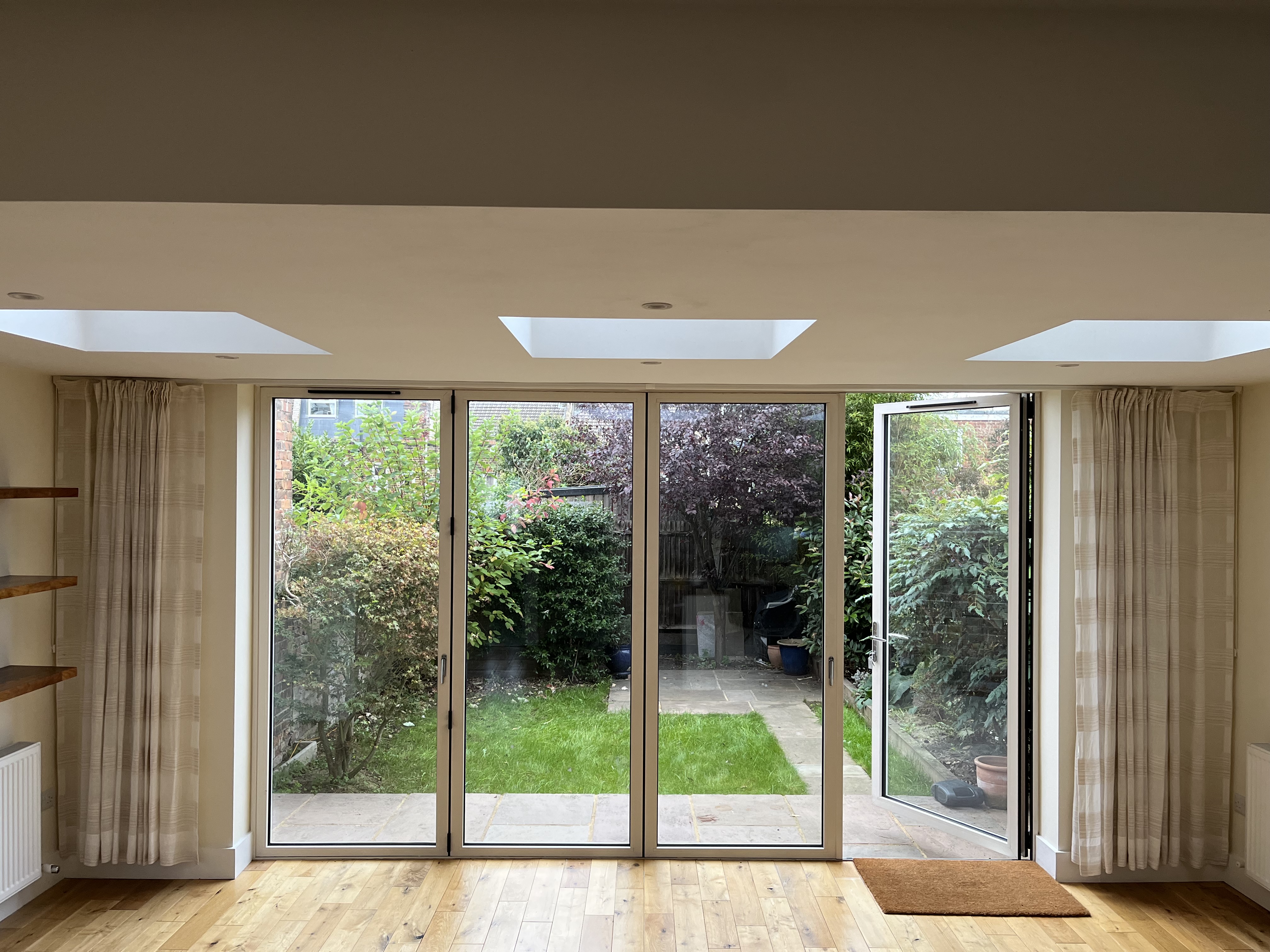
As usual, I sit here at my table by the window of my study, admiring the autumnal trees standing in the park across the road, looking for inspiration to write. They have been my encouraging companions for years. The difference is that today might be the last time I write sitting here.

Early autumn has cycled back again. The fullness of the moon has synchronized with the one eleven years ago. The comings and goings of the seasons, of the world carry on as usual. Moving away from this home to live elsewhere was unthinkable at one time. But now, the heart has settled. It knows things it did not before. It carries a treasure of love and memories. Saagar lives in this heart now. He cannot be left behind. He is with me everywhere.

This, our home is ‘under offer’ now. A young couple wants to buy it for the same reasons we did twenty years ago. A quiet street. A diverse neighborhood. A garden. Parks and good schools nearby. Last few days of packing up have been intense. Things that have surfaced from deep recesses – a handheld Nintendo Gameboy carefully wrapped in its purple case, a proper Canon camera, one black sock with TUESDAY on it in yellow bunched together with another with SATURDAY printed on it in green.

I know not to trust my memory. It often fails me. It misremembers things, puts them in the wrong order. Omits some entirely. It plays tricks, causes confusion. Forgets what I want to hold on to and remembers what I’d rather forget. Luckily, the job of the heart does not include remembering but feeling – how it feels to sit here looking out the window and then at a blank page, to fold a much-loved photo in silk and cover it in more soft clothing, to look at an empty room and see it filled with light, to know it’s okay. I can trust this thing in the center of my chest. It’s all okay.

Bad mother.

She had been admitted to a separate room in the Birth Center because of her special circumstances. The thing was written all over her notes.

“Congratulations Vicky! You have a beautiful baby boy. Do you have other kids?” the doctor’s voice boomed from behind the drapes covering Vicky’s legs. She was grieving her first born, Oliver. Only six weeks prior, his brain tumour had ended his sweet little life. He was three. The doctor should’ve known but he didn’t. Did he not read her notes? Did no one tell him?

She kept quiet and so did her midwife, who knew. She let go of Vicky’s hand and walked south to whisper something in the doctor’s ear. His question remained suspended on top of her head like a heavy cold fog.

Vicky lay there, admonishing herself for the time Oliver had asked her for a cuddle. She was so tired, she was unable to stand up. The last few weeks of her second pregnancy and the last few weeks of Oliver’s life had mercilessly clashed and she was trapped in the middle. She wished for more strength. She wished Oliver had been home to receive his little brother. His sweet round face with blue google eyes danced in front of her eyes. The new baby had been cleaned and weighed. He lay in the cot while she danced with Oliver in her dreams.

Back in her room, the midwife fished out a smiley portrait of Oliver and set it on Vicky’s bedside table so she could see his face. Susan, her friend from the Lamaze classes came with a bunch of red roses. In those days that was allowed. “You have the perfect replacement.” she leaned down to kiss Vicky on the cheek, holding her own belly with her right hand.

Forty-five years later, Vicky still says “Bad mother” to herself for not having given Oliver more cuddles, especially the one he had asked for. She has not forgotten his smile or his suffering. She still believes her doctor was callous. She wishes Susan had not said what she said.

The kindness of that nameless midwife still brings a smile to her face and a tear to her eye.

*** *** ***

(On Unresolved parental grief , research says that parents who have not worked through their grief are at increased risk of long-term mental and physical illnesses. Core helps parents grieve and grow together.)

Love endures.

As you walk through the intense fire that follows the death of your child, your heart burns for those walking behind you. You turn around and look at their tear-drenched faces – parents whose child just died . Despite the unbearable heat of your own loss, you can’t help but reach out to them. Their predicament as unbearable to you as your own. In trying to ease their pain, you believe you diminish your own.

This poem is offered by one of the CORe members for those carrying the heavy load of love and loss. It deeply respects the brokenness while also tracing the quiet light that remains, reminding us that even in grief’s shadow, love whispers through.

I feel your grieving, heart laid bare,
pieces scattered, our lot unfair.
Yet each fragment, though fragile, shines,
resilience stitched by love’s designs.

Your angel child, though gone from sight,
does dwell in memory, a quiet light.
In laughter caught, in whispers faint,
in all the love your heart can paint.

Each tear a bridge, each sigh a thread,
connecting worlds where you are led.
The joins of grief, so tender, true,
are etched with courage in all you do.

Though nights are long and shadows deep,
their presence lingers—it does not sleep.
In dreams, in stars, in softest air,
your dearest whispers: “I am there.”

Your love endures beyond the pain,
a sacred flame that shall remain.
Though broken, your heart bears a light,
turning grief’s darkness into sight.

So let each memory softly bloom,
a garden bright within the gloom.
Even in sorrow, love will find
its way to warm the grieving mind.

Now fragments found, arranged anew,

Love, hope, and courage form the glue.

Your heart, though changed, beats strong and true,

A living flame that carries you.

Whispered Reflection:

Each fracture, each delicate seam, carries a quiet, hidden light. Through love, courage, and the passing of time, these pieces are held together, forming a heart that is not the same as before—but more radiant for all it has endured. The very places of repair shine with their own gentle beauty, a reminder that even in loss, love endures and is able to recreate beauty.

Cats

The Intensive Care Unit (ICU) at City Hospital, Belfast was a circus. Every day of the week a different clown (read Consultant) took charge of the ICU. What was right on a Monday was completely wrong on a Tuesday. The same action would be pronounced ‘perfect’ by one clown and ‘abhorrent’ by another. To make things even better, they didn’t talk to each other. The flunkies (read Junior doctors) were the in-betweeners that got lammed from both sides as their shifts crossed over time-territories. They were the pawns on the frontline that took over the running of the unit from one clown at the beginning of a shift and handed over to the other at the end of it. The flunkies dodged the arrows of conflict between the clowns – on the phones, in hospital corridors and at handovers. They were the ones that ran around all night looking after the sickest patients in the hospital, only to be lambasted the next morning. They were the buckets in which the bile of bitterness was collected, the one that the clowns didn’t have the gall to throw at each other.

In 2004, I was one of those flunkies. After about 8 months of this non-sense, I was done. I was loosing my sense of self, my confidence in making decisions and most importantly, the pride in my job. It was time to stop and take stock. After a nasty night shift, I was handing over the patients to the day team. At one point the Consultant said to me ‘you need your head examined’. That did it. I couldn’t bear to go home only to return to this hell-hole ten hours later. I walked into the Psychiatry Outpatient Department which was on the way to the car-park. There were two empty seats in the waiting area. I planted myself on one.
“Do you have an appointment?” one of the receptionists asked me.
“No. I don’t. I can wait for as long as it takes. I work here. If I am not seen today I may not come back tomorrow.” I didn’t fully comprehend what I was saying but it was my truth.

Dr Ingram was a handsome young psychiatrist with kind eyes and a small beer belly, well couched in his grey suit. He understood. He gave me 6 weeks off on grounds of ‘work-related-stress’ and started me on Fluoxetine. I was also seen five or six times by a therapist. She was a kind elderly lady who listened. She suggested getting a cat.

At the Antrim Animal rescue home an adorable black and white feline peered at Saagar’s dad and me from her cage. It was her eyes that got me – curious and twinkling, like a child. They said this little girl had been there for a month. Before that she’d had a rough life on the streets for a few months. Her right ear had a wedge missing from its edge. We decided to call her Bella. We were advised to keep her strictly indoors for at least 6 weeks, till she got familiarised with the smells of the house. She found her way to the tops of kitchen cabinets and radiator covers, squeezed behind sofas and underneath beds, inside shoes and suitcases. The only place she didn’t like was her brand new soft bed.

On our trip to the vet for a basic check-up, we were told that the she-cat was in fact a he-cat. After much discussion, Saagar’s dad’s choice of name came up tops. ‘Mr Bronx’, the old faithful. He soon became a source of great joy, comfort and hilarity for us. We had him playing with balls of wool, soft toys with bells and chasing the beam of a laser pen. He was pure joy but kept his distance. Slowly he let us stroke and cuddle him. His purring beneath the palms of my hand soothed my soul and made me feel deeply connected with this four-legged being. Within a month we were having full-fledged conversations.

The Fluoxetine made me feel like a zombie. No joy. No pain. No love.
It was dehumanising. At times it made me terribly restless but I stuck with it. It was proof that pills can’t make you happy. May be they take the edge off, but at a price. The best thing about that time was that I could rest. I was left alone. I had some control on my days and nights, which I had not had for years.

After 6 weeks, it was time to go back to work. I did. My schedule was reshuffled to ensure I didn’t spend much time working in ICU. It worked. I got back on my feet. Later I discovered that other junior doctors before me, had had similar unpleasant experiences, complaints had been made about the sad state of affairs at that hospital but nothing had changed on ground. It was an open secret, not spoken about while the abuse persisted and continued to break innocent young doctors down.

Nine years later, Saagar was home from University and I got a phone call from him at work. “Mamma, can we get a cat? I found one on Gumtree.”
That evening we went over to a tiny flat in Sydenham occupied by a black family of four – mum and three kids. On a window sill lounged another family of four, a grey mother-cat with her three grey kittens. Six weeks old. The kittens were being carried around the flat like rags by the kids. They didn’t care if they lifted them by their ears or tails or bellies.They released the sweet little things from various heights above the floor, cornered them and held them tight. They told us about what the cats ate. We picked the littlest one, a grey and white mini-punk. We got a bell, a bowl and some toys for him from the pet shop and brought him home in a cardboard box. He was christened ‘Milkshake’ by Saagar, who became his loving mum that summer.

The sedate Mr Bronx was too old and too calm for the punchy young Milkshake who developed an attitude very quickly, but they found a way to co-exist, keeping a safe distance from each other.

Not once did it occur to me that there might be a connection between the circumstances in which we got the first cat and then, the second.

Othering our Ownkind.

“More than two thousand people read my post and saw my video today “ Yuval said.

‘They will see it and be moved by it. What then? What will they do?’ asked Basel.

That is the big question. What can we do? What will we do? Two young journalists from either camp came together to document the encroachment and destruction of a village called Masafer Yatta on the West Bank. They raise this question loud and clear for each of us. What can I do? The injustice of all this pushing and kicking, hurting and forcing fills me to the brim with a sense of sadness and powerlessness. My arms and legs go limp. So, thus far I’ve been running away from it. I must be a coward. What can I do? So many influential and powerful people have been quiet, watching the numbers and images get worse every day for decades.

Today, I watched No Other Land on the big screen. Live footage shot on a mobile phone over 4 years, 2019 to 2023. Running away is not possible anymore.

Harun’s mother prayed for his death. This young man was shot by a soldier while he was trying to stop his home from being demolished by the army. The bullet left him paralysed from his neck down. He was nursed in a cave as they had no house. No facilities. No transport. No freedoms. Everything around them was being bull-dozed – chicken coups, elementary schools, homes and villages. No one knew what new destruction each new day would bring. Toddlers were learning to speak, and older kids were trying to play and go to school in the middle of this madness. The respectable Mr Tony Blair graced the village with his pointless guest appearance for seven minutes.

Our world is bipolar, selectively blind. It’s okay for the politics of some nations to be tied to a faith but not for others, it’s okay for some nations to dishonour every treaty that they ever signed but not for others, it’s okay to condemn the exact same atrocities when committed by one nation and not another, it’s okay for third parties to fund and support the killing of women and children in plain sight. This is our world.

We humans have the arrogance to believe we are the smartest of all species, yet dogs don’t kill other dogs in millions every year. No other species has constructed the level of othering that humans have. We can’t see what we are doing to ourselves. We can’t see that there is no other. It’s only us in different garbs. Those of us who can see, must see. Those who can write, must write. Those who can sing, must sing. Let not our dark side win.

Arrogance, blindness and cowardice – a recipe for self-extinction.

By Abdul Raheem (https://www.instagram.com/mud._.lotus)