Day 979

“Helping others is the way we help ourselves”
-Oprah Winfrey

Simple ideas change the world. A Clinical Psychologist, Dr Charlie Howard was taking a walk around her area. Having recently had a child, she was looking for her next “thing”. She asked random people what would make a difference in their community. “A Problem-Solving Booth right here on my street” answered a young man in the queue in a sandwich shop.  “A place where people can go with the stresses in their head and where we can help each other”. The idea was genius and Charlie’s head built on it quickly. “Maybe we could try one here?” Charlie suggested, “we could do it together”. The young man smiled at Charlie and said “yeah maybe” and then his phone rang and he ran off down the street. No one knows his name and no one has seen him since. He probably has no idea just what his throwaway words have since inspired.

Problem-Solving Booths are a great way to bring members of the community together to have conversations that they might not otherwise have, by helping each other with their problems. One chair is for the “Helper”, the person listening to the problems. The other is for the “Helped”, the person describing their concerns. The aim of the Booth is that people swap roles regularly as we all have both the potential to have problems as well as to offer help.

Thrive London is a citywide movement for better mental health for Londoners supported by the Mayor of London and the London Health Board. Problem-Solving Booths have become the local arm of Thrive and we’re working out what they are, what they do and what they can do, with everyone we meet from street to street, borough to borough and organisation to organisation. It’s cool.

Watch this space!


Day 978

Primum non nocere- First do no harm.

Doctors could save lives by breaking rules on privacy.

Screen Shot 2017-06-29 at 22.23.06

This is a point worth making again and again and again and again and as many times as it takes. Few excerpts:

Hamish Elvidge, father of Mathew – “Before my son took his own life, he had only just been discharged as a low-risk patient, despite coming in as a high-risk patient that very same day after a suicide attempt. At no point were his family involved in any part of the process. There is a chance that, had the hospital decided to share information with his family, our son would still be here today.”

“Confidentiality is far too embedded within the medical profession. The default position has to be one where you have to explain why you haven’t involved the family.”

Prof. Appleby said: “Psychiatrists should feel able to use their clinical judgment on where the balance of patient safety and confidentiality lies. Families are devastated when they discover too late that their loved ones had been talking to professionals about suicide.”

Professor Sir Simon Wessely, president of the Royal College of Psychiatrists, said: “In my experience, if doctors make well- justified, well-recorded decisions to share information in the best interest of a patient who is in suicidal crisis, consistent with their professional codes of practice, this will be understood, respected and upheld in courts of law.”

 (Source: The Herald_Congress17_suicide story.pdf)


Day 977

_95454465_rebeccaprofile

Rebecca

Rose Polge. Rebecca Ovenden. Lauren Phillips.
All junior doctors. All deaths by suicide, in just over one year.
The only three publicly known. Total number not known.

Polge’s mother linked her suicide directly to conditions at work – exhaustion because of long hours, work related anxiety, despair at her future in medicine and the news of the imposition of a new contract on junior doctors.

This problem is not limited to the UK. Earlier this year, 4 deaths within 5 months in Australia propelled the launch of an urgent investigation into the problem. No such investigation in the UK. Indeed, the law here explicitly excludes suicide from the requirements to report work-related deaths. A GMC report in 2016 stated that the low morale amongst junior doctors was putting patients at risk. Signals of distress and a dangerous level of alienation are an indication that the system cannot simply go on as before.

At the 2017 BMA junior doctors’ conference, delegates gave the union a mandate to lobby for all suicides to be investigated formally by their employer, jointly with the GMC, Health Education England and the BMA.

In France, workplace suicides are a well-recognised entity.
Yes. Suicides are complex. There can be many contributory factors. But when there is clear evidence of a link to work pressures, that should be given appropriate attention.

Ref: BMJ Article: Suicides among junior doctors in the NHS followed by an interesting discussion.

Day 976

I grieve.

I grieve for his death.
For his guilt, his shame.
His self blame.
His sadness. His silence.
Every moment of distance.
Him, all alone. Forlorn.
His thoughts, torn.
His brokenness. Hopelessness.
His lightless eyes. His vanished smiles.
His hollow form. His shadow gone.
His quite desperation. Separation.
His terror. His fright.
Night after night.
Misunderstood, behind a hood.

I grieve.
For this black and white Now.
For this constant ‘How?’
That wretched day I went to work.
Every time I put me first.
Words unsaid. Eyes unmet.
Holidays unmade.
Jokes and Stories unshared . Games unplayed.
Songs unhummed. Beats undrummed.
Meals uncooked. Dreams unhooked.
Films unseen. Jeans uncleaned.
Hugs unheld. Incense unsmelt.
Cocktails unmixed. Good-nights unkissed.

I grieve and I am grateful
For all that was given
and all that was taken away
And all the nitty-gritty.
For it pushes me closer to Divinity.

Day 975

image_update_img

Ben 

In conversation with a retired Paediatric surgeon today, the topic of premature babies came up. He said that the commonest type of surgery in new-borns has changed over the years. Unlike a couple of decades ago, the commonest operation now is for dead gut, essentially due to the rise in our ability to provide better care for premature babies. He thought that the incidence of premature births was almost double in London than anywhere else in the UK because of high stress levels.

According to one of the largest reviews of evidence, children born very prematurely are at greater risk of developing mental health and social problems that can persist well into adulthood. Children who weighed less than a kilogram at birth are about four times as likely as those born at term to have attention deficit hyperactivity disorder (ADHD), and significant emotional problems. This may be due to weakened connections in brain networks linked to attention, communication and the processing of emotions.

These findings are important because mental health issues that occur in childhood are a strong predictor of psychiatric disorders in adulthood. “There is a strong case for assessing, on a regular basis, the mental health status of these children, so that early intervention approaches might be implemented sooner rather than later, with a view to minimising future mental health problems,” said Prof Smith from Glasgow.

Sarah is a Registered General Nurse with 25 years’ experience. She worked as a Neonatal Nurse over the last 17 years prior to moving to The University of Salford where she is now a Neonatal Lecturer within the Midwifery Team.

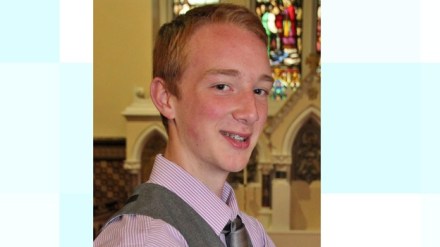
Sarah became involved with PAPYRUS in 2013 after the loss of her 14-year-old son Ben to suicide. Ben was a premature baby.

sarah_fitchett_for_trustees_bio