Shushshsh…

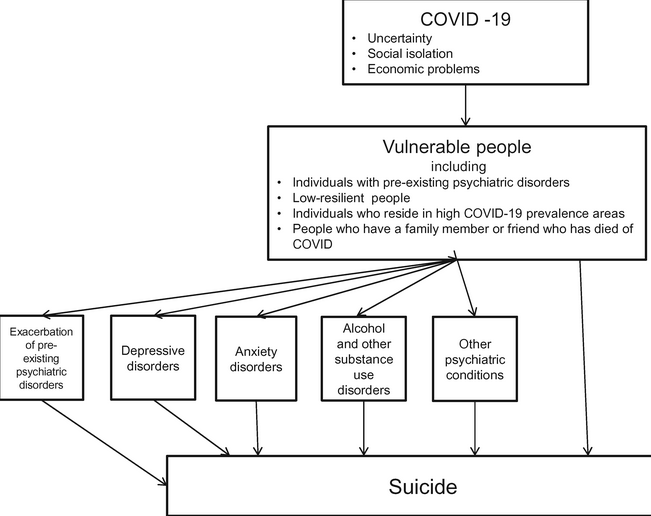
In June 2020 Sher et al said “Social isolation, anxiety, fear of contagion, uncertainty, chronic stress and economic difficulties may lead to the development or exacerbation of depressive, anxiety, substance use and other psychiatric disorders in vulnerable populations including individuals with pre-existing psychiatric disorders and people who reside in high COVID-19 prevalence areas … COVID-19 crisis may increase suicide rates during and after the pandemic.”

This possibility is slowly starting to unfold. The number of calls being made to crisis help-lines of all kinds is up by about 40%. Economic uncertainty, insomnia, stress and suicidality feed into each other. The previous financial crisis of 2008 had a tragic outfall in terms of the toll taken on human life, essentially due to job losses. Now we are heading into another one. Unless governments all over the world wake up now, lives lost by suicide over the coming months and years could be more than those lost to COVID-19. As per the ONS data from last year, the England and Wales suicide rate remains statistically significantly higher than the rates seen in recent years.

Active outreach is necessary. If you know friends or family who might be struggling or worried, please do reach out to them with your time and open up supportive conversations. Sending a text or WhatsApp message is not enough. Having a proper check-in by telephonic or video link, possibly meeting up for a cup of tea or a drink fosters proper connection. If you find yourself in a tight spot, please know – this too shall pass. It is a temporary problem. Life still holds promise and beauty. Do reach out to your friends and family for support. More than ever before, in the present times suicide prevention is everybody’s business. Take care of you and yours.
Logotherapy

It was late 1930s. He was a young man in love. She was a young woman who was delighted to be asked by him. They were married. Soon she was to be a mother. But the clan they belonged to were not allowed to procreate. She was made to abandon the baby even before it was born. They both were sent to different concentration/death camps. But their love story did not end there.

Despite shoveling snow with no shoes on, going for months without proper food, constant beatings and humiliation, not knowing which instant he would be walked to his death, he carried on loving her. He did not know if she was dead or alive but he loved her every second. He hoped to see her again. His longing kept him alive.

Four years later, he was freed and he found out that his sweetheart had passed away soon after their separation, at the age of 24. His father, mother and brother had met the same fate in that ugly assault of humanity on itself. His sister had survived and moved to a faraway land.

Viktor E. Frankl was a Psychiatrist. He took 9 days to pen down his learning and thoughts which became a book – ‘Man’s Search for Meaning’ that sold millions of copies all over the world as it helped them transform their suffering .

He pioneered a new way of counselling patients called Logotherapy or ‘meaning-based-therapy’. When asked of the difference between Psychoanalysis and Logotherapy, he said, “In Psychoanalysis the patient must lie on a couch and tell you things which sometimes are very disagreeable to tell. In Logotherapy the patient may remain sitting erect but he must hear things which sometimes are very disagreeable to hear.”

It is a future focussed approach through which the patient is reoriented toward his unique and specific attributes aligned to a purpose which can be fulfilled by him/her alone. It is based on the premise of freedom – the freedom to choose our response to our experiences, the freedom to choose the stance we take when faced with a difficult and unchangeable situation.

Over the last 5 years I have read Frankl’s book at least 5 times, each time deriving new inspiration. Last week I had the good fortune of being able to share some of those insights on-line with a community close to my heart. The Compassionate Friends helped me discover that Frankl’s love story will never end. It is interwoven into yours and mine and with the love-stories of those yet to come across it.

Human rights issue – Families Matter

Hundreds of times, in waiting rooms outside Intensive Care Units I have looked into the eyes of sons and daughters, spouses and partners of patients, held their hands and said, “We did all we could. I am so sorry for your loss.”

When Saagar died, no one looked into my eyes and said that to me. They had not done all they could for him. The hospital carried out a sham investigation, a futile exercise in ‘being seen’ to be doing the right thing.

The GMC found everything to be hunky dory. The doctors ‘looking after’ Saagar had done their jobs to perfection. Just too bad the patient was dead. They did not deem Saagar’s case worthy of an investigation. GMC’s role in its own words:

We work to protect patient safety and support medical education and practice across the UK.”

The Coroner’s report shone some light on the holes in Saagar’s care. It clearly pointed out the things that South London and Maudsley (SLaM) Hospital got wrong.

  1. There was a general failure to identify the diagnosis on the discharge summary from the Home Treatment Team to the GP.
  2. There was a general failure to communicate thoroughly enough with the parents about the relapse symptoms, what to watch out for and where to go for help in the future.

Last June, I wrote to the CEO of SLaM, requesting an update on the changes that had been made in his organisation in response to the Coroner’s findings above. He said someone would get back to me and I heard nothing. This June, I sent him a reminder and again he said someone would get back to me and I am still waiting.

What are my rights as a parent? Is this too much to ask?

What were Saagar’s rights as a young man with a mental illness?

Are our lives not as important as anyone else’s? Black or white or brown? With Cancer or Diabetes? Or Bipolar Disorder?

Everyone deserves to be heard and seen. With respect.

It’s not charity. It’s a human rights issue.

Ref: Learning from deaths: Guidance for NHS trusts on working with bereaved families and carers

The man who loved yellow.

He dropped out of the security of an Engineering Course to enrol into the futility of a dance school. He carved his way through sheer hard work from a humble home in the north-east of India to the flashing lights at the heart of Bollywood. He personified simplicity. He had no god-fathers in this brutal industry known for its nepotism and ruthlessness. He stood on the sheer credibility of his talent.

Stars, moons and aliens took up a lot of space in his head. He spent hours on his beloved telescope which he called his ‘time-machine’.  He made new friends, kept old ones and his humility through the fame and the wealth of stardom. He stayed true to himself and his name which meant ‘Peaceful’.

His charm and talent won hearts all around. His youthful portrayal of his love of cricket came through in his films ‘KaiPoChe’ and “M.S Dhoni, the untold story“. But the media gave him a hard time as they saw him as an outsider. Of journalists he said, “First they’ll ignore you, then they’ll laugh at you and then they’ll fight with you. Right now, they’re laughing at me.”

Not anymore. Bollywood is in a state of shock. On the 14th of June 2020 Sushant Singh Rajput ended his life at the age of 34. It seems he had been on treatment for depression for the past 6 months. Police is frantically interviewing multiple people to establish a ‘cause’ for his death.  

Film contracts falling through? Not enough new offers of interesting roles? Disparaging remarks made by influential bitchy colleagues? Being bullied and ignored? Financial difficulties? A painful break-up? The death of his mother at the age of 16? The death of his young manager, Disha Salian 3 days prior to his? Unmet parental expectations? Inadequate treatment for Depression? Migration away from home? Loneliness? Stigma of having a mental illness? Not knowing how to ask for help? Being a man?

All of the above.  

RIP Sushant.

PS: India has the highest suicide rate in South-east Asia: 16.5 suicides per 100,000 people

Food, water, shelter and clothing.

That’s what it’s all about. Isn’t it? Our most basic needs.

For some, who were comfortable, these basics are threatened in the current climate. For some they have constantly been under threat. For the lucky ones, all is well. For now.

The fact remains that food needs to be grown by someone. Seeds need to be sown and nurtured. Given the right amount of nutrients, sun and water. Given time to mature and then harvested. Like Midas, even if everything else was made of gold, we could not eat it. Even if we put hundreds of satellites in space, we need our basic needs met.

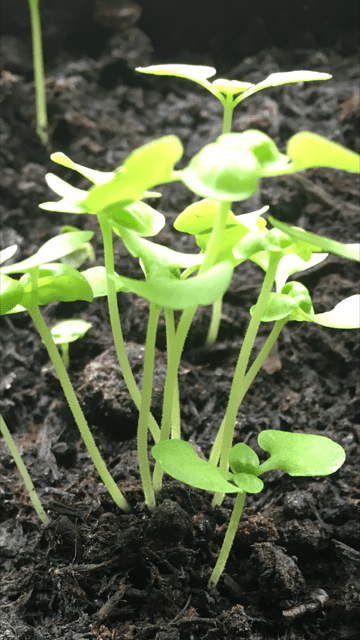
Over the past few months I have appreciated growing a few things from seed. Sunflowers, mint, coriander and sage. Not enough to keep me alive but enough to give me a smug feel of being someone who grows stuff. I have little trays laid out by the windowsill and they fill me with pride each day they reach out for the sun, a few millimeters more than yesterday. What must it be like to be a real farmer!

In India, more than 11 thousand farmers ended their lives in the year 2016. Too much rain. Too little rain. Aberrant weather. Poor quality seeds. Exploitative middle men. Illness in the family. Monsanto. Easy access to pesticides. False promises of relief measures, incentivising a farmer suicide. The government promises money but fails to deliver again and again. It then blocks articles and videos that try to make this information public.

Kheyti is an organisation that helps small farmers design and implement low-cost farming interventions. “Greenhouse-in-a-Box” is a low-cost greenhouse bundled with end-to-end services. This greenhouse fits in 2-5% of a small farmer’s land, protects crops from environmental risks and grows 7 times more food using 90% less water.

This prolonged lockdown is going to affect many individuals and small businesses. Many are starting to worry about their very basic needs. Uncertainty, insecurity and the feeling of being stuck is rising everyday. Helplines are receiving more calls. Food banks have had to expand beyond capacity. The indirect and unintended consequences of the pandemic might be worse than the direct and predicted ones. As incomes fall away, despair in our communities will rise further.

Each of us needs to think of one person we know whose income might be affected by this and call them. We need to think of one person recently bereaved and call them. Not text. Not e-mail. Phone call. Speak. Directly. Ask questions. Connect, have a chat, come up with ideas and creative answers. Signpost to resources. Reassure. Give hope. Together, figure it out.

This too will pass but before that it will test us. All of us.

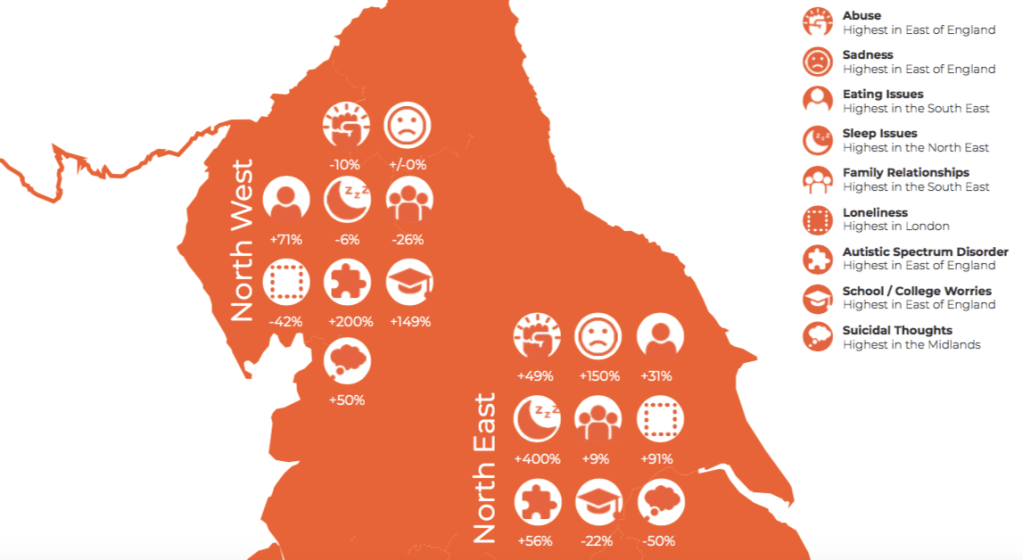
Kooth Infographics – suicidal thoughts rising. Highest in the Midlands.

Kooth Week 10 COVID infographics