Mum’s village

The southernmost beach on the coast of Goa is also its most pristine. Galgibaga. The other name for it is Turtle beach, home to a vulnerable species of turtle, the olive ridley. I get that the first part of their name comes from the colour of their shell, which is olive. No idea where the ‘ridley’ comes from. Well…

Approaching the date of delivery of eggs, usually in November,  the female of the species returns to the spot where she herself hatched. Mum’s home, I guess. Mass-nestings are common. Mum’s village, I guess. Sisters and cousins, all coming home to have their babies.  They bury their eggs one and a half feet under the sand. After about two months, the hatchlings have to risk crossing a hazardous beach before they reach the safety of the sea. As they scoot across, predators such as crabs, eagles, dogs and the like nab them. To enhance their dwindling numbers, local conservationists and NGOs now place safety nets around the area where the eggs are buried, discourage dogs from getting close and facilitate the safe transit of baby turtles from land to sea.

No bars, restaurants, casinos, or beach huts are allowed on this white sandy stretch. No loud music. No big car parks, hence humans have to make an effort to get here. So, despite its immense beauty, there is no noise.

Two kilometres along a little road curving inland from this beach is our temporary abode, surrounded by birds and a green canopy of tall trees. Everyone seems to know everyone here. There are no beggars or homeless people. I need never worry about my unlocked bicycle parked outside. It’s safe. Coconuts, big banana trees, pepper vines and baby-mangoes are within an arm’s length of our windows and balconies. A small bus, a car or a scooter may pass by noticeably at long gaps. The distinct calls of the fisher-woman and the bread-man, I can now recognise.  

My return to the land where I hatched and gave birth decades ago. Overlapping cycles of life. Circles, like bubbles being blown to the sky at dusk, capturing all the colours. Merging. Dancing. Bursting.

Simple joys.

I fold.

My latest love is folding. The act of arranging a piece of paper or cloth in a way that it occupies less space and looks neat. Layering one part of it on top of another to make it compact. Apparently, molecules, tents, parachutes, rocks and beds fold too. But I am more inclined towards an un-stitched piece of material. Bed sheets and towels are my favourites but I don’t mind table-covers, handkerchiefs and face-towels.

Firstly, it’s the subtle fragrance of moist lavender fabric conditioner, still fresh from the wash. When I open my arms out wide to hold the margins, the top edge rises right up to my nose and the aroma gets right inside my head. Exhilarated by that, my fingertips follow the margins to find the corners. Sometimes the rim curls up on itself and needs to be straightened, patted back repeatedly on a flat surface. The corner often falls to the floor and it takes a deep forward bend to lift it up. These are the in-built stretching advantages for the upper and lower body.

The corresponding corners are brought together and the first large fold created which gets progressively smaller with every corner alignment, until I have a beautiful stack-able rectangle in my hands, ready to land on its shelf in the airing cup-board along with and on top of its contemporaries in white, blue, orange and green. If dried on a clothes-line, it doesn’t need ironing. That’s the energy saving advantage.

Folding a sari is an art-form. I learnt it from my mother. Here, the mouth and teeth assume an active role. The sari is an un-tailored stretch, at least six yards long and about forty-two inches wide. Before anything I need to ensure that I have a bed nearby so that I can lay the length of the material there while I work on the edges and corners. After figuring out which horizontal edge is up and which surface goes on the outside, I start from the top left corner. The rest of the routine has to be witnessed to be believed but it’s the middle point on the top edge of the sari that has been folded twice over that is held between the incisors for a short time. The silk ones have a habit of going all askew if not held and laid perfectly and lovingly flat. A real treat for the hands and arms.

Oh. The satisfaction. I wish all the ruffles and crinkles of the world could be folded neatly away and patted out with warm hands.

Yesterday I found myself putting away a pashmina that I had used once since it was dry-cleaned. In default mode, I was making the folds along the same lines, in the same direction as the dry-cleaner had done. It was strangely pleasurable and worrying.

Wonder where this new love of mine will take me.

Dis _ _ _ _ tions!

Sitting at my desk, hoping to create gold on paper (read computer screen). I wonder what’s on radio? A new Urdu poem on Instagram? The angle of the sun getting snazzier by the day. That pile of unopened mail, staring at me. Those people walking by the window, in all-white costumes, singing. Are they drunk? The silencer in that car is not working.

The answer phone, blinking. Oh! That pending phone call to Mum and that long overdue important e-mail. Wonder if it’s cycling weather tomorrow. My hair, so bad from sweating inside the helmet. My stomach’s churning again. I wonder if the orchids need more water in this weather. Maybe I should look it up. No. No. Later. That new film someone recommended on Netflix. That Book at Bedtime – I need to catch up with the first two episodes. A-level results came out today. I hope the majority of the students were not disappointed. Saagar did so well in his A-level exams! Ten years ago.

That picture perfect Expedia cloud, framed in the middle of my window. This breeze, just like the one before the first monsoon shower back home. Wonder if anyone’s reading the report I wrote. Wonder if many patients will make it to the hospital tomorrow for their appointments. What do the train drivers do when they are on strike? I see the point they are trying to make. They believe they’re doing it for us all. Good for them.

The laundry needs sorted and put away. I need to pack for the weekend. A cup of jasmine tea and a piece of chocolate would be perfect. It’s too late to write anything sensible now. So, here’s praying for better luck tomorrow. Good night for now.

Come home, my darling.

I still hear the key turning in the door from the outside and you stepping in. Can you believe it? I still see your face, darkened by the sun. Dressed in your cricket whites, you drag your massive cricket-bag-on-wheels behind you by your left arm.

“Did you take the sun-screen with you?” I ask.

“Yes, it’s in the bag.”

“Did you actually put it on?’

 “Mamma, I’m hungry.”

I still wait for you to join us for dinner. I cook the foods you like, especially on your birthday: spinach-paneer for mains, chocolate mousse for dessert. I wonder what you’d be doing in this realm if you were here. Job? Girl-friend? How silly! Isn’t it? I can’t help it. It’s involuntary. It’s got something to do with the heart. With longing. With missing. With love. It’s not supposed to make sense. You would have had a good old chuckle at my expense if you were here. But you are not and I am. How random is that?

I still remember the first time I felt you elbow-ing or knee-ing me from inside my tummy, as if we had an inside joke between us. I remember holding all three kilos of you in my arms for the first time. I couldn’t believe you were for real. You were all mine. Now my arms ache with emptiness. Is this real?

Do you miss me sometimes?

Happy birthday my darling.

Heaven

It will be the past

And we’ll live there together.

Not as it was to live

But as it is remembered.

It will be the past.

We’ll all go back together.

Everyone we ever loved,

And lost, and must remember.

It will be the past.

And it will last forever.

                      – A poem by Patrick Phillips, on the New York subway.

(“Ghar aa” is a Hindi phrase that means “Come home”)

Not ‘them’ and ‘us’. Just ‘us’.

It has been a dream to be face-to-face, talking about Saagar with the Psychiatric community. In the past 7 years that has not really happened. On Wednesday, the 15th of September, I got as up close as possible with an entire department of roughly 100 psychiatrists and Therapists at differing levels of experience and practice. They were in New York and I was here, in London. The Grand Round was organised by a colleague, Prof Mike Myers, who gave it the title:

‘Losing a Son to Suicide: How One Mother is Opening Hearts and Minds Around the World’

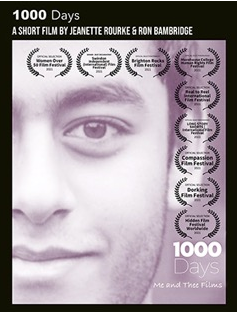
After a cordial ‘meet and greet’, the film ‘1000 days’ was screened. It was followed by complete silence. Same as the previous time it was screened. And the time before. Each time the audience was left speechless.

After a long minute I gently stepped in with the assurance that this was a normal response. I invited questions and comments. I thanked them for the work they do and acknowledged how difficult it is for the profession to deal with such losses. I shared my hope that the film will deepen their insights into the human element of such deaths and the value of forging partnerships with bereaved families.

What followed was a fulsome, creative and holistic exchange of ideas.

“What led you to make this film and share your life in this way?” one young Resident asked me.

“I could only work with what I had and do what was in front of me. When I could write, I wrote. When I could speak, I spoke. When I could learn, I learnt. From the moment I heard the news of Saagar’s death, my only intention was that this must stop. No one should have to suffer the way Saagar did or the way I and his friends do. This film came about because it’s time we recognize that these lives are worth talking about, that the desire to end one’s suffering is a normal human desire and that we all have a role to play.”

Winner – BEST DOCUMENTARY – Swindon Independent International Film Festival
Winner – Brighton Rocks Film Festival – Spirit Award
Winner – Compassion Film Festival Colorado – Reflections of Love People’s Choice Award
Nominee – Morehouse College Human Rights Festival Atlanta (winners yet to be announced) 
Semi Finalist – Gold Coast International Film Festival – New York 
Nominee – Long Story Shorts International Film Festival 

Upcoming festivals where the film can be watched starting 23rd September 2021. Tickets available now.

‘1000 Days’  
Morehouse College Human Rights Film Festival – fosters ongoing discussions about human rights and social and political issues.
September 23 – 25 https://morehousehumanrightsfilmfestival.com/2021-film-guide/

‘1000 Days’ at Women Over Fifty Film Festival:
WOFFF is an inclusive, international film festival celebrating women over 50 in front of, and behind the camera.
25 Sept – 2 Oct – tickets on sale
https://wofff21.eventive.org/films/61379c142c09f100b90ae7c4

Comments:

”Bringing people closer and keeping them deeply connected despite social isolation.”

“Keeping the silk threads of human bonds as strong as ever.”