Heartbreak Syndrome

Screen Shot 2019-04-27 at 18.48.41

Carrie Fisher: Date of death 27th Dec 2016.
Her mother, Debbie Renolds’ date of death: 28th Dec 2016

Emiliano Sala: Plane Crash – 21st Jan 2019
(Death confirmed 13 days later).
His father, Horatio Sala’s date of death – 26th April 2019

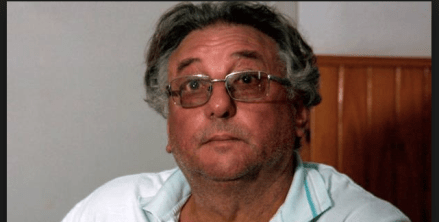
Both these parents died of natural causes. Horatio Sala was only 58. For days after the crash, he was not sure what was happening. “Hours go by and I know nothing. It makes me think the worst. I know nothing. Nobody has spoken to me. Not a call from the Embassy, the club, from anyone.”

I cannot imagine how stressful that must be. After the ‘worst’ was confirmed, the investigation was a protracted one. Horatio’s angst is palpable on the video clips. The grief and anger of it must have caused a sustained and prolonged release of adrenaline which greatly raised his pulse and blood pressure, making his heart work harder, making his blood sticky and ruining his immune system. Research also shows that in the first 30 days after a loved one dies, your risk of dying too is significantly increased. There are many stories validating this finding.

More than a month after the crash a BBC report said, “Some operational aspects are yet to be determined, such as the validity of the pilot’s licence and ratings.” What must that do to a parent! “Air accident investigators will continue to look at all operational, technical, organisational and human factors which might have contributed to the crash.”

They will continue to look I am sure but for the bereaved families, there is no resolution till the investigation is complete. They don’t feel settled until then. They are haunted by unanswered questions. The big and noisy fight inside overshadows everything else. There is no sign of ‘peace’ for at least a thousand mile radius. A prompt, fair and proper investigation is essential for them to start grieving properly. Losing a child is bad enough. A parent should not then have to fight for facts and justice.

Sadly, even the medical profession does not understand sudden traumatic grief. Often the investigations are a sham, take forever and produce vague statements like the ones above. I know many parents whose suffering is insulted and prolonged for this reason. This must change. It breaks my heart and many others.

PS: Very sorry for the pilot, Mr Ibbotson’s death. The system failed him too. If he did not have an appropriate licence, the system did not stop him from flying.

Inventory of Loss

Just like old trinkets, losses sit about in our being for years, forming layers upon layers, rusting us on the inside. Most of the world walks around with a thin film of red rust of unresolved grief just under their skin. A long list of losses dressed up as something else hides behind this film.

When Russell was 6, he went for a basketball game with his dad one Saturday. He lost his little blue jacket there. His dad gave him a good hiding for that. For Russell, it meant loss of safety. Did anyone recognise this as a loss? Nope.

When Saagar moved from India to Northern Ireland, he didn’t know English very well. He was one of three coloured kids in his Primary school. Something as fundamental as his name was alien to all around him. One day he came home from school and asked, “Can we change my name to Alan or something?” For him, this move meant loss of a sense of place and a sense of self. Was it acknowledged as such? Nope.

When the Tsunami washed away thousands of villages on 2004, Saagar was stunned. Until then he had faith in God but after watching the devastation caused by it on TV, it was all over for him. He said, “If there was a God, He would not allow such a horrible  thing to happen.” It meant a profound loss of faith for him. Did we know how to deal with it? Nope.

When I was diagnosed with Rheumatoid Arthritis, I was 42. It mainly affected the small joints in both my hands. I worried about my ability to work in the future. With correct diagnosis and medication, I was back to normal in a short time, but for a while I lost my confidence, my sense of security. Was it expressed and addressed? Nope.

Yes. We accumulate losses without knowing it and our inventories continue to add on more items when we’re not looking.

I am learning to look at and validate all my losses. I am learning to be complete with them.  As Christmas is approaching, I am aware that that empty chair at my dinner table will hurt. But I am grateful that Saagar once sat there. I am already grateful for all those who will be in their chairs that day. I am also determined to make them feel special and wonderful, loved and cherished, like I would Saagar, if he were here.

PS: In Jan/Feb 2019 I hope to start a series of 8 weekly Grief Recovery workshops, 2 hours each. Up to 9 participants can be accommodated. It will most likely be on Tuesday evenings in South London. If you think you would like to work with me and take small actions towards healing, please do let me know. Thank you.

https://twitter.com/GriefUK/status/1067853104962506757?ref_src=twsrc%5Etfw%7Ctwcamp%5Eembeddedtimeline%7Ctwterm%5Eprofile%3Agriefuk&ref_url=https%3A%2F%2Fwww.griefrecoverymethod.co.uk%2F_webedit%2Fgenerator%2Fwidgets%2Ftwitter.php%3Fusername%3Dgriefuk%26height%3D300%26theme%3Dlight%26links%3D

How did I get here?

17John W James was a young man in America who had his heart broken by the death of his son in 1977. He found that there was no help available for his heart. He was mostly asked to process the pain through his brain. This did not work for him. His pain continued to worsen and invade other parts of his life, such as his marriage and his work. At one point his suffering and isolation was so great that he couldn’t bear to continue living. He was on the brink of ending his life when he asked himself, “How did I get here?”

He sat down and took a closer look at his life. He found many losses in his past that had been claiming parts of his soul like land-mines along the way. For example, friends lost in the Vietnam war.  He had never addressed or resolved any of his previous painful experiences and they had been layering up, one on top of the other, on top of him, to the point he was being smothered by them. He unpicked each of these layers one by one. He dealt with every one of them in a particular way. He found a method by which he could reach his heart and reduce his pain. Slowly, he started to feel much better. He shared this method with other grieving families and it helped them too. He called it “Grief Recovery Method”.

This afternoon I completed my Grief Recovery Method workshops and I can see why they have helped thousands of people across the globe over the last 30 years.

PS: E-book request form : https://www.griefrecoverymethod.co.uk/ebookrequestform/

Hope

The concert had just finished and the hall was semi-lit. A dance recital entitled ‘Hope’ had coaxed everyone’s feelings up from deep within to just under the surface, like fish in an aquarium hovering at the top for specks of food. The main supporter of the show was the Patel family who had recently lost one of its eminent members. He was survived by his young wife and three kids. The soft thuds of seats folding up, the hiss of people whispering in gentle tones and trudging in small steps towards the exit filled the warm air.

I approached the 17 years old Patel boy, one of the sons. He appeared shrunken. Contracted, like an empty plastic water bottle, after a flight.

“How’re you doing?”
‘Not bad. Thanks’ he stated, unconvinced, looking downwards and sideways.
“Did you enjoy that?”
‘Yes. T’was nice.’ Still expressionless.
“How’s mum doing?”
‘We went for a safari to Kenya. That was good’ he looked up a little.
“I am sorry for your loss. I hope you’re taking good care of yourself.”
‘Yes. Thanks’. Mortified.
“Can I give you a hug?”

It was like hugging a coat stand.

Resources:

1. Child Bereavement UK: https://childbereavementuk.org/for-families/support-for-bereaved-children/
2. Winston’s wish (Charity to help young ones cope with grief): https://www.winstonswish.org/
3. Cruse: https://www.cruse.org.uk/children/how-to-help

9 days to go.

Why? How did we get here?
Why us? How can this be?
Why him? Such a sweet child!

How did it feel to be him at that point?
How did it get that bad?
Why could no one see it?
How could I be so blind to his pain?
Did he try to tell me in code?
Could I not hear his cryptic messages? Why?
Did he hide it? Was he trying to protect me?
Were there clues I missed?
How could all this be happening straight in my line of vision?

Is this a crazy practical joke? Fake news?
Could I just go back and rearrange events like my dressing table?
Did he tell anyone else? His friends? His hair-dresser?

Why did he say nothing to me?
Did he not trust me enough?
Did he think I loved him too much to bear hearing those words?
Did he think I loved him too little?
Did he think I wouldn’t understand? Would I have understood?
Would I have freaked out?

Did he think I’d be better off without him?
Did he have any idea how wrong that could be?

Was it a choice or a complete lack of choice?

How bad was his pain? How unbearable?
I want to stand where he stood.
I want to see what he saw.
I want to feel what he felt.
I want to experience what he experienced.
I want to go back there. NOW!!!

How much love does it take to keep someone alive? Why was mine not enough?

The annual festival of my beastly treacherous demons has begun.
Thank you Autumn.