Day 990

stock-photo-mans-coat-hanging-on-a-handle-of-a-vintage-door-84244456

The Hook

Couldn’t believe that Saagar was gone on Day 1 or Day 10 or Day 100 … and soon it will be Day 1000. Still, life goes on. Still struggle with it. A lot!

Everything has changed – the world, me, my relationship with the world. I have been walking, sometimes crawling, up a steep learning mountain. Still am. Sometimes flattened by it. Many of you have been walking with me, keeping me fun, encouraging and comforting company. We have spent a lot of time together and there is so much more to do, share and learn.

This blog has been the hook on which I have hung my days. It has kept me from irretrievably crashing on the floor and getting decimated. It had held me together. It has been an ever-present friend, always willing to listen and receive, the stage on which I have shown Saagar off and poured my love for him, a rubbish bin into which I have chucked my pain, anger and regrets.

Coming up to Day 1000, I am filled with anticipation as I know it is time to loosen my grip, to place a little more faith in life and ride my bike with ‘no-hands’ for a bit. I feel the time is right. It is with trepidation that I make this proposal to myself that after Day 1000 I shall post a blog every Thursday. Or will it be Day 1001?

“You who walk, your footprints
 are the road and nothing else
 There is no road, Walker.
You made the road by walking.
By walking you made the road
And when you look backward
you see
 the path that you will never step on again.
Walker, there is no road,
Only wind-trails in the sea.”

– By Antonio Machado (PROVERBIOS Y CANTARES – XXIX)


Day 989

Accidental findings

The_ACE_Pyramid

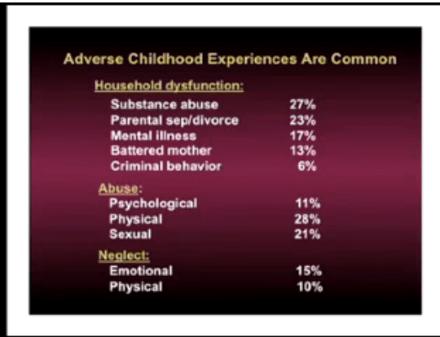
In the mid 80s, Dr Vincent Felitti ran an Obesity clinic in America. Many people enrolled and hundreds of pounds were shed by them. But he found that the drop-out rate from his programme was as high as 50% despite good results. He did not understand this and went back to look closely at patient notes.

“I had assumed that people who were 400, 500, 600 pounds would be getting heavier and heavier year after year. In two thousand people, I did not see it once. When they gained weight, it was abrupt and then they stabilized. If they lost weight, they regained all of it or more over a very short time.”

The turning point in Felitti’s quest came by accident. He was running through yet another series of questions with yet another obesity program. How much did you weigh when you were born…when you were in first grade…when you were in high school…when you first became sexually active…

One female patient replied – “Forty pounds” and broke down in floods of tears, “I was four years old.” He found similar common themes emerging from various stories and went on researching this subject for the next 25 years.

The obese people that Felitti was interviewing were 100, 200, 300, 400 overweight, but they didn’t see their weight as a problem. To them, eating was a fix, a solution like IV drug user calls a dose a “fix”.

Eating made them feel better. Eating soothed their anxiety, fear, anger or depression – it worked like alcohol or tobacco or methamphetamines. Not eating increased their anxiety, depression, and fear to levels that were intolerable. For many people, just being obese solved a problem. In the case of the woman who’d been raped, she felt as if she were invisible to men.

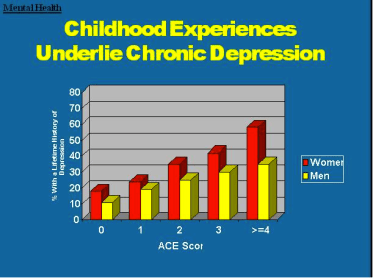
Felitti went on to further explore the  impact of childhood trauma on people and coined the term – ACE, Adverse Chilhood Experience. He found a strong co-relation between the number of ACEs and early death.

aceslist

acedepression

Film: https://www.youtube.com/watch?v=v3A_HexLxDY


Day 988

Transition is the cliff edge.

IMG_0591

Alas, poor Yorick…

Eighteenth birthday! Yay! No more a child. You are mentally, emotionally, socially, spiritually and physiologically an adult. That’s it. Over to Adult services now. Easy.  The number ‘18’ is completely arbitrary. It is designed for the convenience of the service providers, not in the best interest of children. There is a strong case being made now for raising the ‘transition’ age to 25 and rightly so. The recent publication “State of Child Health 2017” has recognised that the transition from Paediatric to Adult services is poorly organised and unsafe for mental and physical health conditions.

This is how one of the parents felt: “In my experience the teams did not work together. They each did their separate thing. When Rebecca left school, she was left with without regular support or advice. When she turned 18 we just stopped receiving information. Emails and phone calls didn’t get answered.”

Chronic conditions such as Epilepsy, Asthma, Diabetes, Juvenile Arthritis and Childhood Obesity are often associated with significant mental health problems. The budget for kids was 6% of the Adult MH services until recently. The government promised an increase and guess what! It has gone up to 7% now. Hurrah! Considering that mental illness most often begins in adolescence and early intervention is of paramount importance, the allocation of funds is highly disproportionate.

Piet Jansen, Director of International Relations, Yes We Can Youth Clinics, Netherlands, commented:

‘There was a lot of talk at the CAMHS congress about the Green Paper, but in my view the only green thing that matters here are dollar bills (in this case pounds). Without sound financial and genuine political commitment, structural changes are not to happen.’

DC2K3UbXUAAai4p


Day 985

download

‘Children and Young People’s Mental Health – Taking Early Action’ : title of a conference I attended today.

The hall was packed with 350-400 people, working for the well-being of kids as teachers, social workers, decision makers and others. Two speakers mentioned suicide in the passing – Rt. Hon. Norman Lamb MP, who lost his sister through this tragedy 2 years ago and Richard Andrews, who set up the charity Healios after experiencing serious difficulties in accessing support for friends and family affected by serious mental illness.

One of the professors spoke about the reasons for early deaths of people with mental ill-health.  He attributed this mainly to physical problems such as hypertension, obesity and smoking related problems. Death by suicide wasn’t mentioned.

I learnt a lot, some of which I shall share in the next few days. A Green Paper is being drawn up to set out proposals for delivering better mental health support for children and young people. During one of the question times, I suggested that bearing in mind that suicide is the biggest killer of young people in this country, 2 things must be included in the Green Paper –

  1. Suicide Prevention Training for all medical and nursing staff and students, just like CPR training, to bring parity of esteem between physical and mental ill-health.
  2. Meaningful sharing of information about para-suicidal young people between medical teams, police, first-responders and families, in the best interest of the patient.

This remark was met with a stunned silence. The room froze. The chairperson mumbled something like ‘eloquent…’ and rapidly moved on to the next person.

Stigma lives here too. Inside the healthcare community.


Day 983

How many?

download

“Work out how many vulnerable children there are in this country today…Four months, 12 experts, 500 pages and four spreadsheets later, and our answer is: we don’t know.”

The report produced by the Independent Jersey Care Inquiry into the abuse of children in the Island’s care system over seven decades was published yesterday. The findings were shocking:

  • Having their hair forcibly cut off
  • Having their mouths washed out with soap
  • Spending long periods in an isolation room
  • Having fat from a frying pan poured over them
  • Being punched and slapped
  • Being sexually abused
  • Live electrical wires applied to legs
  • Being hit with a pre-war army stick with a metal end
  • Being beaten with nettles as a punishment for bedwetting

The “Jersey way” is a term used to describe a system where “serious issues are swept under the carpet” and “people avoid being held to account for abuses”. However, Jersey is not the only place in the world where this has been happening and still carries on.

Studies show that children and adolescents in care are at greater risk of suicide and attempting suicide than those who are not in care. Rates of suicide attempts and hospital admissions within this population were highest before entry into care and decreased thereafter. Health and social care professionals should be made aware of this research. The care home experience is a prominent risk marker for suicidal behaviour among teenagers and young adults.