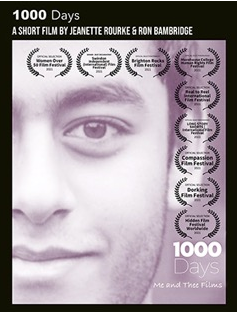
A report and a film.

A report published last month by National Child Mortality Database (NCMD) identifies common characteristics of children and young people who die by suicide between 1st April 2019 and 31st March 2020. It investigates factors associated with these deaths and makes recommendations for policy makers.

Every child or young person who dies by suicide is precious. These deaths are a devastating loss for families and can impact future generations and the wider community. There is a strong need to understand what happened and why, in every case. We must ensure that we learn the lessons we need to, to stop future suicides.

Key Findings:

-Services should be aware that child suicide is not limited to certain groups; rates of suicide were similar across all areas, and regions in England, including urban and rural environments, and across deprived and affluent neighbourhoods.

(No one is immune.)

-62% of children or young people reviewed had suffered a significant personal loss in their life prior to their death, this includes bereavement and “living losses” such as loss of friendships and routine due to moving home or school or other close relationship breakdown.

(Saagar was unable to return to his life at University due to a new diagnosis of a mental illness.)

-Over one third of the children and young people reviewed had never been in contact with mental health services. This suggests that mental health needs or risks were not identified prior to the child or young person’s death.

(Saagar had been in contact with Mental Health Services but they discharged him as soon as he showed signs of improvement. They did not follow him up. His GP was unable to identify his high risk of suicide despite his Depression scores being the worse they could be for at least 4 weeks.)

-16% of children or young people reviewed had a confirmed diagnosis of a neurodevelopmental condition at the time of their death. For example, autism spectrum disorder or attention deficit hyperactivity disorder. This appears higher than found in the general population.

(Saagar did not.)

-Almost a quarter of children and young people reviewed had experienced bullying either face to face or cyber bullying. The majority of reported bullying occurred in school, highlighting the need for clear anti-bullying policies in schools.

(At his Primary school in Belfast, his peers called him ‘Catholic’. He didn’t know what it meant but he knew it was not right. This went on for more than a year before I found out. When I spoke to his class teacher about it, she denied any problem.)

The film ‘1000 days’ tells us about Saagar and what we have learnt from his life and death. I am not sure what or how much the policy makers and service providers have learnt or changed but we have learnt and changed a lot and here we talk about that. The film is presently available on-line at the Waterford Film Festival (Short Programe 6), till the 15th of November at the link below. Please take 20 minutes to watch it if you can. You will learn something too. Each one of us can make a difference.

https://waterfordfilmfestivalonline.com/programs/collection-jlvwfxb8ctq

Mum’s not the word.

He didn’t want to go. The new school was an hour’s drive from home. His bags were packed. Each piece of clothing had been labelled, “Baxter 289”. Each set had been neatly marked and packaged – rugby, cricket, football. He was getting ready to leave for the most prestigious Boarding school in town. Nothing less would do for a seven years old lad from such a good family as his. It was for his own good. This precious boy needed a proper education, even if he had to be separated from his sweet mum, wrenched away from his big house on the hill and the fields all around, his playground. This was unquestionably the right thing to do and it was being done. They would make a proper young man out of him. 

His mum knelt beside him in his room, combed his curly brown hair back from his forehead and kissed him there, gently. She looked at his freckled face and spoke apologetically, “I’ll see you at the weekend my darling.”

“I don’t want to go Mum.” He said, looking straight into her big blue eyes.

“I know sweetheart. But once you get there, you’ll have so much fun. You won’t want to come home” she said.

He looked at her face, his eyes now pleading. She felt an ache in her chest and looked down and away at the green Persian carpet.

“Don’t send me away. Please. I promise to be good.”

“My sweet, sweet child. Your dad only wants what’s best for you. Let’s not keep him waiting in the car.”

She held his hand and walked him out into the sunny afternoon of that last Friday in August. The sun was keeping the car warm even though all the windows were open. The day looked like it ought to be a happy one.

It was never the same again.

Forty years later.

He wanted to come home for Christmas. The Government had locked everyone in their homes because of the bugs. He lived in the big smoky town full of bugs. She still lived in her lovely big house on the hill in the open, clean and green countryside.

“It’s not as bad as they make it out to be Mum. We are well and strong and so are you. Nothing will happen. Don’t worry.”

‘I do worry darling. Let’s meet once this season of calamity is over.’

“I would really like to spend Christmas with you.”

‘Yes. That would be nice but I am not sure. The government has not given permission yet.’

“They really should. If they don’t, that would be more of a political decision than a scientific one.”

‘The Government only wants what’s best for us. Let’s not disobey the rules.’

That sounded familiar. He was seven again.

— — — — — — — — — — — — — — — — — — — — — — — — — —

Ref: How early maternal deprivation changes the brain and behavior? by Masa Cater and Gregor Majdic

EJN – 18 April 2021: https://onlinelibrary.wiley.com/doi/10.1111/ejn.15238

This night.

He was born when I was 28.

The monsters of pain took him in his 21st.

I was in my 49th.

Today, he would be in his 28th. I am in my 56th.

7 years ago, this night was his last in this house.

I am here tonight. Sleeping in his room.

7 years it takes for all my cells to be replaced.

7 chakras. 7 cycles.

7 colors. 7 musical notes.

7 days clumped into a week.

A bunch of random dates. Time as a thing.

Not straight. A mirage.

Revisiting.

Revolving. Rotating.

An illusion. A thought.

A future forgot.

Grow. Mature. Flower. See.

A constellation upon which I sit as fully me.

Push through the glass wall of Time. Release.

Rise and fall

free.

Ordinary people

Once upon a time there was an ordinary person. Making a living, being honest, spending time with the family, having a few friends and simple pleasures. Nothing special. Just ordinary.

Then they lost their child to the monster of unbearable pain. They carried on breathing and giving and receiving love. There was nothing ordinary about that. They couldn’t bear the thought of the same thing happening to anyone else. So, they went out to tell the stories of their angels to everyone. To exhibit the smithereens of their bleeding hearts. That was not easy or normal but they did it anyway. To say that there were other options that they wish their kids had been encouraged to explore. To give out the phone numbers of the good people out there who can help. To remind everyone that there was hope. There is hope.

These 3 dads were ordinary people. Now they are walking together for 300 miles over 2 weeks, making waves all over the country, connecting with people, smashing the stigma and sharing the stories of their lovely girls. Ordinary and beautiful. Just like you.

Please listen and take a look at what’s possible when love speaks and acts.

Not ‘them’ and ‘us’. Just ‘us’.

It has been a dream to be face-to-face, talking about Saagar with the Psychiatric community. In the past 7 years that has not really happened. On Wednesday, the 15th of September, I got as up close as possible with an entire department of roughly 100 psychiatrists and Therapists at differing levels of experience and practice. They were in New York and I was here, in London. The Grand Round was organised by a colleague, Prof Mike Myers, who gave it the title:

‘Losing a Son to Suicide: How One Mother is Opening Hearts and Minds Around the World’

After a cordial ‘meet and greet’, the film ‘1000 days’ was screened. It was followed by complete silence. Same as the previous time it was screened. And the time before. Each time the audience was left speechless.

After a long minute I gently stepped in with the assurance that this was a normal response. I invited questions and comments. I thanked them for the work they do and acknowledged how difficult it is for the profession to deal with such losses. I shared my hope that the film will deepen their insights into the human element of such deaths and the value of forging partnerships with bereaved families.

What followed was a fulsome, creative and holistic exchange of ideas.

“What led you to make this film and share your life in this way?” one young Resident asked me.

“I could only work with what I had and do what was in front of me. When I could write, I wrote. When I could speak, I spoke. When I could learn, I learnt. From the moment I heard the news of Saagar’s death, my only intention was that this must stop. No one should have to suffer the way Saagar did or the way I and his friends do. This film came about because it’s time we recognize that these lives are worth talking about, that the desire to end one’s suffering is a normal human desire and that we all have a role to play.”

Winner – BEST DOCUMENTARY – Swindon Independent International Film Festival
Winner – Brighton Rocks Film Festival – Spirit Award
Winner – Compassion Film Festival Colorado – Reflections of Love People’s Choice Award
Nominee – Morehouse College Human Rights Festival Atlanta (winners yet to be announced) 
Semi Finalist – Gold Coast International Film Festival – New York 
Nominee – Long Story Shorts International Film Festival 

Upcoming festivals where the film can be watched starting 23rd September 2021. Tickets available now.

‘1000 Days’  
Morehouse College Human Rights Film Festival – fosters ongoing discussions about human rights and social and political issues.
September 23 – 25 https://morehousehumanrightsfilmfestival.com/2021-film-guide/

‘1000 Days’ at Women Over Fifty Film Festival:
WOFFF is an inclusive, international film festival celebrating women over 50 in front of, and behind the camera.
25 Sept – 2 Oct – tickets on sale
https://wofff21.eventive.org/films/61379c142c09f100b90ae7c4

Comments:

”Bringing people closer and keeping them deeply connected despite social isolation.”

“Keeping the silk threads of human bonds as strong as ever.”