Day 842

A Psychiatrist recently expressed his point of view- “If I take everyone who tells me they want to end their lives seriously, I would have to admit almost everyone I see to hospital. What we need is for people to be able to verbalise how they feel rather than dash straight to a perceived solution.” I suppose he means it would be helpful if everyone had an emotional vocabulary, a way of describing how they feel – happy, worried, excited, frustrated, scared, wretched, rotten, hopeless, angry…  a process that ideally should start when we’re kids. Just like we learn to identify objects and name them, we should develop the ability to identify our feelings and name them.

“If you’re happy and you know it…clap your hands.”
“If you’re happy and you know it, hug a friend.”
“If you’re sad and you know it, cry a tear – “boo-hoo.”
“If you’re mad and you know it, use your words “I’m mad.”
“If you’re scared and you know it, get some help, “HEEELLLLPPP!”
“If you’re silly and you know it, make a face, “BBBBLLLUUUUHHHH!”

“A large and more complex feeling vocabulary allows children to make finer discriminations between feelings; to better communicate with others about their internal affective states; and to engage in discussions about their personal experiences with the world”
– Centre on the Social and Emotional Foundations for Early Learning (CSEFEL)

Adults can proactively teach young children to identify their feelings and those of others. Through stories, modelling and role play they can pair an emotion with a coping strategy, for example, taking a deep breath when angry; requesting a break when annoyed, talking to someone when sad. Positive emotions may need to be regulated too.

When I was young, feelings didn’t get much attention. They were often set aside, ignored or suppressed. They didn’t seem to be important. They came and went and changed all the time. So, it was easy to not hang on to them. Doing, behaving, achieving and knowing were important. They were tangible and afforded rewards. So, it was easy to focus on them. I didn’t have an emotional vocabulary. I didn’t know there was such a thing. I didn’t know many people who had it. Now I am learning.

Ref:

The feelings song: https://www.youtube.com/watch?v=UsISd1AMNYU

On Monday when it rained: https://www.youtube.com/watch?v=eOhwGmxDPl8

Click to access handout6.pdf

Day 835

66075a17a8cc802e1b9aa49934e2896c-1

The sensitive ones feel deeply, love deeply, hurt deeply. In this hard world, they are forced to grow an armour of steel but inside they are soft and bruise easily. They suffer not only their own angst but also the pain of everyone around them, especially those they love.

They make good mimics and actors because they can literally put themselves in someone else’s shoes. It is their keen observation and empathy that enables them to imitate others accents and actions to perfection.

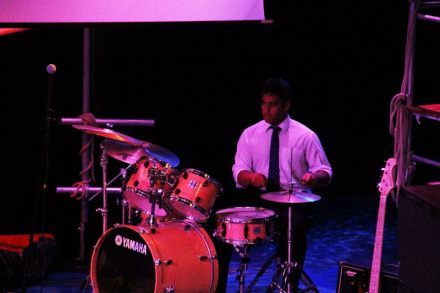
They make good musicians because their ears and brains are superbly tuned to their heart-strings and they can truly feel the music.

They make good friends as they are loyal, honest and true. Simple things mean a lot to them. Their purity and simplicity make them adorable.

Their sensitivity is the source of their passion and compassion, creativity and a deep appreciation of the small things in life, keen awareness and a vivid inner life.

They suffer deeply when betrayed, rejected or devalued. They fret over misunderstandings and unresolved issues.

All they want is to love and be loved.

The world needs more sensitive people but sadly, hasn’t learnt to value them enough.

drumming


Day 832

The hospital where we went when he was ill is just down the road from where we live. It is 18 minutes by bus, 10 minutes but car on a quiet day. The Emergency department is on the left. The Mental hospital is on the right. There is a visitor’s car park in front of the Mental hospital. That is where we parked the car. That is where we waited for a couple of hours to be seen by a psychiatrist. That is where I had to make my own way that day because Saagar refused to have me in the car with him and his father. That is where he should have been when he was severely ill a few weeks later. That is where he could have been saved.

That is where I went this afternoon to watch a play called ‘Hearing Things’, a play co-produced by patients and professionals, based on insights derived from 6 weeks of workshops involving actors and people with a mental illness, offering both an opportunity for expression, transformation and co-creation. Through a cast of 3, we met people of different races and age groups. It was about challenging assumptions. It was about the empathy and personalities of patients. It was about ‘the system’ and the dynamics within it, mental well being of health care providers and role-reversal. It was about giving people a chance.

“I am off now to be mad and I don’t have to be sectioned for it”, remarked one of the participants as drama gave him the freedom to be who he is, without fear of judgment. It was about the possibility of being ‘re-assembled’. It was powerful and moving. It did not mince words. I spoke loud and clear. It was accessible, funny, clever and heart-breaking.

One young person describes his experience of drama:

“…after you do the drama you get this feeling…it feels as if whatever was bothering you went away and you feel light and can do whatever you want around you, it makes the day simpler and you can concentrate on your activities, it makes you feel better, like at the end of the day when you come home from work tired and you want to put your feet up, you don’t feel guilty relaxing as you have done a hard days work. I wanted to understand the person and put myself in their shoes.  At the end of it I felt good.  150% happy!”  

 It was about creating a new paradigm of relating to people suffering with mental illness.  It was all heart.

Ref:

http://playingon.org.uk/hearing-things-2016-2017/

Day 826

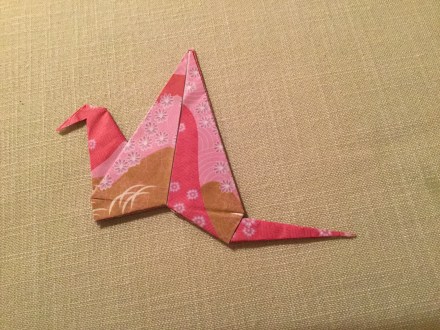
img_0534

This forgotten book-mark in a book being revisited after two years is an origami crane – a symbol of healing in Japan. A school kid had given it to me at Hiroshima as a token of gratitude for helping him practise his spoken English.

Paper folding started in China in the first century and reached Japan in the 6th century. Here it was cultivated as an art of understatement. Origami suggests. It implies without announcing outright. It intimates without brashness. In Japanese folklore, a crane is fabled to live for a thousand years and is held in high esteem. It is believed that folding 1000 paper cranes brings the folder’s wishes come true.

A young girl called Sadako Sasaki survived the Hiroshima bomb when she was only two years old. Less than 10 years later she was diagnosed with leukemia, a cancer of the bone marrow. The disease progressed rapidly and the prognosis was not good. She set out to make a thousand paper cranes. She could complete 644 before she died on Oct. 25, 1955, less than a year after being diagnosed. Her classmates, family and friends made more to bring them up to 1000 and buried them with Sadako.

2013-08-20-sadakobybushcropped

Her story captured the imagination of the country and the world. Today, we recognize the crane as a symbol of peace and hope.

“She let out both the pain of our parents and her own suffering with each crane.”
“Her death gave us a big goal. Small peace is so important with compassion and delicacy it will become big like a ripple effect. She showed us how to do it. It is my, and the Sasaki family’s responsibility to tell her story to the world. I believe if you don’t create a small peace, you can’t create a bigger peace. I like to gather those good wishes and good will and spread to the world,” said Masahiro, her brother.

Peace and hope to Sadako and to us all.

Day 815

photo

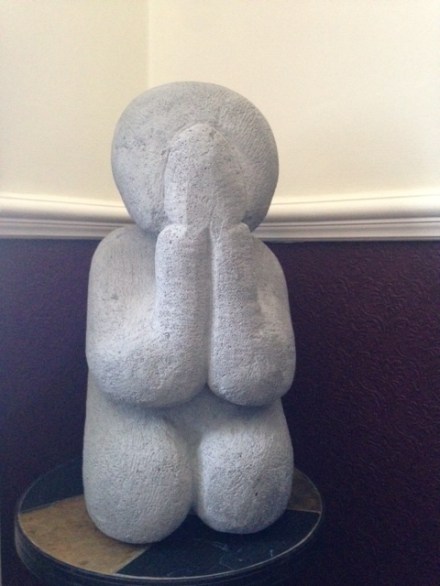
(A sculpture by Ruth M, who lived with Bipolar Disorder, expressing her depression)

In the 1940s, mental hospitals were places of isolation and confinement, probably closer to prison than hospital. Netherne, in Surrey was seen as a progressive asylum at the forefront of waves of reform and development for nearly 50 years, till the eventual closure of the British asylums. They enthusiastically adopted physical treatments, now viewed as barbaric- insulin coma therapy, electroconvulsive therapy and lobotomy, then seen as optimistic approaches to treatment.

Edward Adamson (1911-1996) was a pioneer of British Art Therapy. He encouraged and collected the paintings, drawings and sculptures by people compelled to live in Netherne Hospital between 1946 and 1981. He describes that many people who came to his first lecture there had shaved or bandaged heads, bruised faces and black eyes, following brain surgery.

Adamson started collecting art during his early visits when a man on a locked ward gave him the first of his several drawings done on toilet paper with a charred matchstick. He later met other people on the wards who would have had no personal possessions, working with whatever materials they could find to create something for themselves.

The Adamson Collection has 6,000 of these works of an estimated 100,000 when he retired. The collection is seen as unique in the history of art therapy of the reforming psychiatry of the 1950s and 60s, collected by an artist rather than a psychiatrist, with a strong representation of works by women. Above all it is a memorial to all those who suffered in the asylums and to the human need to express.

“Edward Adamson practiced art as healing before there were ever terms or labels like ‘Art Therapist’. Being with him for anyone was therapy and yet he didn’t play at clinician, but rather served so sweetly as a supreme friend, ‘there’ for those who had none other. There were for Edward no patients. I think that is why so many lost people in his care found their way back to themselves. Adamson’s was an alchemy of the highest sort.”

– Rebecca Alban Hoffberger, Founder/Director American Visionary Art Museum, 2011

13ec28aed459f20a9816caf08304393c

Ref: http://www.adamsoncollectiontrust.org/wp-content/uploads/2016/09/2-2011.-DOF-Raw-Vision-for-EAF.pdf